

The invention of the tank car coincided with the discovery of oil in northwestern Pennsylvania in the 1860s. Oilmen quickly discovered that hauling oil to market in horse-drawn wagons or floating barrels down local streams wasn’t going to do the job as oil production ramped up. The oil industry needed to find a way to take advantage of the country’s growing railroad network.
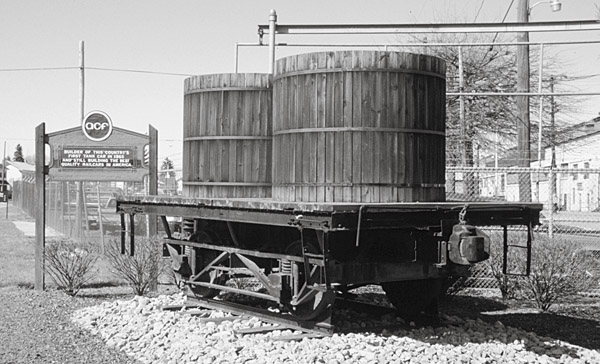
In 1865, Pennsylvania oilman Amos Densmore designed the first tank car, which consisted of two
wood vats on a flatcar. A new company, American Car & Foundry, a conglomerate of 13 freight-car builders, manufactured the car. Today a replica of this pioneer tank car is on display in front of the ACF Industries tank car plant in Milton, Pa.
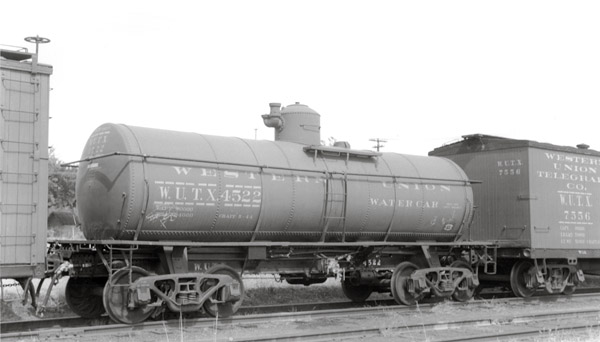
Car builders made the first iron and steel tanks by riveting together a series of overlapping cylinders. This method evolved into attaching two or more curved upper plates to a curved
bottom plate that ran the entire length of the car. The bottom plate produced a stronger tank and made tank car construction easier and cheaper.
Some tank cars were built of three or more longitudinal steel sheets riveted together.
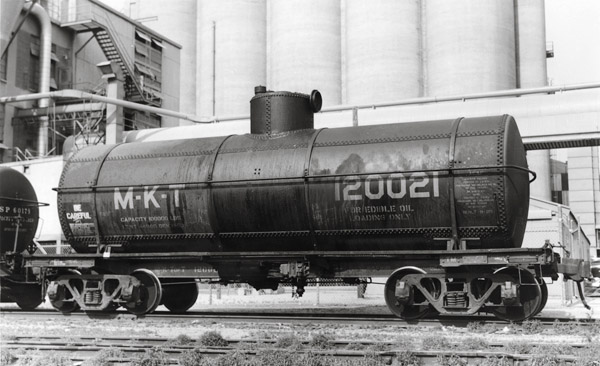
By the turn of the 20th century steel frames with the tank anchored at the midpoint of the center sill became common. The first “frameless” tank car appeared in 1901, although the design didn’t become widespread until the 1950s.
What started out as a specialized car for the oil industry evolved into a versatile piece of rolling stock. Tank cars still haul a wide range of commodities from corn syrup to hydrochloric
acid.