Nancy Norris
Common name: Coastal white cedar, Andy’s cedar
Latin name: Chamaecyparis thyoides ‘Andelyensis Conica’
Plant type: Dwarf conifer
USDA Hardiness Zones: 4-10
Cultural needs: Moist, well drained, neutral or slightly acidic soil; full sun
Plant size: 3′ x 1’6″ in ten years, without pruning
Latin name: Chamaecyparis thyoides ‘Andelyensis Conica’
Plant type: Dwarf conifer
USDA Hardiness Zones: 4-10
Cultural needs: Moist, well drained, neutral or slightly acidic soil; full sun
Plant size: 3′ x 1’6″ in ten years, without pruning
Jack Verducci
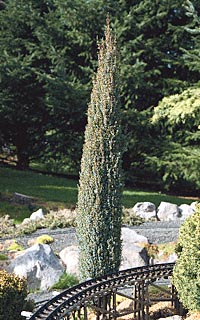
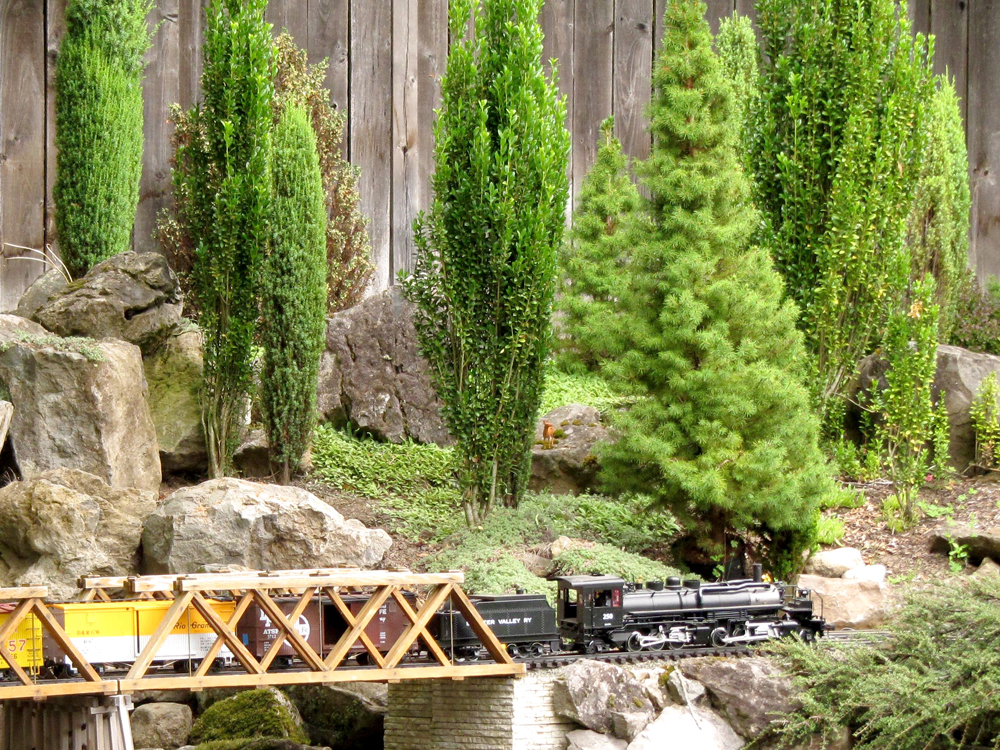
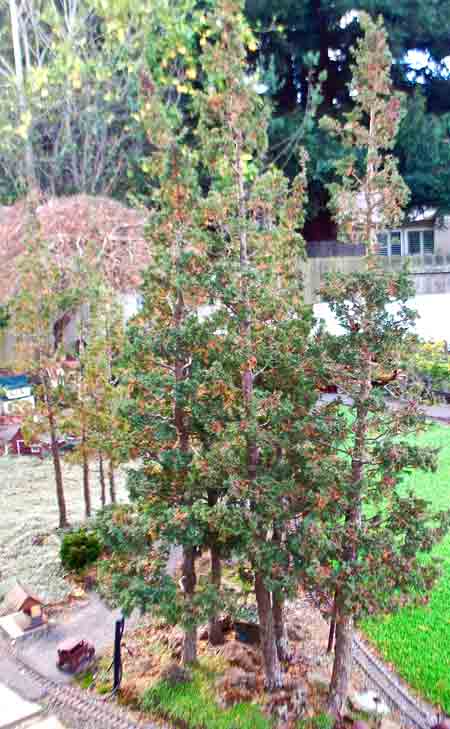
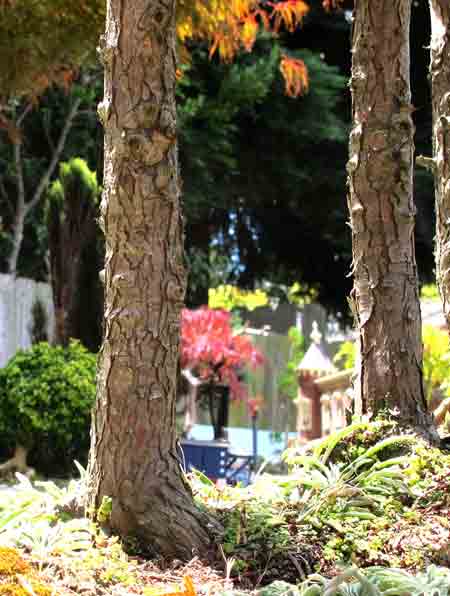
The heritage of Andy’s cedar goes back to China and Japan. The habit is a dense blue-green cone. This perfect forest tree for our garden railways will thrive with the necessary care. Its other name, coastal white cedar, hints at the amount of water needed, which is at least 1″ of water per week—even more when it’s hot. Gardeners on the northern edge of Hardiness Zone 4 should be sure to irrigate thoroughly in the fall before the ground freezes, then protect leaves from winter drying. Andy’s coastal white cedar grows less than 3″ a year—a true miniature that responds well to pruning. Choose branch patterns carefully and prune regularly because new growth will not grow on old, inside wood. Regular heading-back of branch tips will initiate new buds closer to the trunk. In the photos, Jack Verducci has created clumps of forest trees, opened up to show the trunk and branches. In a few years the bark matures to an interesting flaky cover that adds realism. Full sun (minimum of five hours per day) is critical for strong leaf production and dense branches but afternoon shade is great if it’s a hot location. Read about several Chamaecyparis varieties by searching gardenrailways.com (see related articles below).