Question: What you can tell us about this caboose, is it even from the 1950s?
ANSWER:
Transcription courtesy of YouTube.
RC: It is from the late 40s into the 50s. The number 6257 was a caboose that Lionel used in many many of its sets. In fact, the first set that I received in 1956, the number 710, had a 6257 caboose.
It was based on a Southern Pacific prototype and was manufactured probably in the millions. This one did not have a light. There was a more deluxe version, the 6357, that had a light.
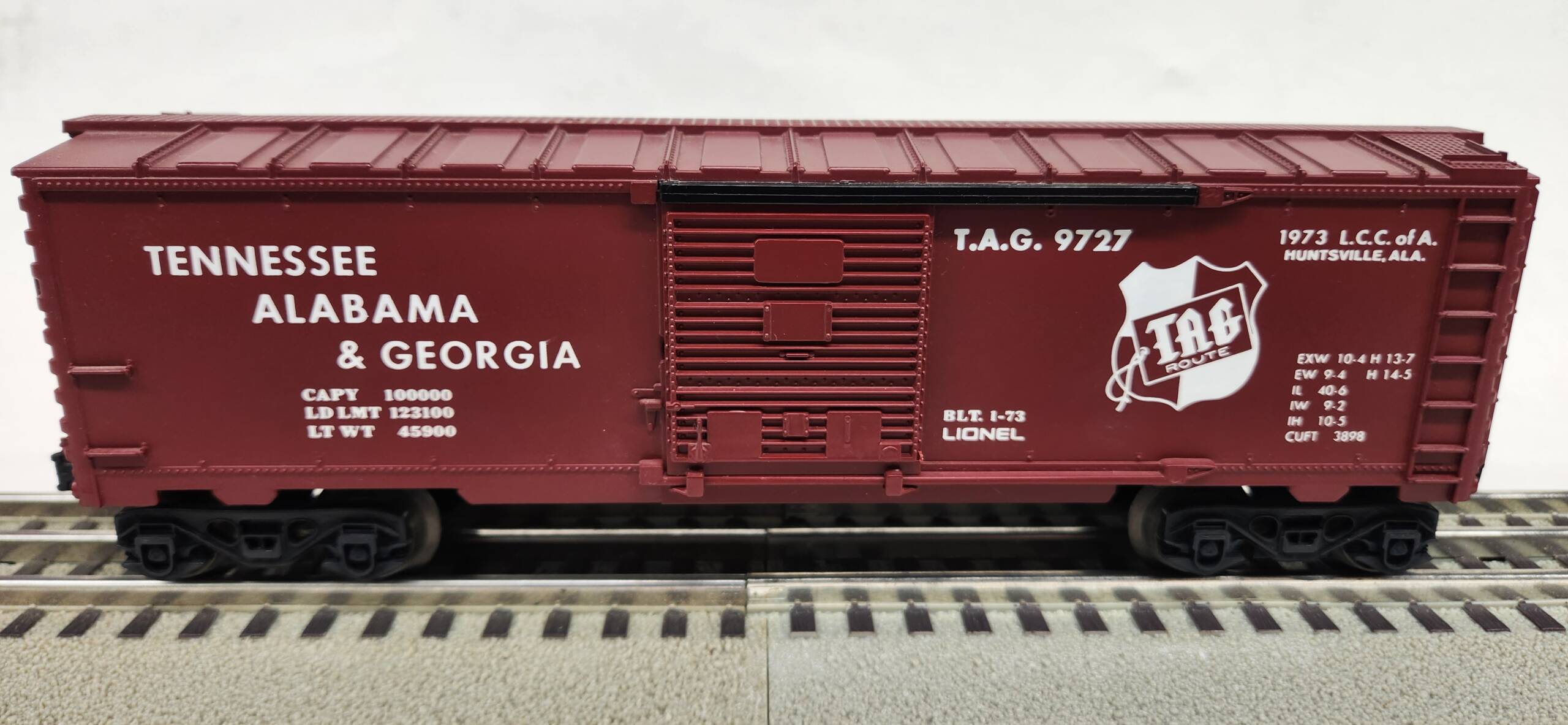
But, just thinking about this, a lot of you out there on Facebook probably have an old toy train, and you’re wondering how do you find out more about it? Well, the first thing to do is try to find out who manufactured it. In this case, when you see the word “Lionel” that’s easy. That tells you that Lionel manufactured it.
But you may have to look on the side. You may have to look on the bottom. Sometimes the name of the manufacturer is written there or is written or printed somewhere small [letters]. So that’s the first step then you want to look for any numbers.
In this case, the 6257 is the product number that Lionel assigned to its caboose. Interestingly, Lionel had always used that final digit of “7” to indicate a caboose.
It used the final numeral of “1” for flatcars; “4” for boxcars; “5” for tank cars, and so in this case, we do have that. We know it’s a Lionel caboose with that number, which makes it easy to identify.
One thing that may confuse people is that Lionel put a tiny little built date of 1947. Well, in that case, it was imitating what railroads did. They would paint on their boxcars [or] rolling stock when the item was built, although in this case I think this does fit when the 6257 was added to the line, although you know, I think it was more like 1948 but it’s still very very close.
It’s a nice a nice item, very commonplace, it would have been a lot of fun to have in a set. So, something else to add for those of you that do have old toy trains.
Before you get rid of them, because I do get questions about “where can I sell this? Where can I get rid of it?” I always tell people: “Before you do that, think about it.”
This is an heirloom this belonged to you or your family
You probably will not get a great deal of money for it. Sometimes you will, depending on what it is, but mostly you won’t.
To me, it’s priceless for your family.
Is there someone in your family that would treasure having this for years to come?
I’ll be very honest with you: If I could have one train that had belonged to my father, who is no longer alive but played with them in the 1920s, I would cherish it forever.
There’s no amount of money that I would take for it, and that’s probably true for many of you. So if you have a train see who in the family might want it treat it well, treasure it, because for so much of the 20th century and really into today an electric train was the finest, most important, most sophisticated, most treasured plaything that a boy could have. And we know that there were boys who didn’t get them and they grew up to be the men in the 1940s who would sort of wrestle with their kids as they were fathers now to see who was going to get to play with the train.
So it’s really, really, important to keep it.
Interested in learning more about classic Lionel toy trains from the 1950s? Check out Lionel Trains of the 1950s on shop.trains.com! – Ed.