A: Good question, Ben. Don’t look for logic today in that corporate decision, which reflects Lionel’s thinking some 70 years ago. I suppose it made sense back then.
It started after the Ives Manufacturing Corp., a rival producer of toy trains, went bankrupt in 1928. Lionel eventually took over production of Ives trains. Ives had a 27-inch-diameter circle, and Lionel continued with it.
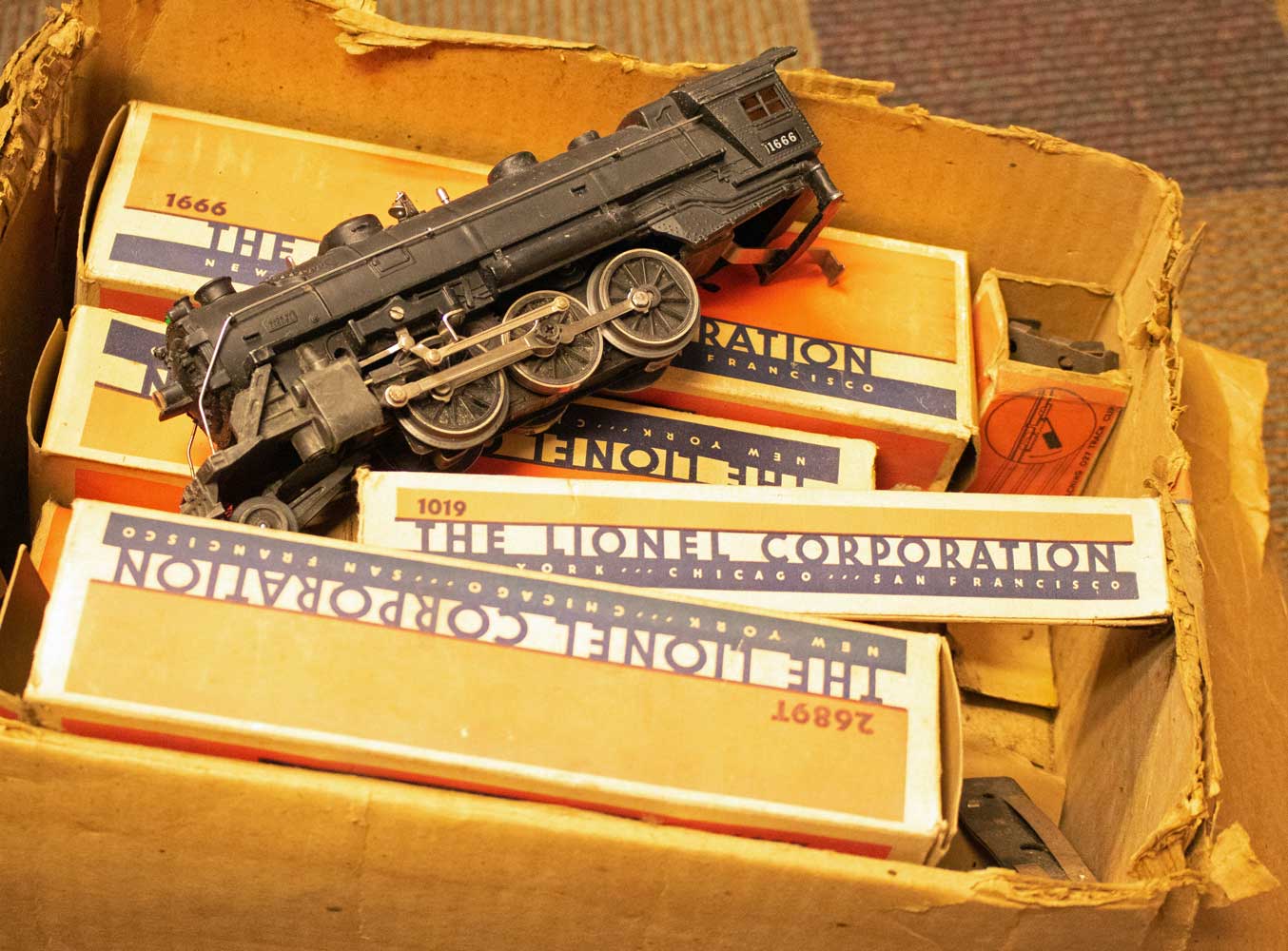
Trains labeled “Ives Lines,” later “Lionel Junior,” and still later “O-27,” were Lionel’s low-end entries into the depressed market of the 1930s.
By making these cheaper, less elaborate trains with track that could be manufactured with slightly less metal, Lionel could maintain the integrity and prestige of its regular O gauge line while meeting the price competition from Marx and American Flyer head on.
Flyer also had two lines on two distinct price levels and two track diameters. Of course, Marx always used O-27 track, which is actually compatible with Lionel’s.
That’s how it all began. Why it persisted for so many years is probably in the realm of inertia, habit, or nostalgia. I know that Lionel considered doing away with one or the other gauge several times over the years, but nothing happened.