Virginia-CSX deal’s impact will extend to North Carolina NEWSWIRE

Virginia-CSX deal’s impact will extend to North Carolina NEWSWIRE

By Bob Johnston | January 29, 2020

| Last updated on November 3, 2020


Right-of-way purchase paves way for rebirth of S Line, helps North Carolina projects advance

SLine_Norlina_Johnston
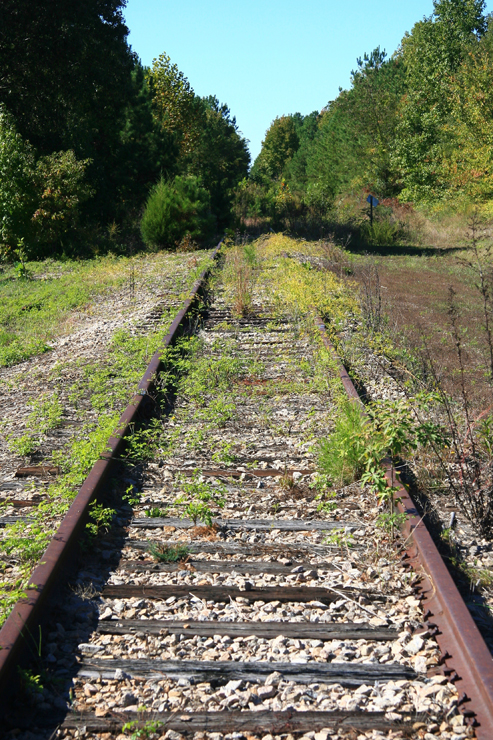
Weeds have begun encroaching on remnants of the former Seaboard S Line at Norlina, N.C., in this 2007 view.
Bob Johnston
Third article in a series on Virginia’s rail plans. The first, on the impact near Washington, D.C., is available here. The second, on the statewide passenger rail impact, is here.

NORLINA, N.C. — Nowhere are the conflicting priorities of freight and passenger rail more starkly evident than a small community just south of the Virginia state line, once a junction for Seaboard Air Line routes north to Richmond and Portsmouth, Va.

Seaboard’s Florida-bound Silver Star once flew through Norlina without stopping as it took less than three hours to travel between Richmond, Va., and Raleigh, N.C. But Seaboard successor CSX Transportation decided in the 1980s that a parallel, former Atlantic Coast Line route further east could handle all the company’s freight. That meant Amtrak passenger trains would have to move, as well.

But Virginia’s planned $3.7 billion rail investment program [see “Virginia, CSX announce major rail infrastructure program,” Trains News Wire, Dec. 20, 2019] includes purchase of the now-abandoned “S Line” right-of-way through Norlina, offering a new glimmer of hope that a long-sought, much-studied higher-speed conduit to the Southeast is a giant step closer to construction.

Tracks north of Norlina to a connection with the former ACL south of Petersburg, Va., were abandoned, and those to the south were downgraded after Amtrak’s Silver Star and Carolinian were kicked off the S Line in October 1986. The main culprit: costs to maintain aging bridges, including a long one over the Roanoke River’s Lake Gaston near the North Carolina-Virginia state line.

A preliminary engineering evaluation paid for by the two states, released in February 1997, identified the route as the best available alternative capable of 100-mph operations. But in-depth analyses requiring environmental reviews and citizen outreach plodded along for 20 years until the Federal Railroad Administration finalized its Tier II Environmental Impact Statement on March 24, 2017.    

In the interim, North Carolina concentrated its limited funds and grant requests on improvements to the existing Charlotte-Raleigh Piedmont corridor, a beneficiary of over $500 million in federal stimulus grants in 2010.

But the state’s Rail Division Director Jason Orthner, P.E., tells Trains News Wire, “There has never been a moment when we stopped momentum on the S Line. … We’ve had highway projects that have hung around for 30 to 40 years just because it takes a lot of resources and there is not unlimited funding, even for roads.”

The Record of Decision, which prescribes detailed engineering plans calling for 22 minor corridor realignments from the original right-of-way, triggered both Virginia’s land acquisition investment plans and Tarheel State improvements south of Norlina at Ridgeway, N.C., the current end-of-track, to Raleigh.

In Virginia, Chris Smith, spokesman for the Department of Rail and Public Transportation, says the agency “will need to conduct survey work following the finalization of the S Line acquisition from CSX later this year” before it can offer any details on its plans going forward.

SLine_Dinwiddie_Johnston
In Dinwiddie, Va., a factory has been built across the former S Line right of way.
Bob Johnston

In North Carolina, transportation projects compete for funding through a scoring system that assigns more points for positive impact to the most possible users. So highway overpasses usually top the list, since drivers, rail freight, and potential rail passengers all benefit. Grade separations are expensive, but the completed S Line decision enabled the state to win a $10 million Consolidated Rail Infrastructure and Safety Improvement grant that is helping it pay for four projects totaling $83 million through an increasingly congested area between Raleigh and Wake Forest, N.C.

“Conflicts between vehicles and trains are always the weak link; they play into both safety and reliability,” says Orthner. The work is set to begin this year; getting it done will enable his division to devise a plan to incrementally add trains north from Raleigh Union Station as upgrades are completed.

CSX S Line track that once accommodated Seaboard and Amtrak streamliners is now maintained at Class 2 standards: 25 mph for freight and 30 mph for passenger trains.

The possibility of first extending Piedmonts 15 miles to Wake Forest or 44 miles to Henderson, where a station is proposed, “would require a significant amount of work to introduce new service,” says Orthner. His department is working on a price tag for individual segments, investigating federal discretionary grant opportunities, and attempting to get projects included in the state transportation funding program. Heavy population density with few roads in that area mean any improvements would create immediate benefits for both travelers and freight on both highways and rails.

Yet the estimate for completing the entire route to Richmond’s Main Street Station is slightly bigger than Virginia’s entire investment: $3.8 billion. In addition to construction, the number includes $24.5 million for more environmental work, $775 million for right-of-way acquisition, and $61.4 million for utility relocation.

“Highways enjoy formula funding based on allocations [from the Highway Trust Fund] to states, not competitive grants,” says Orthner. “I testified to Congress that there has to be a level of funding beyond discretionary grants if there is a real interest in developing a national system. That’s why we look at incremental development. We create a much larger program, then try to match funding opportunities to what can be built.”

Today’s Silver Star and Carolinian are scheduled for more than 3½ hours to traverse the circuitous 197 miles between Richmond and Raleigh via Selma, N. C., This includes recovery padding for anticipated freight congestion delays, which in reality can cause serious tardiness if they occur on the mostly single-track corridor south of Petersburg, Va.

At 161 miles, the more direct S Line, when completed, will enable trains to lop off at least an hour from current travel times and pave the way for more frequencies along the developing Southeast Corridor. These could potentially extend as far as Atlanta if the states of South Carolina and Georgia are inclined to support passenger rail investment.

While North Carolina continues to seek grants, Virginia’s move gives the project an invaluable boost and energizes the possibility that it will someday be completed.

Share this article