Bennett Levin: Time for state to take over ‘Keystone’ corridor operation NEWSWIRE

Bennett Levin: Time for state to take over ‘Keystone’ corridor operation NEWSWIRE

By Dan Cupper | December 20, 2019

| Last updated on November 3, 2020


Get a weekly roundup of the industry news you need.

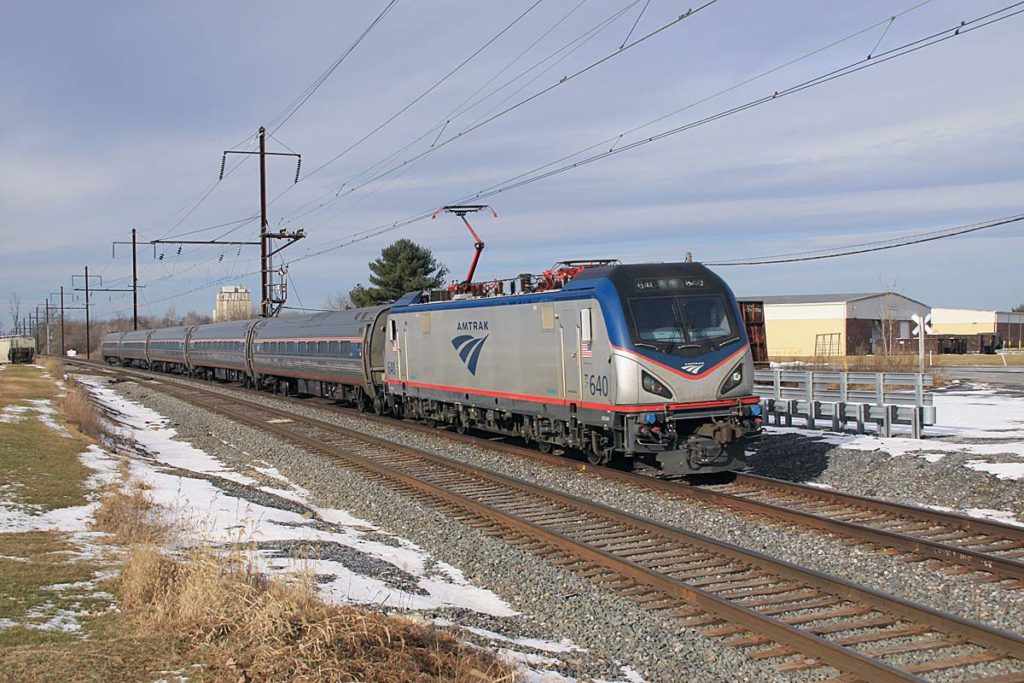
Amtrak640
Amtrak ‘Keystone Service’ train No. 664 hustles east at Mount Joy, Penn., in January 2018.
Mark Hoffman
HARRISBURG, Pa. – Pennsylvania should sever its relationship with Amtrak and take over operation of the Keystone Service (Philadelphia-Harrisburg) and the in-state portion of the Pennsylvanian (New York-Philadelphia-Pittsburgh), according to one rail industry veteran. Lower taxpayer outlays and the prospect of increased passenger-train frequencies between Harrisburg and Pittsburgh could result.

That was the essence of testimony offered in the Pennsylvania Capitol this week by Philadelphia-area short line operator and passenger rail advocate Bennett Levin before the state House of Representatives Transportation Committee. He was the sole witness at the hearing.

Current service consists of 13 weekday Keystone Service round-trips (many of which run through to New York) and a single daily New York-Pittsburgh train, the Pennsylvanian. The state, through the Pennsylvania Department of Transportation, has sponsored the Pennsylvanian since its start-up on April 27, 1980, following the 1979 demise of Amtrak’s National Limited.

The federal government should transfer ownership of the 103-mile Harrisburg-Philadelphia line to the state, Levin says, the Southeastern Pennsylvania Transportation Authority should take over as provider of Keystone Service.

“SEPTA is one of the best managed commuter rail operators in the nation and there is no reason why their franchise cannot be modified to allow them to run west of Thorndale to Harrisburg,” Levin says. “Therefore the initial step in crafting a solution in the Pittsburgh region is to divorce Amtrak by having the U.S. Department of Transportation gift the Harrisburg Line to Pennsylvania and let SEPTA provide the existing Keystone Service.

“Pennsylvania will have cut out the ‘middleman’ and our taxpayers [will] get full value for every dollar they spend for rail passenger service. We have already paid for the Harrisburg Line; we should own it.”

Amtrak’s top management, Levin says, includes no one with practical railroad experience, and is guilty of “bizarre conduct” that does not bode well for Pennsylvania passenger railroading. “It is very evident that rather than focusing on running a first-rate passenger railroad, Amtrak’s senior management is focused on developing real-estate assets,” he says.

Between the state and SEPTA, Pennsylvania taxpayers pay Amtrak more than $1 million a week to provide Amtrak passenger service as well as access for SEPTA trains on the eastern third of the Harrisburg Line. Together, Levin says, PennDOT and SEPTA have spent more than $250 million for infrastructure improvements on the Harrisburg Line.

Among these improvements are completely new stations built or under construction at Paoli, Exton, Downingtown, Mount Joy, Elizabethtown, and Middletown.

The 81 weekday SEPTA trains on the Harrisburg Line carry 20,000 passengers; the 26 weekday Keystone trains carry 4,130 people, and the single daily Pennsylvanian round-trip carries more than 560 passengers a day.

Levin acknowledged that SEPTA operation of Keystone trains would mean a change of trains at Philadelphia’s 30th Street Station for passengers continuing to or from New Jersey or New York City. “Those folks going to New York, let them walk downstairs,” he says, referring to the upper level and lower level platforms at 30th Street.

As for western Pennsylvania, Levin said the Pennsylvanian’s present schedule is timed to serve fewer than 10 percent of its passengers – those connecting to the Washington-Chicago Capitol Limited in Pittsburgh at inconvenient times. An earlier westbound schedule would serve more passengers and would allow for a turnback commuter run between Pittsburgh and Johnstown, similar to the short-lived (1981-1983) Fort Pitt, which linked Pittsburgh and Altoona on a similar equipment-sharing basis.

Once the Johnstown-Pittsburgh service is established and the Pennsylvanian is given a more convenient time slot, expansion of cross-state frequency can be addressed, perhaps as a non-electrified extension of a SEPTA or Keystone train.

“Almost 90 percent of the passengers riding the Pennsylvanian do not connect with the Capitol Limited,” Levin says. “Therefore it is not a stretch to conclude that today’s Pennsylvanian does not provide the most optimal service for most potential users.”

Following the 1995 discontinuance of Amtrak’s Broadway Limited, the Pennsylvanian was left as the sole cross-state train, and it was rescheduled. “The [new] schedule was forced upon the Commonwealth to serve the few folks that connect to and from Amtrak’s Capitol Limited in the middle of the night, or before dawn, at Pittsburgh,” Levin said.

The state capital budget has money earmarked to provide infrastructure improvements for the Norfolk Southern Harrisburg-Pittsburgh main line to allow for additional capacity, but talks have gone nowhere. Numerous studies have been conducted but have produced little result.

Levin has taken members of the Legislature to Pittsburgh aboard his private cars three times in the recent years to make the point that improved passenger service is possible. He volunteered to testify before the committee after attending a meeting in Altoona in August 2019 when “everyone [seemed to be] talking past each other,” he tells Trains News Wire. “All these studies have been [bull]. It’s my belief that Norfolk Southern is a perfectly rational partner, once you get Amtrak out of the picture.

“I stand by [the testimony],” he says. “It had to be said and had to be said to the Legislature. I have not had one negative comment [on the proposal].”

Share this article