That’s the assessment of Texas Rail Advocates President Peter LeCody. He tells Trains News Wire that even though 11 bills designed to thwart construction did not advance, “There’s always a chance that amendments and riders could still be attached to bills working through the Texas House and Senate; we’re watching the situation very closely.”
The Texas Tribune reports that a budget conference committee member says a rider was struck that would have prevented the state’s transportation department from coordinating with Texas Central in any way because, “the language changes general law, something that House rules don’t allow the budget to do.”
Hearings were held on two Senate bills, but they have not advanced from the transportation committee. There are specific deadlines that govern how legislation may be considered, and many dates have already passed.
The big question is whether Texas Central has the right to utilize eminent domain laws to condemn property, a power granted to highways, railroads, and public utilities like power lines and pipelines, just in case the company can’t come to a purchase agreement with landowners. Texans Against High-Speed Rail President and Chairman Kyle Workman has argued, and a Leon County Court agreed, that Texas Central isn’t a railroad because it doesn’t yet operate any trains.
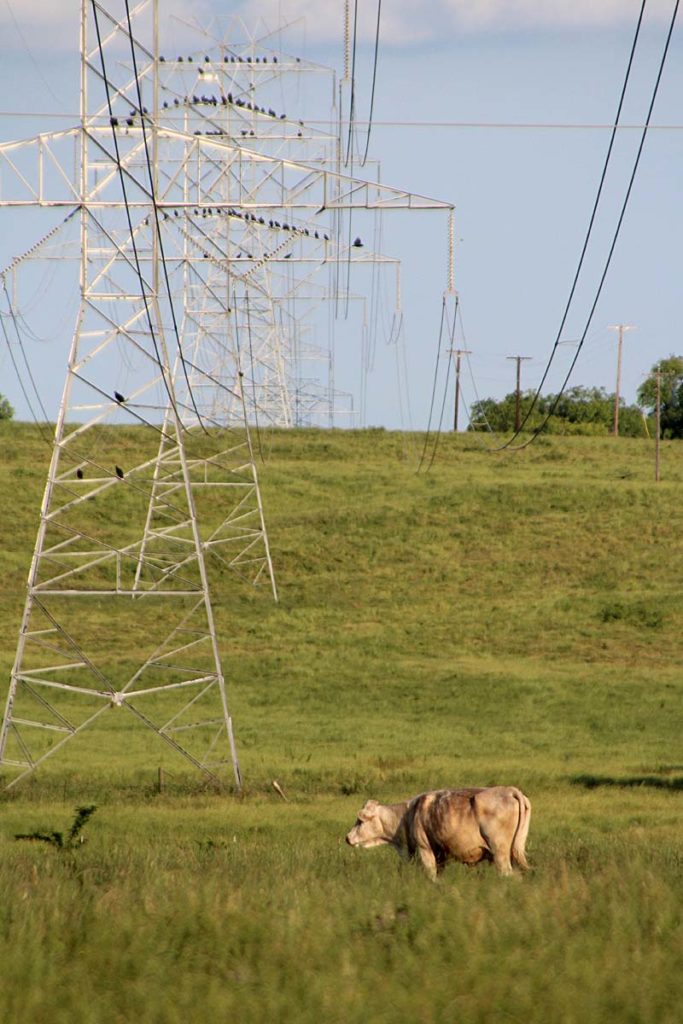
The already-approved federal Draft Environmental Impact Statement notes that 52% of the chosen route runs adjacent to power line corridors. Coincidentally, these were built with the knowledge that eminent domain laws would compel sales if agreements could not be reached.
Holly Reed, Texas Central’s managing director of external affairs, told Trains News Wire on a tour of the proposed Dallas station location in January 2019 that, since a definite route alignment has now been chosen, “we’re in the field every single day negotiating and signing deals. We’ve publicly announced we have over 30% of the parcels under an option contract.”
She adds that because the southern portion of the route close to Houston was known for some time, “In Waller, Grimes, and Madison counties we actually have half of the parcels under contract.”
Reed emphasizes that more than half of the sealed right-of-way is to be elevated and will be built on earthen berms or viaducts. A part of every landowner property discussion is to make sure pass-through needs on the property are incorporated into specific construction plans.