

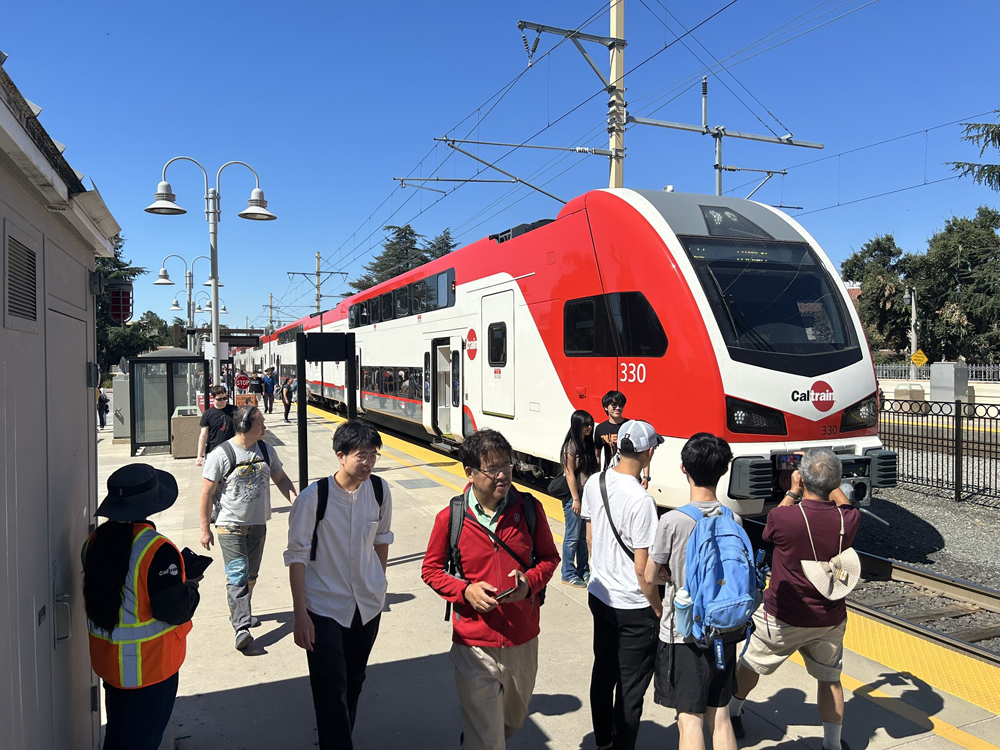
SAN CARLOS, Calif. — Caltrain has become the latest commuter operator to outline dire operational impacts without new funding — in this case, a regional funding measure to be on the ballot a year from now, in November 2026.
As outlined at the November meeting of the Caltrain board, potential impacts without funding from the initiative could include closing more than one-third of stations, ending weekend service, reducing service to once an hour, ending operations by 9 p.m., and cutting some segments of service.
These potential cuts come at a time when, the operator says, September ridership was up 55% over the same month a year ago, with weekend ridership having doubled and four consecutive months with over 1 million riders, following the switch to electrified service between San Francisco and San Jose.
“Caltrain has made tremendous strides in improving service, expanding ridership, and earning the trust of our riders and communities,” Executive Director Michelle Bouchard said in a press release. “The regional funding solution would provide a sustainable funding source to continue those efforts, but should it fail to pass we will face a number of scenarios that will affect years of progress, affect tens of thousands of daily riders who depend on Caltrain, increase traffic, and adversely affect the Bay Area’s economy.”
The ballot measure, authorized by a bill signed into law last month by Gov. Gavin Newsom, will ask voters in Alameda, Contra Costa, San Francisco, San Mateo, and Santa Clara counties to approve an additional half-cent sales tax for a 14-year period that is projected to raise $980 million annually. About 60% of the revenue from that tax would go to preserving operations of Caltrain, BART, San Francisco Muni, AC Transit, and several smaller transit operations. About a third would go to the Santa Clara Valley Transportation Authority, San Mateo County bus operator SamTrans, and transportation agencies in Alameda and Contra Costa counties.
Caltrain says it has already worked to address budget shortfalls, reflecting changes in post-pandemic commuter habits, with cost-cutting measures including hiring freezes, crewing changes, and reductions to non-labor expenses, as well seeking additional revenue from sources such as advertising and transit-oriented development.
Share this article