WASHINGTON — The Rail Passengers Association said today it will be “actively involved in protecting the rights of passengers” as the Union Pacific-Norfolk Southern merger is considered by the Surface Transportation Board.
Amtrak had no comment on the merger announcement. Neither did commuter rail operator Metra, which has been involved in a lengthy legal and regulatory fight with UP over Metra operations on three Union Pacific routes in the Chicago area.
Rail Passengers Association CEO Jim Mathews said in a statement that passengers and shippers have “good reason to treat this news with skepticism.
“The past decade has seen Class I railroads steadily losing market share to trucking in pursuit of shareholder dividends,” Mathews said. “While that’s been good for Wall Street, it’s meant worse rail service for passengers and shippers in the rest of the country.”
Mathews noted the companies involved are both currently involved in federal cases involving passenger operations, with UP before the Surface Transportation Board as part of an investigation of operation of Amtrak’s Sunset Limited, and NS sued by the Department of Justice over handling of the Crescent. (The latter case is near a settlement, according to a recent court filing.)
“The onus is on these companies to prove that this merger won’t simply exacerbate these problems — and we believe that is a very high bar to clear,” Mathews said.
The Federal Railroad Administration’s first-quarter 2025 report on passenger performance — the most recent available — shows Union Pacific with the highest number of delay minutes per 10,000 train-miles, while NS ranks fifth among the six Class I railroads. Amtrak’s 2024 host railroad report card gave Norfolk Southern a grade of B-plus and Union Pacific a B-minus, while noting UP was “most improved.”
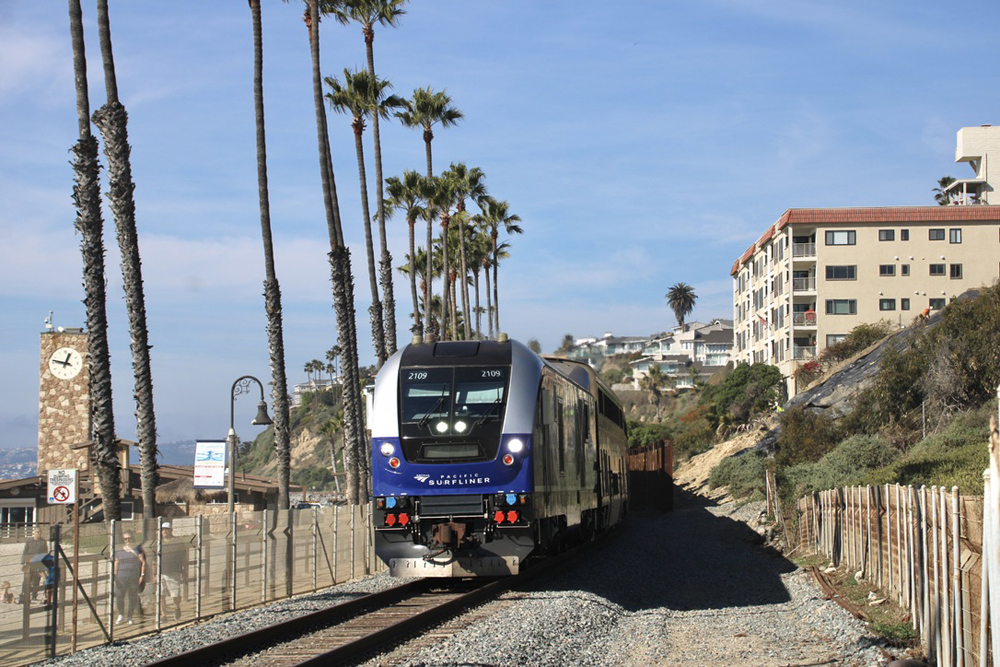
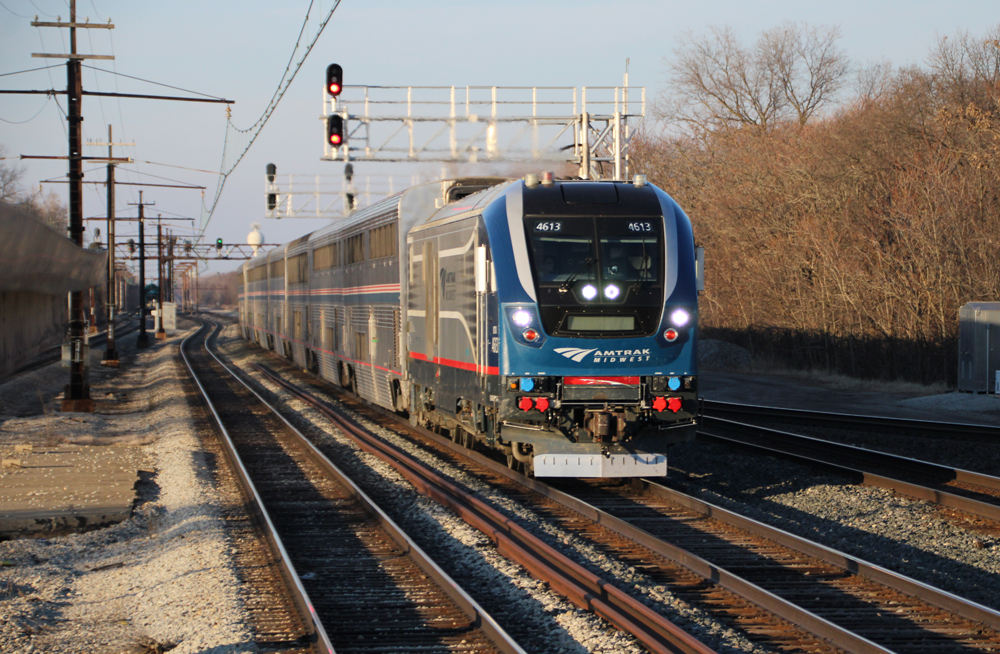
UP is a host railroad for all or part of 10 Amtrak routes: the long-distance Sunset Limited, Texas Eagle, Coast Starlight, and California Zephyr, and the state-supported Capitol Corridor, Pacific Surfliner, and San Joaquins in California; Missouri River Runner; Lincoln Service; and Amtrak Cascades. The railroad also is host to the Rocky Mountaineer cruise train in Colorado and Utah. NS is host toat least part of the long-distance Crescent, Lake Shore Limited, Cardinal, and Floridian, and state-supported routes including the Pere Marquette, Piedmont, Blue Water, Wolverine, Pennsylvanian, and Carolinian.
The merger proceedings could provide a venue for Amtrak to seek concessions as part of an STB decision or in exchange for merger support. The latter was the passenger operator’s course of action in the merger of Canadian Pacific and Kansas City Southern. It supported that merger in exchange for the new company’s commitment to passenger projects including a New Orleans-Baton Rouge passenger train and a Meridian, Miss.-Dallas section of the Crescent [see “Amtrak, Southern Rail Commission welcome news …,” Trains News Wire, March 15, 2023].
Similarly, Metra — which has objected to new contract terms imposed by Union Pacific for the commuter operator’s use of UP lines — could play a role in the STB approval process. It opposed the CPKC merger on the grounds it could have a negative effect on two Metra lines. The STB ultimately imposed a seven-year oversight period for that merger, and included a dispute resolution mechanism for issues regarding freight train interference for Metra trains. Metra had sought additional concessions, however [see “Metra, Chicago suburbs see few concerns addressed …,” News Wire, March 22, 2023]. It sued over the STB decision, although that suit was subsequently dropped.