SPRINGFIELD, Ill. — Chicago-area transit operations will face draconian cuts to service in the next fiscal year after Illinois legislators on Saturday passed a new state budget without addressing the $770 million shortfall for the Regional Transit Authority and its three operating agencies.
While the state Senate passed a transit bill, HB3438, that had been amended to address funding, the House adjourned without debating or voting on the proposal. While the legislature could still address funding during a special session in October or November, that will likely not be in time to avoid the planned 40% cuts in service and layoff of up to 3,000 jobs, Streetsblog Chicago reports.
RTA spokeswoman Tina Fassett Smith, in a series of social media posts, indicated that preparation on those cuts will now begin.
“Balancing regional interests is challenging,” she wrote, “but we are ready to continue our work to achieve consensus and deliver a solution. In the coming weeks, the RTA will work with the Service Boards on a regional budget that by law must only include funding we are confident the system will receive in 2026.”
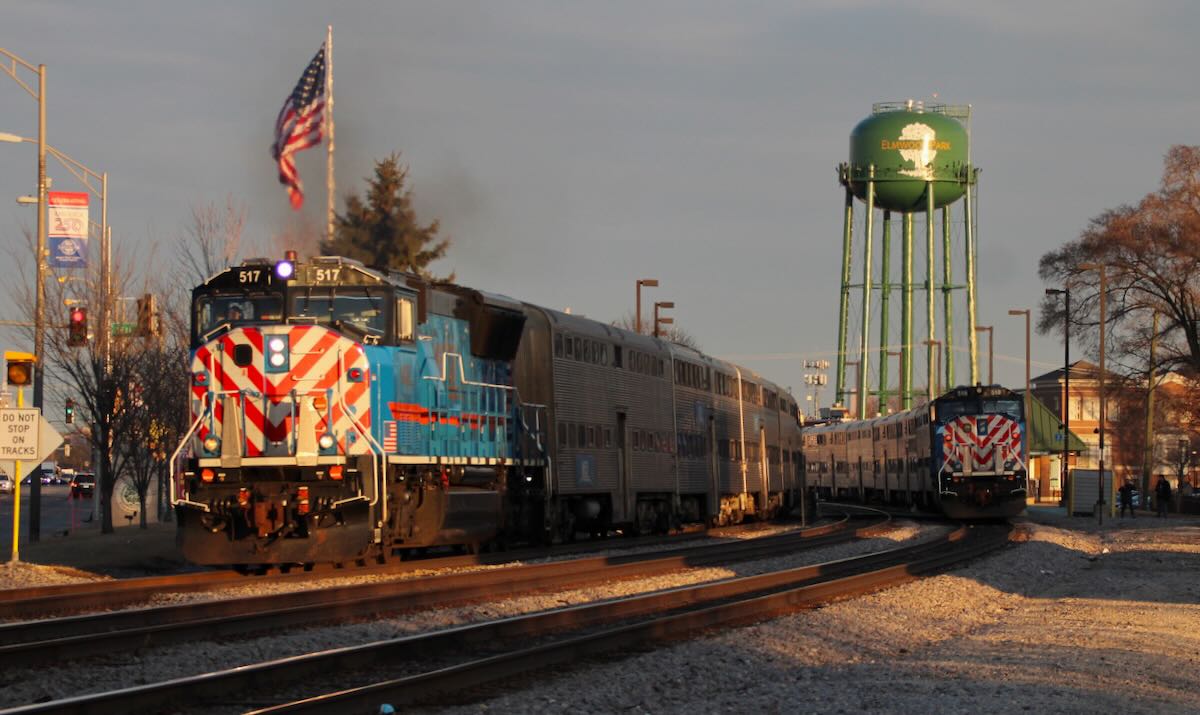
Earlier this year, the RTA outlined the constraints Metra, the Chicago Transit Authority, and Pace bus service would face under that funding. [See “Chicago transit agencies paint dire picture …,” News Wire, March 21, 2025]. For Metra, projections are that morning and late evening trains would be eliminated; trains would run hourly on weekdays and every two hours on weekends, and service on the Metra Electric’s seven-station Blue Island branch would eliminated. CTA rail service would be suspended on four of eight rail lines, with 50 stations closed or seeing drastically reduced service, while other lines would see frequencies cut by 10% to 25%.
Even if funding is ultimately restored, the RTA has warned that the impact of the cuts will be enduring. On lines Metra shares with freight railroads, cuts on lines shared with freight railroads could take up to five years to undo.
Reductions would require “rigorous public engagement and analysis before making any final decisions … which would include public hearings through the fall of the year with actual cuts being implemented throughout 2026,” the RTA said in its March release.
The shortfall has developed through a series of developments including reduced farebox recovery, reflecting lower ridership following work-at-home policies introduced during the COVID-19 pandemic; an end of federal funding to help offset those losses; and increasing costs. The problem is not unique to Chicago and Illinois; transit systems in the Philadelphia and Pittsburgh areas are among others facing major service reductions unless state legislators address budget deficits.
— This is a developing story. Follow Trains News Wire for more information as it becomes available.
Share this article