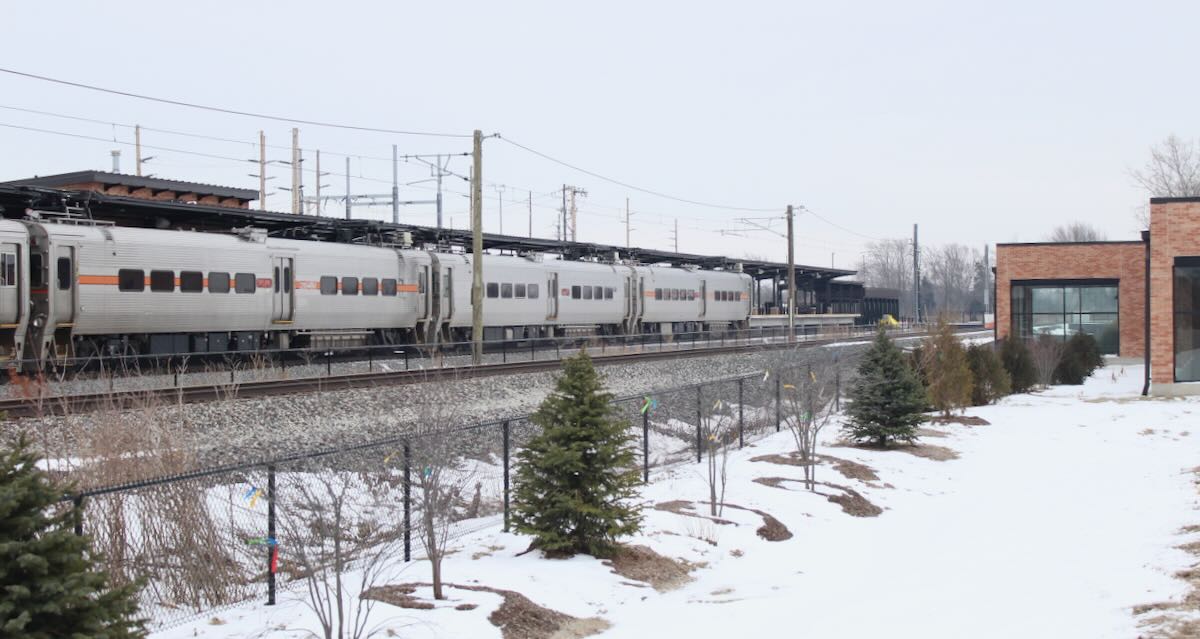


CHICAGO — Union Pacific is seeking to nearly double track access fees for Metra commuter trains on lines in the Chicago area, according to a federal lawsuit. The costs would more than double when other fees are included.
In an amended complaint filed Tuesday in a lawsuit filed earlier this year, Metra says it had been paying approximately $21 million a year to use UP’s tracks to operate its trains on three Chicago-area routes, the UP North, Northwest, and West lines.
But Metra says UP is now asking for more than $40.7 million annually just for use of the tracks, plus “substantial additional rental payments for properties necessary to operate the UP Lines, and performance incentive payments for performance metrics that Union Pacific is already obligated to meet.” That, Metra says, means that compensation “would more than double annually — perhaps much more than double.” (Emphasis in the original).
The incentive fees could be up to $11 million annually, Metra says. The filing does not specify the rental costs.
“Because Union Pacific is doing far less now following the transition of commuter rail services to Metra, this demanded increase of compensation would be pure profit to Union Pacific — funded by Metra riders and Chicago-area taxpayers.”
The suburban Daily Herald newspaper first reported the new filing.
Metra took over operation and equipment-maintenance responsibility for service on the UP routes as of May 16 — a move that Metra said also saw 782 employees move to Metra and leave the UP payroll [see “Metra assumes operation …,” Trains News Wire, May 19, 2025]. Shortly thereafter, UP said it had made a new offer to Metra regarding track access and would impose those fees as of July 1 [see “UP calls for Metra to accept …,” News Wire, May 22, 2025]. In a press release, UP called the new fees “fair, reasonable, and based on market value,” and also said it “cannot continue subsidizing Metra’s operations.”
Metra, in the court filing, says UP is “insisting on commercially unreasonable pricing and terms that it knows Metra cannot accept.” It also disputed UP’s claim that it has been subsidizing the commuter operation, saying UP profits from the Metra contract.
The freight railroad has also called for the Surface Transportation Board to dismiss Metra’s current request for trackage rights — a request stemming from the fee dispute — saying the regulatory body lacks jurisdiction because Metra is an intrastate, rather than interstate, operation [see “Union Pacific asks regulators to dismiss …,” News Wire, May 23, 2025].
The Metra court filing also claims that UP has been “inconsistent” about the possibility that its trains might not be allowed to operate. While UP’s statement asking Metra to accept the latest terms said operations would continue, the commuter operator says that, in a deposition for the STB case, a Union Pacific official said Metra would not be allowed to operate on the UP lines without a written agreement.
“Metra believes that its fees paid to Union Pacific moving forward must account for the fact that Union Pacific will be providing fewer services to Metra on an ongoing basis, due to Union Pacific having discontinued providing the commuter rail services,” the complaint says. Among other points, it also says that Metra has paid more than $1.25 billion toward UP capital improvements over its history — and that the current dispute could constitute a breach of contract that would require UP to pay that amount.
The suit asks that the court provide an injunction preventing UP from barring Metra trains from its lines, since such a move would constitute “irreparable harm;” that it declare Metra is not obligated to pay the new rates posted by UP, and that the status quo fees should remain in place until a new agreement is reached, among other requests.
Share this article