

FORT WORTH, Texas — Persistent, strong winds have caused congestion on BNSF Railway’s Southern Transcon, the railroad said in a customer service advisory on Thursday, March 20.
“The BNSF network is currently experiencing challenges, particularly on the Southern Transcon, due to excessive and extended winds exceeding 75 mph that have impacted service consistency, alongside unexpected service incidents,” the advisory said.
BNSF said it has taken several steps to restore network fluidity as quickly as possible, including crew management, tapping its locomotive surge fleet, and leveraging artificial intelligence “wind technology to proactively manage crew availability and optimize network operations.”
“Our teams continue to support improving fluidity through the ports complex and into our Los Angeles (Hobart) facility,” BNSF said. “Our San Bernardino intermodal facility is seeing improved on-time outbound performance and the Chicago area is anticipated to improve as we move into the weekend.”
In a LinkedIn post last year, BNSF Chief Operating Officer Matthew Igoe explained how strong winds can affect operations.
“Traditionally, trains affected by high winds must significantly reduce speed or stop entirely until the high wind warning passes. But as technology has further developed, we’ve become more prepared and more efficient when high winds pick up,” he wrote.
Bulk trains can operate without restrictions in high winds. But other trains must proceed to a siding where they can stop to allow other trains to pass and wait for the winds to subside.
“Each member of our train crews is equipped with a tablet, and we’ve implemented a BNSF wind detector app for crews to monitor wind speed,” Igoe said. “We also use an automated system, MaxWind, which determines at what speed a train can safely continue traveling during the wind event based on the surface area, shape and weight of the shipment as well as wind conditions.”
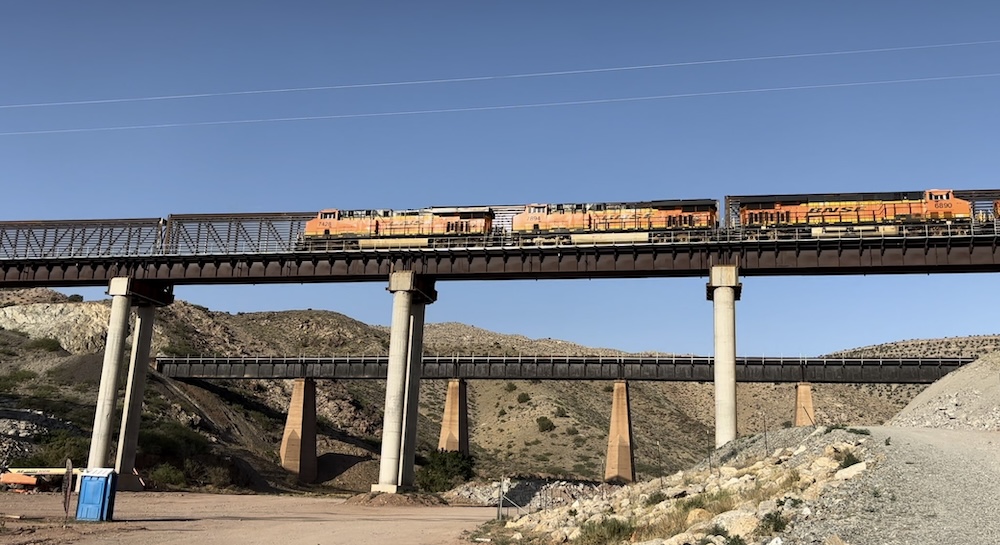
BNSF also has installed wind fences in areas prone to strong gusts.
Share this article