Railroads & Locomotives Heritage Rail Preservation Milwaukee Road boxcab electrics turn 100 this month NEWSWIRE

Milwaukee Road boxcab electrics turn 100 this month NEWSWIRE

By Steve Glischinski | November 12, 2015

| Last updated on August 1, 2025


Get a weekly roundup of the industry news you need.

Email Newsletter

Get the newest photos, videos, stories, and more from Trains.com brands. Sign-up for email today!

BOXCAB
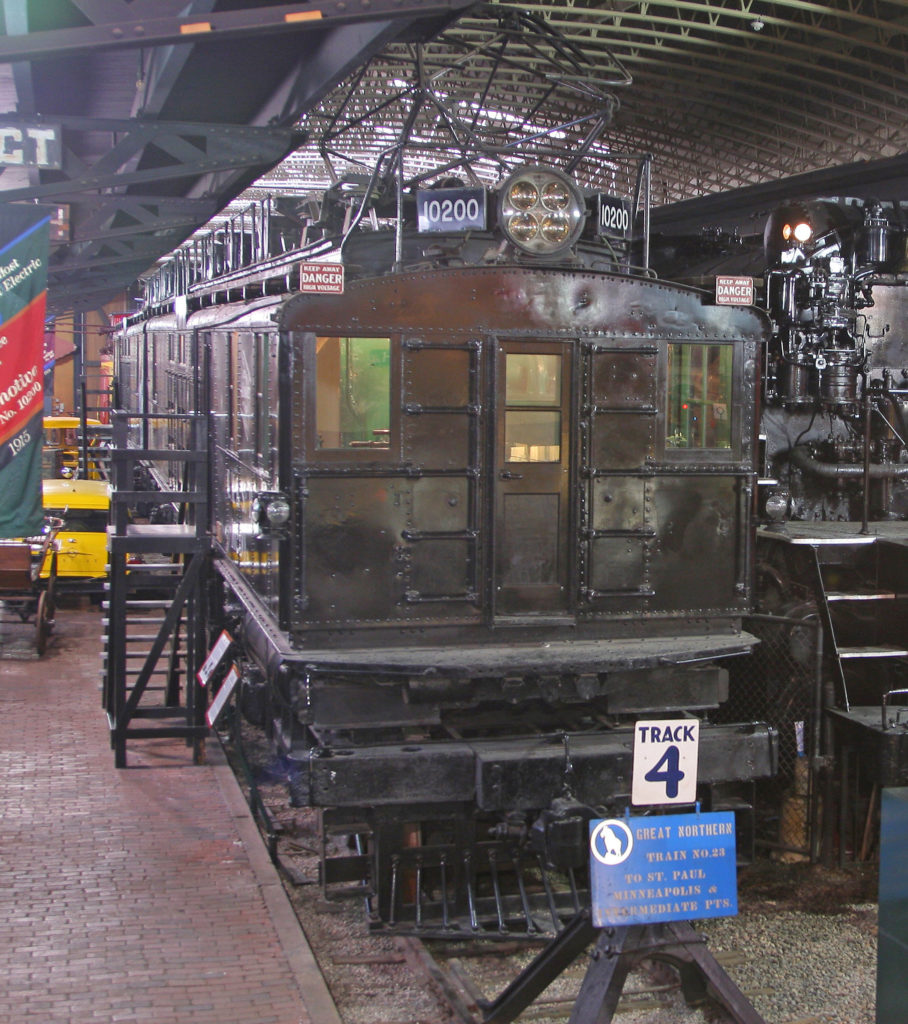
Milwaukee Road No. 10200 on static display at the Lake Superior Railroad Museum in Duluth, Minn.
Steve Glischinski
DULUTH, Minn. — The legendary Milwaukee Road Pacific Extension saw its last trains in 1980, and the end of its electrification in 1974. But the first electric locomotives used on the “Electric Way Through the Mountains” as Richard Steinheimer called the Milwaukee electrification in his classic 1980 book, are still around 100 years later.

Milwaukee Road “boxcab” electrics 10200A and 10200B, or simply 10200, are displayed indoors at the Lake Superior Railroad Museum in Duluth, and the museum is reminding visitors that the locomotives are 100 years old in 2015. They made their first trips in November 1915.

BOXCABDelivery
Milwaukee Road No. 10200 on public display in Butte, Mont., soon after its delivery from General Electric in 1915.
Lake Superior Railroad Museum collection
Between 1915 and 1920, the Milwaukee Road electrified much of its Pacific Extension across five mountain ranges in Montana, Idaho, and Washington. The railroad eventually electrified 660 miles of main line and for years, it was the longest electric railroad main line in the world. Though the transmission wires and infrastructure were expensive, the payback for the Milwaukee Road was that electrics could pull longer and heavier trains over the mountain divisions faster than steam-powered trains. In 1914, General Electric offered to design a 3,000-volt direct current electrification system for the railroad, supply electrical equipment, and supply locomotives under one large contract, a deal the Milwaukee Road accepted. No. 10200 was the first of 42 electric locomotives delivered to the railroad by GE.

When constructed, No. 10200 was the most powerful electric locomotive in the world, continuously generating 3,000 hp. It was the first electric to operate on direct current at voltages as high as 3,000 volts, and the first to use regenerative braking – when the locomotive traveled down grades, the electric motor was used as an electric generator, feeding electricity back into the supply system. As built, Milwaukee Road’s boxcab electrics were composed of two half-units semi-permanently coupled back-to-back, and numbered as one unit with “A” and “B” suffixes. The railroad assigned 30 locomotives to freight service, classified as EF-1 and numbered 10200-10229. The remaining 12 locomotives were assigned to passenger service as class EP-1, and numbered 10100-10111.

No. 10200 is 112 feet long and weighs 288 tons. GE delivered it to the Milwaukee Road in Chicago on Sept. 25, 1915. Crowds estimated at over 10,000 people viewed the engine at Union Station. The Milwaukee even stuck the locomotive on the head end of the its Olympian passenger train and posed it on its Chicago – Milwaukee main line at Forest Glen, Ill. — far from the electrification. When No. 10200 traveled to its new operating territory, more than 60,000 people came see the new locomotive at stations along the way.

No. 10200 entered service in early November 2015 at Piedmont, Mont., in helper service. The electrification’s formal beginning was Nov. 30, 1915 when No. 10200 pulled a special train out of the yard at Three Forks, Mont. over the Continental Divide to Butte, Mont. 

BOXCABDuluth
Burlington Northern crews deliver No. 10200 to the Lake Superior Railroad Museum in Duluth, Minn., after a cosmetic restoration, Oct. 29, 1977. 
Lake Superior Railroad Museum collection
The last electrically powered road train on the Milwaukee Road operated on June 15, 1974. Incredibly, No. 10200, by then numbered E50A and B, was still on the Milwaukee Road’s roster at the time, having turned in an amazing 59 years of service. Milwaukee Road President Worthington Smith recognized the historic significance of the E50 and directed it be stored until a permanent indoor home could be found for it. In August 1977 it was moved to the railroad’s Milwaukee Shops where bodywork was done, and it was cosmetically restored as close as possible to its original appearance. It was delivered to the museum on Oct. 29, 1977, and officially donated on Nov. 11, 1977; just short of 62 years to the day it first pulled that first train out of Three Forks.

One other Milwaukee Road boxcab survives. No. E57B, originally 10211B, is on display at Harlowton, Mont. once a division point and the eastern limit of electrification on the Rocky Mountain Division.