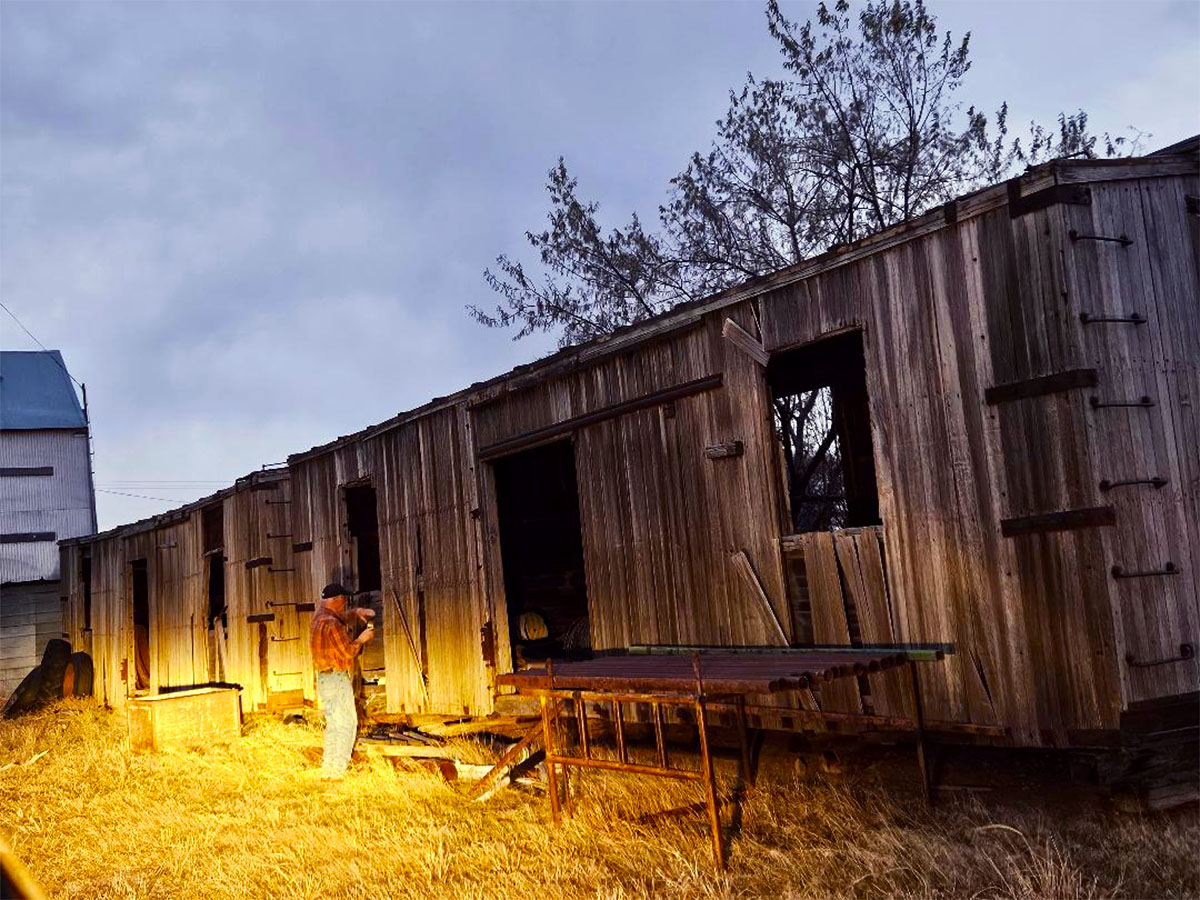
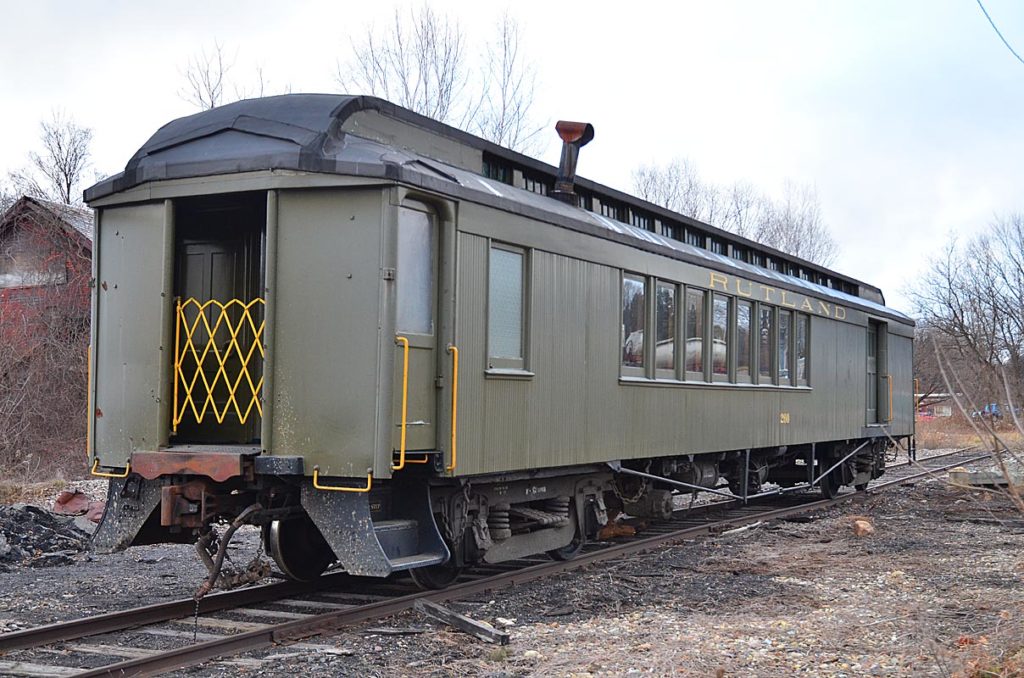
Car No. 260, donated to the museum by the Vermont Rail System, was built in 1891 for the Rutland Railroad as all-wood coach No. 700 by Wagner Car Co. In 1920, the Rutland’s shops rebuilt it as a combination baggage-coach and placed the wood carbody on a steel frame. Steel-frame trucks were also added.
The car served the Rutland Railway until the railroad’s abandonment in 1961. It was sold to the new Green Mountain Railroad in 1963, and was used on that road’s passenger and special trains until 2009. Rutland No. 260 retains its original interior, complete with coal stove and varnished wood walls.
No. 260 was taken off its home rails in December 2013, at North Bennington, Vt., and loaded onto a long trailer for movement by highway to Connecticut. Weather-related delays caused by the harsh winter of 2013-2014 delayed its arrival until March 27. Unloaded, reassembled, and back on live rails again, No. 260 was moved to the museum’s shop in Connecticut, where it was carefully covered for storage.
The museum plans to store the car under cover when it is not in use on excursions.
Tower car W-14 has an elevating platform 10 feet wide and 55 feet long, raising 6 feet above the regular car height of 13 feet, 6 inches for workers to access catenary. It was constructed from a 60-foot flatcar of unknown origin.
The car started life in 1941 as a Budd-built stainless steel coach, part of New York Central’s Empire State Express. Originally No. 2570, the car was named Reuben E. Fenton. In 1966, the car was rebuilt by the Central’s North White Plains, N.Y., shop into a 108-seat commuter coach, No. 1710. During the Penn Central and Conrail era, the car carried No. 2110 and became part of Metro-North’s roster at the agency’s 1983 inception. It was retired from passenger service in the late 1980s.
For more on the museum, go to www.rmne.org.