Last week, the council, which includes members represented by Transport Workers Union of America, UNITE-HERE, and the Transportation Communications Union/International Association of Machinists and Aerospace Workers, held a protest in front of Amtrak headquarters in the nation’s capital. Union members were criticized the railroad for its recent cuts to dining car service and demanded a sit down meeting with President and CEO Richard Anderson.
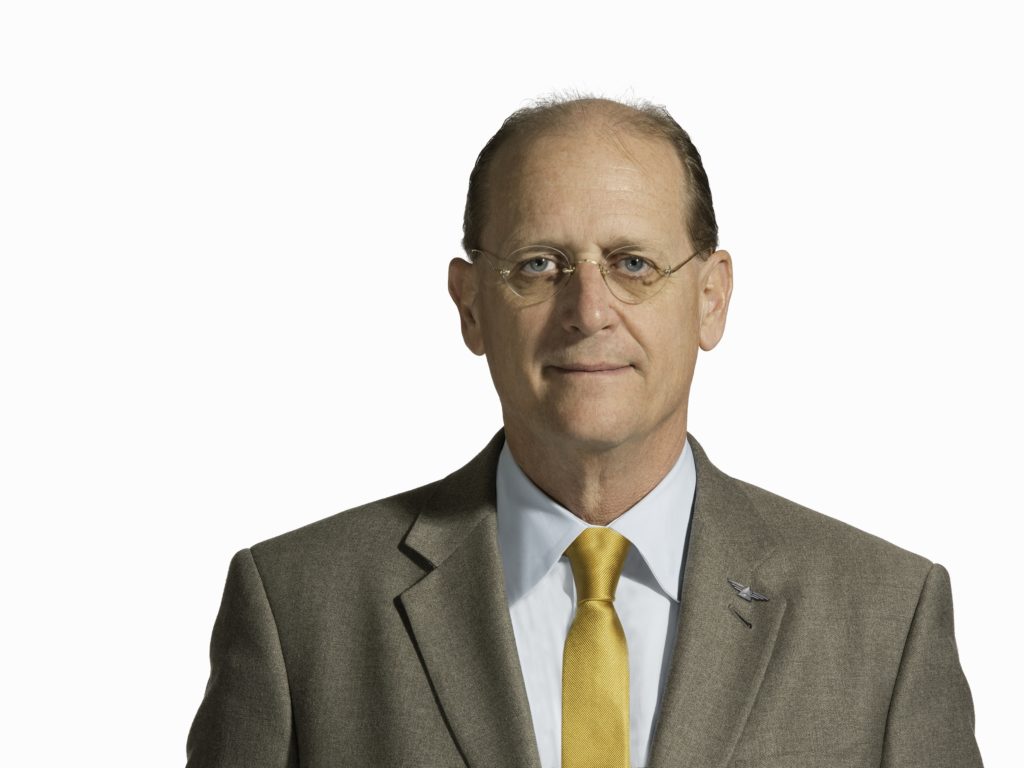
Anderson briefly spoke to union officials during the July 18 “press conference” and suggested the labor representatives set up a meeting with other railroad executives. But union bosses tell Trains News Wire that is not enough. Donald Boyd of UNITE-HERE Local 43 says the union coalition plans to “turn up the heat” on the current Amtrak administration until they get a sit down meeting with Anderson and are currently planning similar events in Chicago and New York, he says.
Amtrak officials saw the exchange in Washington between Anderson and the union officials differently. In a statement to Trains News Wire, Amtrak spokesperson Christina Leeds says, “Richard Anderson had a chance to briefly speak to employees and labor representatives during their assembly outside our office building. He looks forward to working with them as we upgrade the quality of our food and create a more contemporary style of service on some of our long distance trains.”
Earlier this summer, Amtrak replaced traditional dining car service on the Lake Shore Limited and Capitol Limited with pre-boxed lunches marketed as “contemporary and fresh dining choices.” Amtrak officials say the cold lunches “cater to the needs of a new generation of travelers, improving efficiency and costs.”
The change has eliminated some jobs for on-board service employees, but Amtrak officials are quick to note that the employees impacted by the change have been able to find new positions within the company.
But union officials say that statement does not offer a full picture of how employees have been impacted. John Feltz, a vice president for the TWU, and Amy Griffin, president of TWU Local 416 and an Amtrak service attendant for more than 30 years, say the changes have upended some employees’ lives. Feltz says in one instance, an Amtrak chef who previously worked on the East Coast now has to work out of New Orleans, meaning he is spending more time away from his family getting to and from his assignment.
“Anderson says that no one is going to lose their jobs but he’s 100 percent wrong about that,” Feltz says.
“These are not just jobs,” Griffin says. “They are eliminating people’s careers. These are people who have served Amtrak anywhere from one year to 40 years.”
Feltz says he’s particularly frustrated because Amtrak management gave the union little warning of the impending change. Feltz says Amtrak officials informed the union in mid-April that they were considering a change to on board service. Union officials said they wanted to get the feedback of members before the railroad announced the change, but within hours the company had gone forward with its plan to replace hot meals with boxed-meals.
Since the change, Amtrak has announced that they are adding one hot meal to the Capitol and Lake Shore menus, but Griffin says it’s a far cry from what was offered in the past.
“These are not the hot meals passengers are used to,” she says. “These are microwaved.”
Griffin and Feltz say they worry that the plan to do away with traditional dining service on two of the East Coast’s long distance train is the first step in an effort to eliminate more amenities aboard Amtrak’s long-distance trains.
“They’re trying to run this railroad like an airline,” Feltz says in a reference to Anderson’s previous job as CEO of Delta Airlines.