
Home » Federal regulators ask Class I railroads to explain service issues amid network slowdown NEWSWIRE

Federal regulators ask Class I railroads to explain service issues amid network slowdown NEWSWIRE

By Bill Stephens | March 20, 2018

| Last updated on November 3, 2020


Get a weekly roundup of the industry news you need.

STBlogo
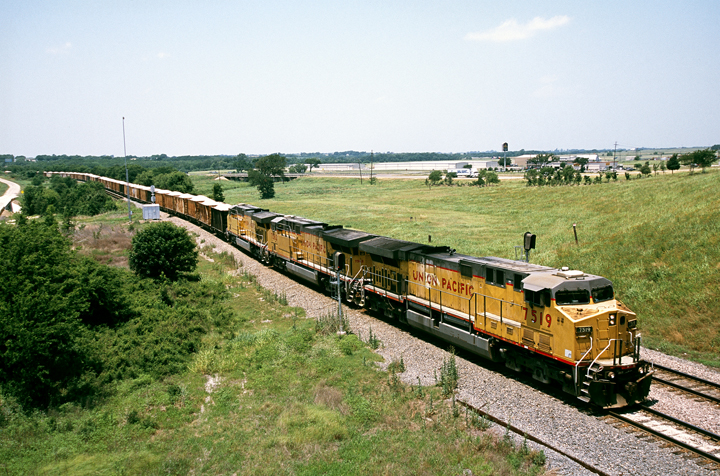
WASHINGTON — Federal regulators are becoming increasingly concerned about the widespread deterioration in railroad service metrics amid complaints from shipper groups, who say the industry is mired in a slowdown that is delaying shipments of goods from automobiles to grain.

The Surface Transportation Board has asked Class I railroad chief executives to explain service problems, whether their railroads have the resources to meet current demand, and to outline their operational outlooks for the rest of the year.

The board’s request to the seven CEOs, made public on Monday, came in response to letters from grain shippers and automakers that painted a picture of slow and erratic service across North America.

Randall Gordon, president of the National Grain and Feed Association, blames the service problems on the industry’s cost-cutting in pursuit of lower operating ratios that please Wall Street and investors.

“This, in turn, has resulted in the systemic shedding of resources by Class I carriers, including locomotives and crews, that has degraded service to unacceptable levels, and resulted in virtually non-existent surge capacity to meet rail customers’ needs,” Gordon wrote to the STB.

The grain association’s letter detailed service problems on BNSF Railway, Canadian National, Canadian Pacific, CSX Transportation, Norfolk Southern, and Union Pacific. But the trade group said the problems on BNSF paled in comparison to those on the other big Class I systems.

The Alliance of Automobile Manufacturers said some assembly plants have run out of room to store new cars due to railroad delays in pulling loaded auto racks and delivering empties.

“Alliance members have met with each of the Class I railroads to discern the causes of these service declines and what remedial actions the railroads are taking. Those meetings have largely been unsatisfactory,” Dave Schwietert, the association’s executive vice president, wrote to the STB. “The responses have varied widely, including IT issues, network changes, weather, and positive train control implementation. Alliance members have not perceived even the semblance of a concerted plan or timeframe to restore effective car service for transporting finished vehicles.”

The STB noted that service appears to be deteriorating at most of the Class I systems, based on declines in average train speed and climbing average terminal dwell times. Other key metrics, such as the number of freight cars online and the number of cars that have not moved in 48 hours, are trending in the wrong direction, the STB wrote.

BNSF’s average train speed and terminal dwell are currently better than the average for the first quarter of 2017, while Kansas City Southern’s metrics are in line with the first-quarter average, according to data reported to the Association of American Railroads.

CN’s average train speed is down 15 percent, and dwell is up 28 percent, compared to the first-quarter average of 2017, as it struggles to handle a surge in traffic in western Canada.

Norfolk Southern’s average train speed is down 16 percent, while dwell is up 17 percent, compared to the first-quarter average from a year ago.

UP’s train speed down 5 percent, and dwell up 6 percent, over the same period.

Canadian Pacific and CSX both report their performance figures independently.

CP’s dwell was up 7 percent when comparing the latest figures reported to the STB with the same week a year ago, while train speed was down 5 percent.

Terminal dwell and average train speeds are both improved compared to last year at CSX, which experienced service problems in 2017 amid the rapid rollout of Precision Scheduled Railroading.

The board’s letters to the Class I chief executives are available online.

You can read the National Grain and Feed Association complaint online.

And the Automakers Alliance letter is available online.

Share this article