

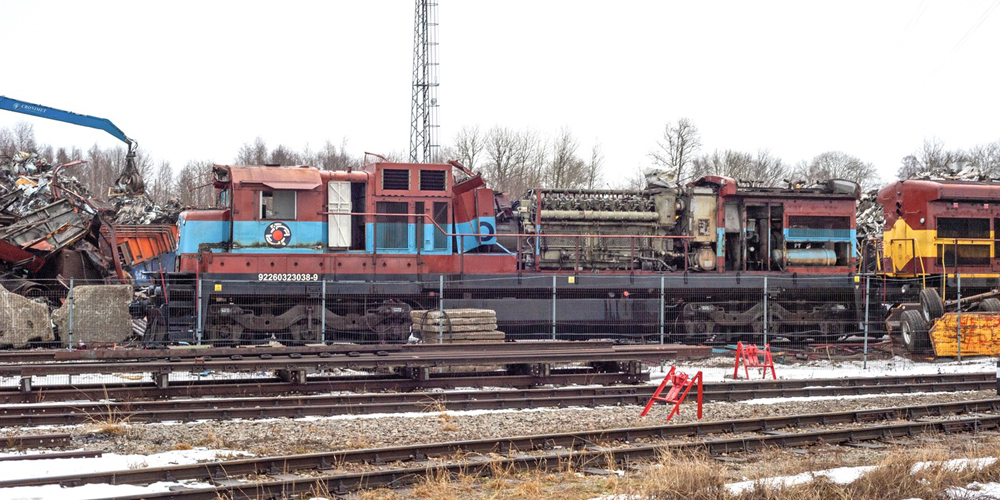
A fleet of GE-built former Union Pacific and Conrail locomotives exported to Estonia two decades ago are now mostly out of service, with many cut up for scrap earlier this year. A handful remain in service, and some, heavily rebuilt, remain in use in Estonia and have been exported to nearby Finland for use there.
Replacements for Soviet diesels
After Estonia regained its independence from the Soviet Union in 1991, the new government set about changing the economy and privatized multiple companies. Restructuring the railways took a decade, but in 2001 the government sold two-thirds of national rail freight company Eesti Raudtee to new company Baltic Rail Services, which counted investors from Britain and Estonia alongside Railroad Development Corp. and Rail World Inc. from the U.S.
The new owners decided to replace the old Soviet-built diesel fleet with GE locomotives modernized and converted to the Soviet 5-foot (1,520 millimeter) gauge. These included 58 ex-UP C36-7 locomotives (originally Missouri Pacific, all built in 1985), reclassified as C36-7i units, plus 19 ex-Conrail C30-7A locomotives, built 1979-81, rebuilt as C30-7i units. The locomotives were delivered to Estonia in 2002-03 in the maroon and gold color scheme used by Wisconsin Central; former WC CEO Ed Burkardt was by this time running Rail World Inc.
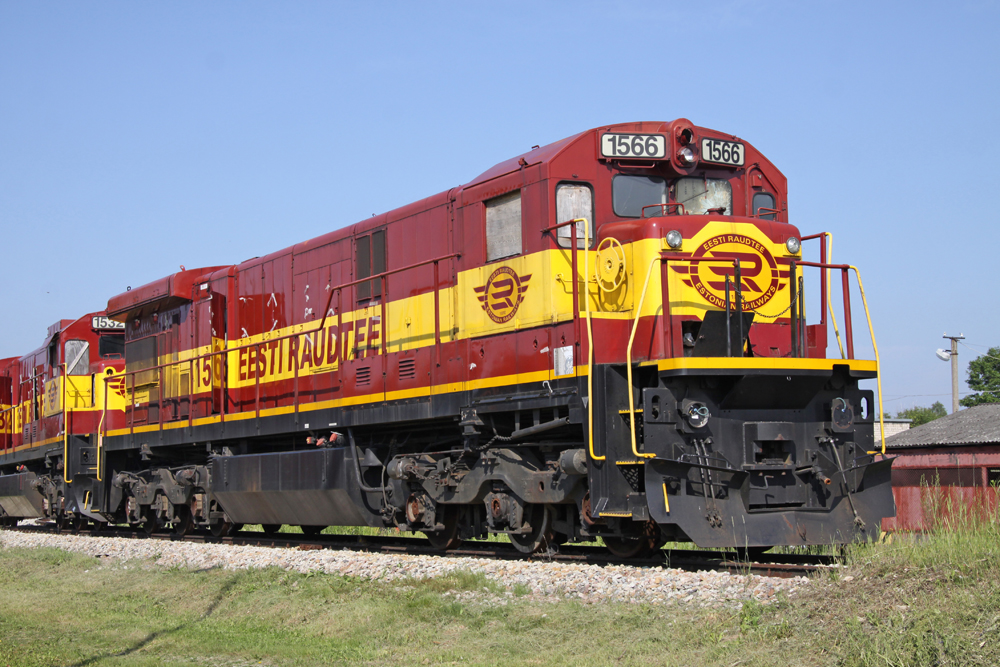
Private ownership of Eesti Raudtee didn’t last long, as relations with the government didn’t work out, and within a few years the company was sold back to the Estonian Government and renamed EVR Cargo. It was renamed again to Operail in 2018. The C36-7i locomotives remained the main motive power for heavy freight traffic, which was heavily dependent on oil exported from neighbouring Russia, although a small number were retired and scrapped around a decade ago. The C30-7i locos were mostly out of use within a few years and stored at shops in Tallinn and Tapa.
Rebuilding and gas conversion
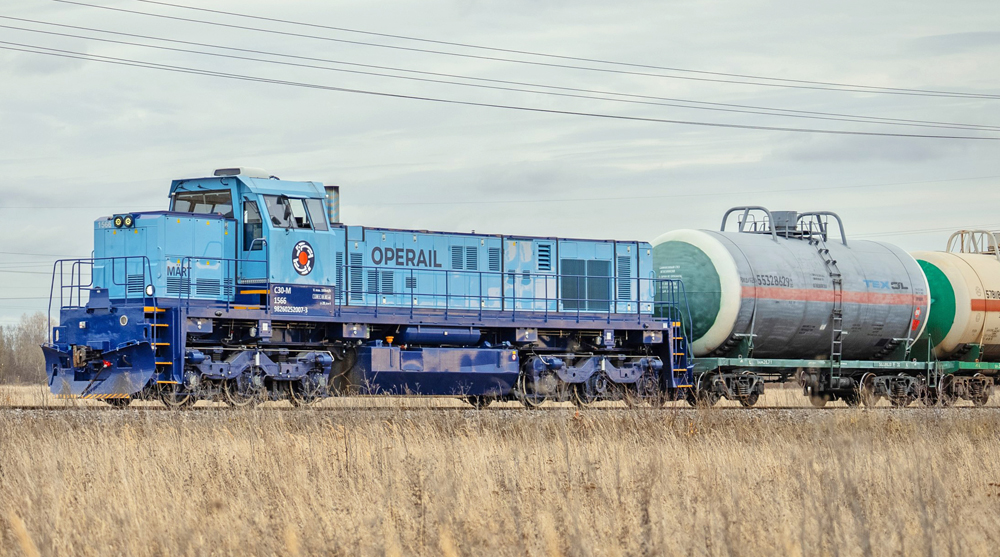
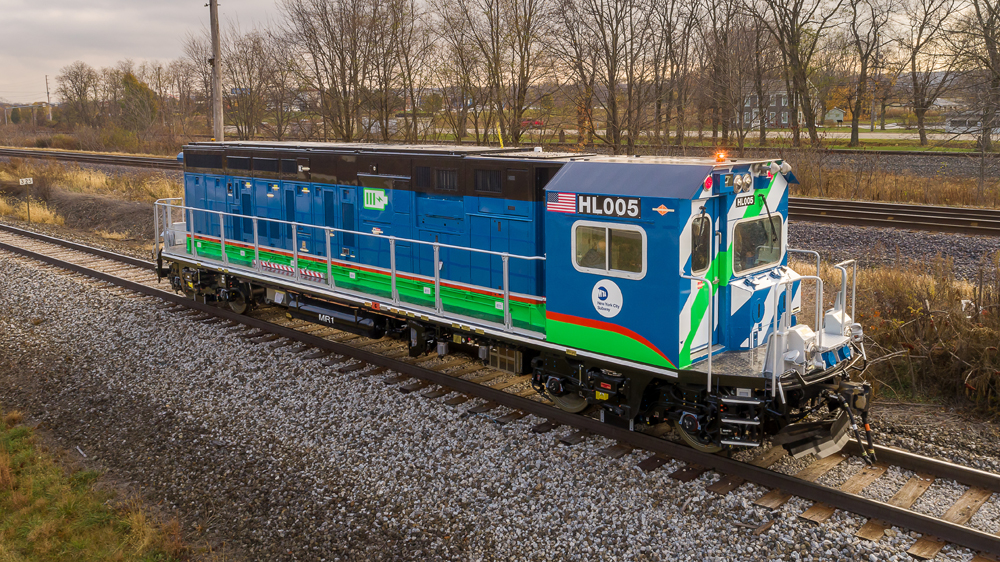
Operail looked at alternative uses for some of the sidelined locos. In 2016, Operail worked with a specialist locomotive remanufacturer in the Czech Republic to dramatically rebuild a C30-7i with a low-height hood and a Caterpillar 3512CHD engine, essentially using the original frame and trucks of the original loco and adding everything else new to create the C30-M. Twelve C30-M locos have been rebuilt, one of which is in use in Ukraine, leased to a company there before the Russian invasion in 2022. Three were sent to Finland in 2021, where Operail had created a new start-up operation.
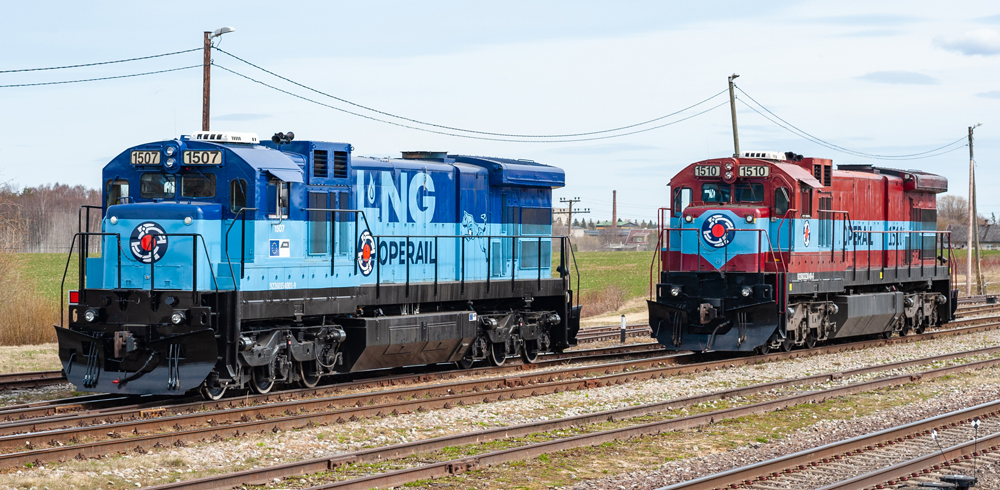
In 2019-2021, Operail experimented with a conversion of a C36-7i to operate from liquefied natural gas [see “Project in Estonia will convert …,” Trains News Wire, Feb. 10, 2021]. That unit, Operail No. 1507, originally UP No. 9036, is now stored at the railway’s Tapa shops.
Freight traffic disappears, locos sidelined
The Russian invasion of Ukraine in 2022 led to an almost overnight decline in rail freight in Estonia, as almost all rail freight traffic, whether handled by Operail or other companies, was transit traffic mostly oil or fertilizer products from Russia or Belarus to ports in Estonia. This traffic was almost immediately banned by international sanctions against Russia and the policy of the Estonian government to minimize trade with Russia.
With most revenue traffic missing, Operail stopped using most of the remaining C36-7i locos in March 2022, and in November 2023 tendered 32 of the fleet for scrap; 3arly this year the locos were moved to scrap yards and cut up. While twelve of the C30-7i locos will likely survive in their rebuilt C30-M configuration, the remaining locos are also likely to end up being scrapped, as many have been stripped of components for the C30-M rebuild program.
To try and assist its finances, Operail sold its new business in Finland, including the three converted C30-M locomotives, as well as some freight equipment, while laying off employees in Estonia. By 2023, Operail was reporting revenues of barely $2 million a month, and the government decided it would re-privatize the company, which still has ten C36-7i units and eight C30-M locomotives on its roster. That auction process started in June 2024.
Share this article