

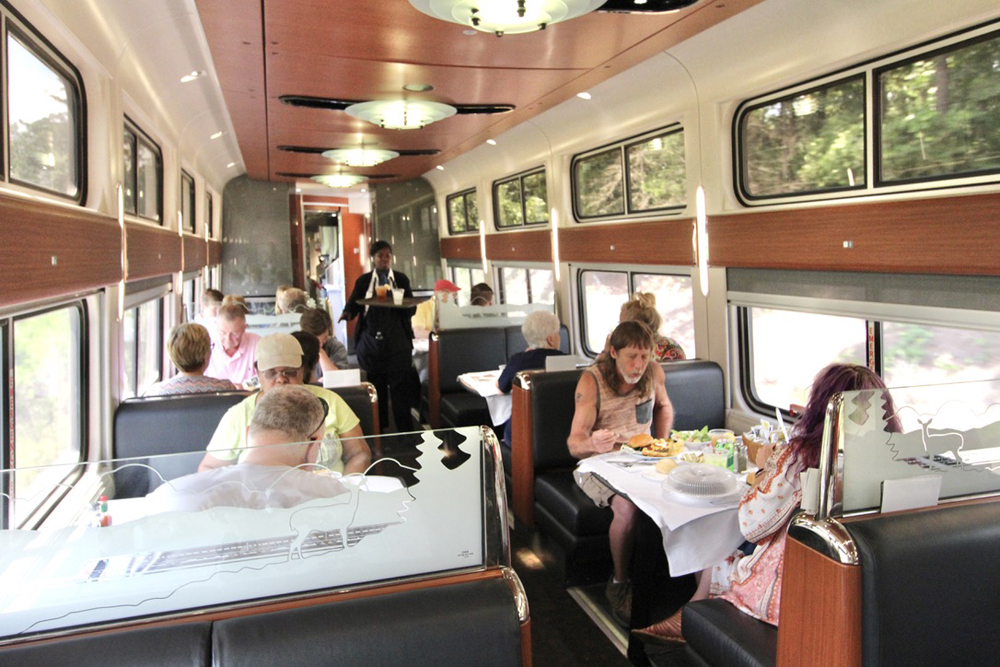
WASHINGTON — Beginning June 1, Amtrak plans to restore a dining car to the New York-New Orleans Crescent. However, initially only sleeping car passengers will be allowed to use it, and the food served will continue to be reheated “flexible” meals.
As reported in the Rail Passengers Association’s weekly Hotline email, Amtrak senior leadership confirmed those details, adding, “the railroad is in the process of identifying, hiring, and training additional on-board service crew so that within a few months, or perhaps next year, coach passengers on the Crescent might be able to enjoy a dining car meal.”
At Amtrak’s public board of directors meeting last December, president Roger Harris said the diner’s return was planned for 2024 [see “Amtrak officials outline new goals …,” Trains News Wire, Dec. 2, 2023]. Harris told News Wire after the session that a number of the sidelined cars — Amtrak has 25 Viewliner II diners on the active roster — needed mechanical work to fix water leaks and repair kitchen flooring.
Several participants in that impromptu post-meeting discussion suggested that management use the diner’s relaunch to develop a food service model for the train that would again permit both coach and sleeping car passengers to access the car.
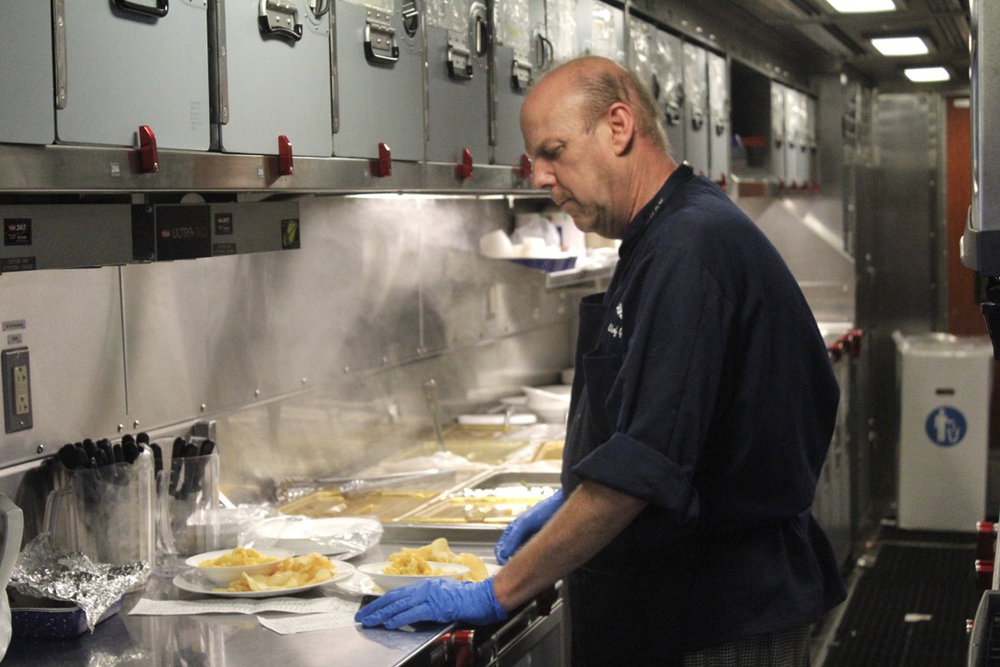
Amtrak had offered full breakfasts, lunches, and dinners on all diner-equipped trains to every traveler from its inception until current management began downgrading food service on all eastern long-distance service except Auto Train in 2018. Most of the Crescent’s dining-car servers and cooks were furloughed with pre-packaged meals, for sleeping-car passengers, only substituted in October 2019. The diner itself was dropped in 2020 during the early stages of the COVID-19 pandemic.
Since then, the train’s Amfleet II café car has served snack-bar food to coach passengers and meals-in-a-bowl to sleeping car guests, who are given the option to eat in their rooms or in the same half of the cafe car used by coach travelers. Onboard service and operating crews occupy half of the cafe exclusively, leaving the small “public” section on the other side of the snack bar as the only lounge space for passengers from the train’s three coaches and two sleepers.
News Wire experienced the same crew occupancy situation on the Cardinal, which like the Crescent, has only a café car and no diner. On a Cardinal trip last December, coach passengers were not allowed to even enter the cafe to buy food for an hour during prime lunch and dinner meal periods while Amtrak employees occupied one half of the car. Amtrak did not respond when News Wire asked then who was in charge of managing Cardinal employees, which had been the topic of several complaints at the board meeting.
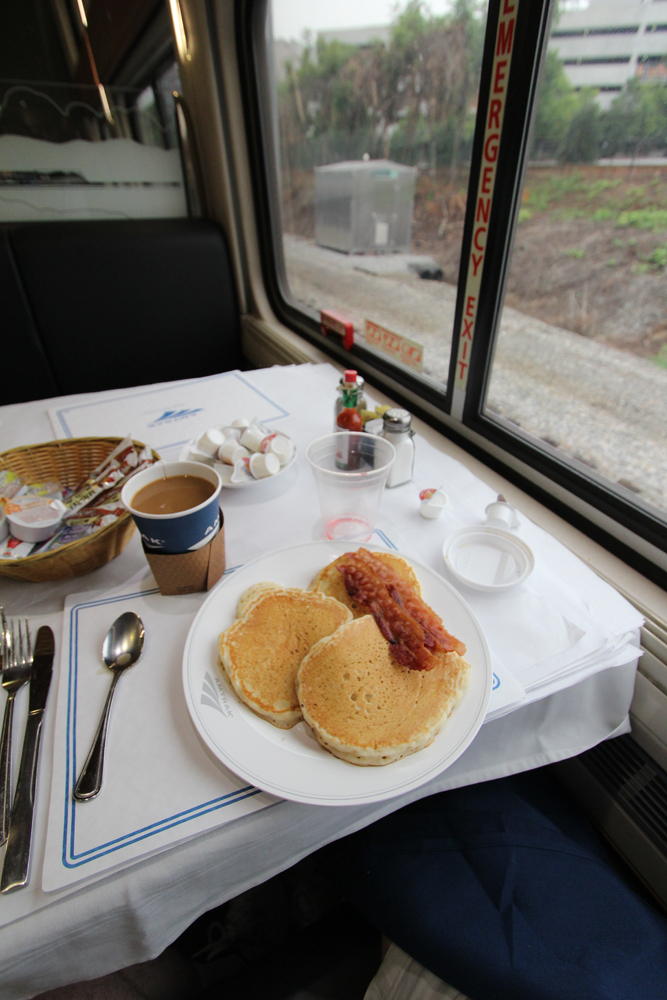
Adding a Viewliner dining car to the Crescent can alleviate the space shortfall, but only achieve its full impact if coach passengers are also allowed to enjoy the car’s benefits. Unlike the other eastern overnighters that have diners — the Silver Meteor, Silver Star, and Lake Shore Limited—this train attracts substantial additional patronage on a daytime segment: Atlanta-Birmingham-New Orleans. The train’s schedule offers four meal periods in each direction where customers with money to spend are not likely to opt for expensive room accommodations. Besides, sleeping car passengers have already paid.
Instead, the company is poised to implement the minimal staffing service sequence used on the Meteor and Star following the pandemic: start with flexible meals, introduce “traditional dining,” then allow a limited number of coach passengers in at meal periods. Management and employees should have enough evidence by now to realize that this model has resulted in underutilization and revenue generating for one of Amtrak’s most unique assets: the dual-windowed Viewliner diner.
Traditional menus and serving protocols are well established on the New York-Florida trains, so it shouldn’t take too long to implement them by expanding staff on the Crescent. Such a move provides an opportunity to substantially enhance the onboard experience on a now-downtrodden, once-proud long-distance train with plenty of unrealized revenue and ridership growth potential.
Former Amtrak and Southern Railway president W. Graham Claytor, Jr., who rode the train regularly, would expect nothing less.
Share this article