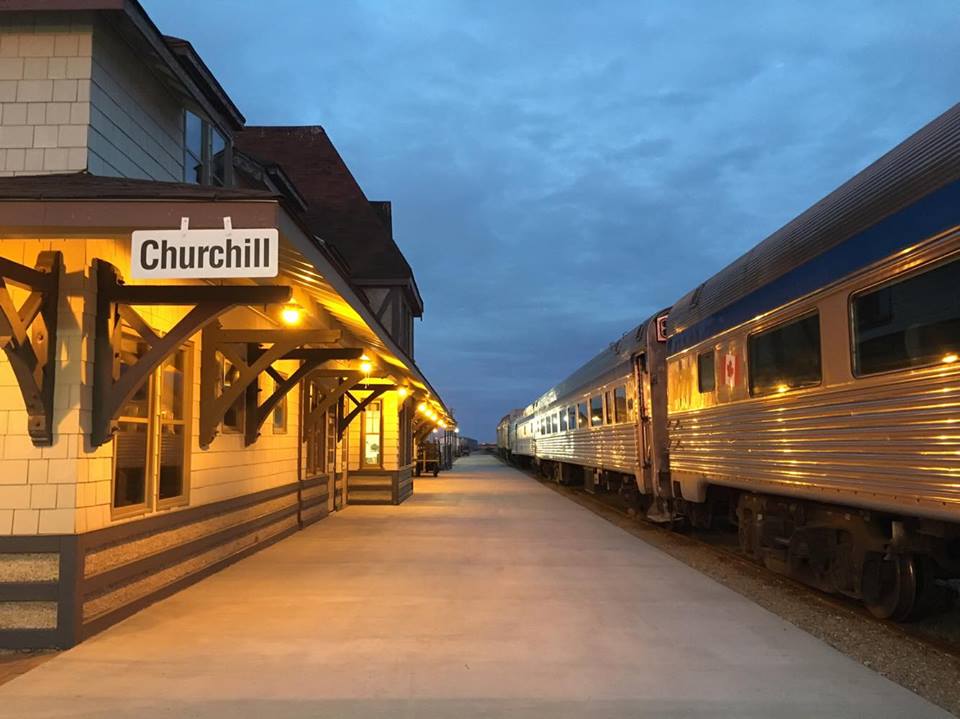
CHURCHILL, Manitoba — The Canadian and Manitoba governments will provide up to C$60 million to complete work on the Hudson Bay Railway, the only year-round way of reaching the remote Port of Churchill, as well as funding the start of redevelopment of the port itself, officials announced today (Friday, Feb. 23).
Churchill is Canada’s only deep-water Arctic port connected to the North American surface transportation network, and as such, the provincial government says it is essential for supply chains, local food security, and regional connectivity.
Funding will go to the Arctic Gateway Group, the partnership of 41 First Nation and Bayline communities that owns the railway. Arctic Gateway was created in the wake of a 2018 commitment by the federal government to see the railway repaired and maintained [see “Canadian government says it will help restore …,” Trains News Wire, Sept. 12, 2017]. The federal and provincial government made a further commitment in 2022, and over the last two construction seasons, work has seen more than 166,000 ties replaced, 2 million feet (610 kilometers) of track resurfaced, new ballast installed on 23% of the route between The Pas, Man., and Churchill, and more than 10 bridges upgraded or repaired.
“The Port of Churchill makes Manitoba a maritime province, and both the port and the rail line offer so much potential when it comes to international trade, energy exports and building out the supply chains that create good jobs in Northern Manitoba,” Manitoba Premier Wab Kinew said in a press release. “Our team fought to repair the rail line because we understand it is the backbone of the northern economy and a vital connection to food and fuel for the families that live there. We’re proud to partner with the Government of Canada to make this important investment.”
The CBC reports the federal and provincial governments will each contribute $30 million to the project, and that Churchill Mayor Mike Spence stressed the significance of the local ownership of the railway.
“Far too long communities like Bayline communities have been neglected,” Spence said, according to the CBC. “We are now strategically owners. There’s no other model like it in Canada.”
The railway had previously belonged to OmniTrax, which purchased the line from Canadian National in 1997.
Share this article