

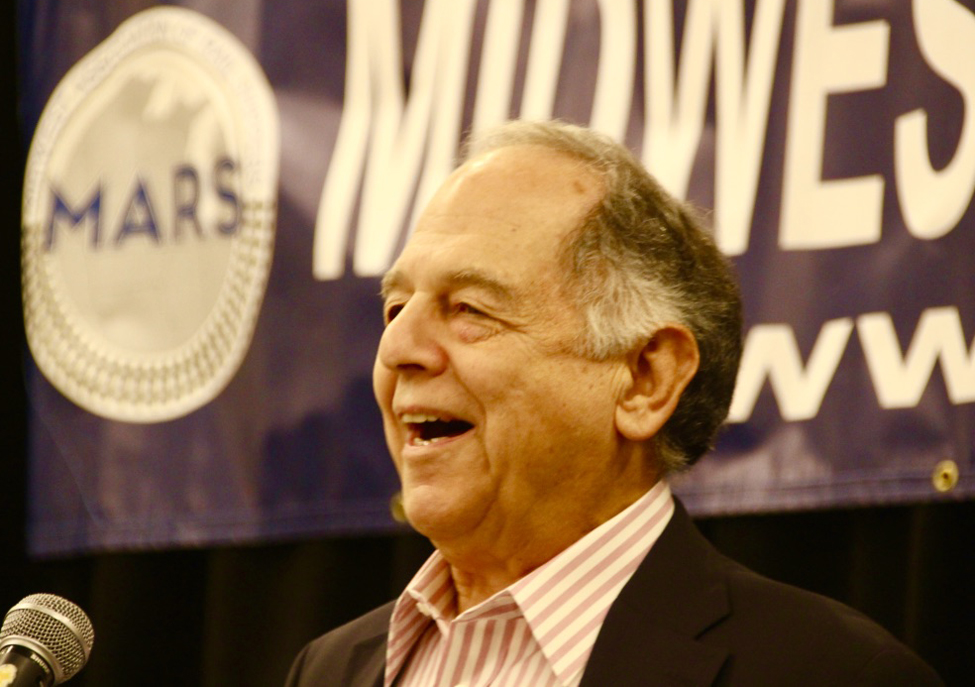
CHICAGO — Martin J. Oberman isn’t ready to retire just yet. That much was clear from his impassioned talk at a recent Northwestern University Transportation Center gathering.
Sharing the bill with the group’s annual holiday luncheon keynote speaker, veteran transportation analyst Anthony B. Hatch, the Surface Transportation Board chairman announced his decision in November to not re-up for another term [see “STB chairman Oberman will not seek reappointment,” Trains News Wire, Nov. 16, 2023].
But he acknowledged to Trains News Wire after the event that he expects to step down “this spring,” adding, “I don’t have a date. I have a lot of things I have to finish and want to get done — can’t talk about what those are. Once they’re done, I’m ready to go.”
What Oberman did reveal were his views about management at the Class I railroads, Wall Street’s potential negative influence, and the railroads’ common carrier obligations.
On railroad workforce reduction woes: “Every shipper I visited told me, ‘Of course we didn’t lay anybody off [during the pandemic]. We knew the business was coming back; we’ve got a lot of value in our employees and we would lose all that.’ Only the railroads didn’t discover this until last year? It’s a 200-year-old industry.
“I constantly hear CEOs preaching to me that the government shouldn’t interfere and let the market decide. I agree: the market is telling you you’re not paying enough. Everyone has a price if you need more workers.”
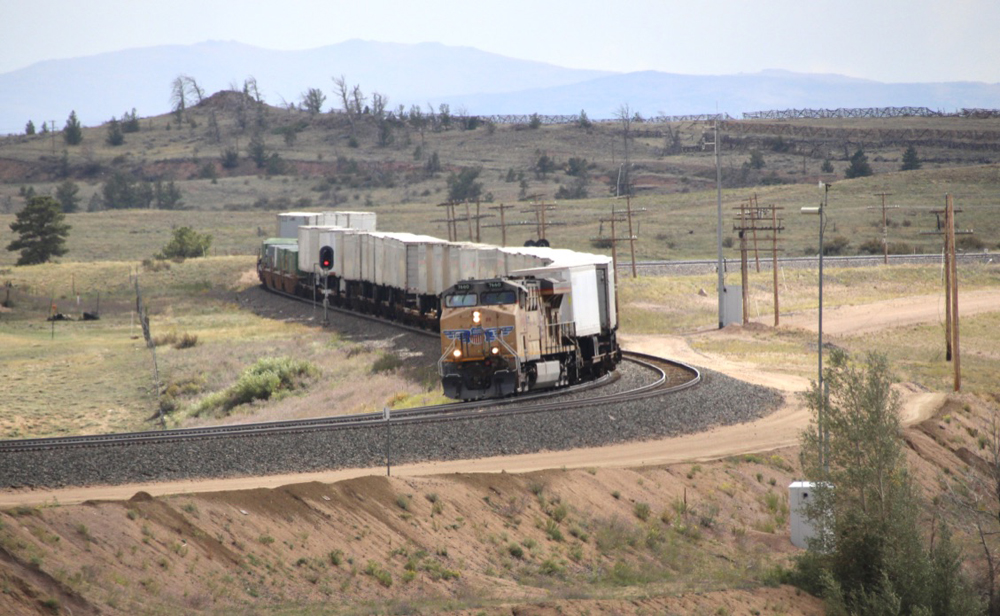
On investment in capacity to support long-term growth: “I think five of the six Class Is have really turned around at the C-suite level in terms of their philosophy. But Union Pacific furloughed 94 mechanics two weeks after Jim Vena took over on Aug. 14 and 100 carmen a couple of weeks after that. In October, they furloughed over 1,300 maintenance-of-way workers and then cut administrative staff by 5%. This was in direct contrast to the other Class Is. The UP carries 28% of freight in this country; if they are unable to recover as the so-called industrial recession recedes, I have a concern for the economy.”
Oberman also is worried that the stockholder-driven corporate “legal structure” which allowed management to conduct massive layoffs “is still in place. Will [a hedge fund] say, ‘enough of this pivot to growth — enough spending money for the long term. We want short-term returns?’ I’m very concerned about UP.”
On the railroads’ common-carrier status: The STB chairman cited an early 20th Century ruling by Supreme Court Associate Justice Rufus W. Peckham, who said that as common carriers, railroads “primarily owe duties to the public of a higher nature even than earning large dividends to their stockholders. The business railroads do is of a public nature, closely affecting nearly all classes in the community.”
And so, Oberman said, “The courts have affirmed that railroads are held to a much higher standard than other businesses because of this common-carrier obligation. Right now this is the only tool the STB really has. Shippers have to live with the railroads day in and day out; they can reasonably and accurately fear retaliation — despite all the railroads’ denials — so they don’t bring a lot of cases.”
He noted two recent cases, including one where settlement talks are pending after the railroad first tried to have it dismissed [see “BNSF and Powder River Basin coal producer settle …,” News Wire, Nov 9, 2023]. “The Board has made clear that there is a common carrier obligation that is meaningful,” Oberman said.
He also revealed that habits he acquired while serving on the Chicago City Council from 1975 to 1987 die hard.
“When a shipper calls me up says they have a unit train that has been stuck in a yard somewhere for three days, I get on the phone with the railroad CEO and ask, ‘Can you move that train?’ I call the shipper back and tell him, ‘I think it is going to happen.’ It’s a natural reaction from an alderman who gets a call from a constituent about that pothole in front of his house that hasn’t been fixed for weeks. But it drives my staff crazy.”
Share this article