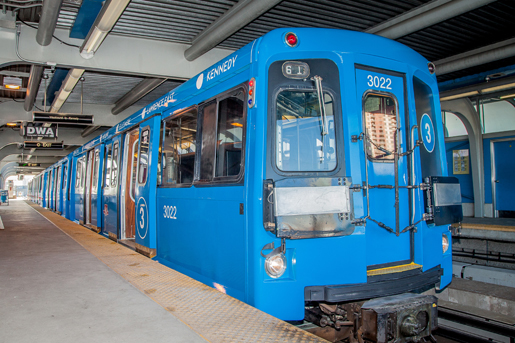
TORONTO — Loose or broken bolts that held the electrified power rail in place were the cause of the derailment that led to the permanent closure of the Scarborough Rapid Transit line, according to a Toronto Transit Commission report.
The CBC reports the initial investigation into the July derailment found “failed reaction rail anchor bolts” led to the derailment. While the rail line underwent visual inspection every 72 hours, the flawed bolts would not have been detected because they were inside concrete, a TTC official told the agency’s board during a Tuesday meeting.
Five people were taken to the hospital for treatment of injuries following the July 24 incident, which saw the last car in a four-car trainset detach from the rest of the train and derail [see “Five require treatment …,” Trains News Wire, July 24, 2023]. The derailment led the TTC to prematurely shut down the line, which had already been scheduled for closure in November. Chrisanne Finnerty, the TTC’s director of commission services, said at the Tuesday meeting that addressing the problem would have required testing and inspection that would have extended beyond the planned closure date.
The TTC will share its findings with systems in Vancouver and Detroit that also use reaction rail systems, she said.
The Scarborough RT line was an orphan in the TTC system in terms of technology, using lighter-weight equipment than other Toronto subway lines. Its scheduled closure reflected plans to extend an existing subway line to serve the route, but that work is not scheduled to be completed until 2030. In the interim, the line is being replaced by expanded bus service.
Share this article