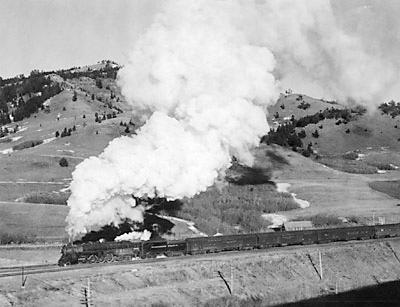
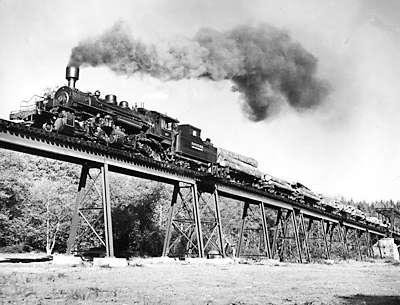
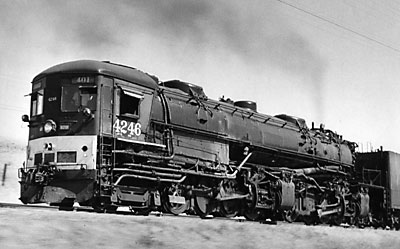
Freight locomotives in passenger service were the exception to the rules. They required passenger cars that were self-contained, the use of separate head-end power generator cars, or some understanding passengers. However, they often offered the best value for the railroads using them who may not have wanted to invest scarce capital in dedicated passenger power for occasional (or even unwanted) passenger operations. In some instances, the use of freight power was a simple decision due to the availability of power-generating cars.
The notion of head-end or hotel power for passenger cars is largely a modern concept. Upon its creation in 1971, all of Amtrak’s equipment was steam heated and cooled and used axle generators for onboard power. It was only with the arrival of the first General Electric P30CH diesels in 1975 did the nation’s passenger carrier begin to move into the realm of locomotive-generated head-end power technologies.
Alaska Railroad
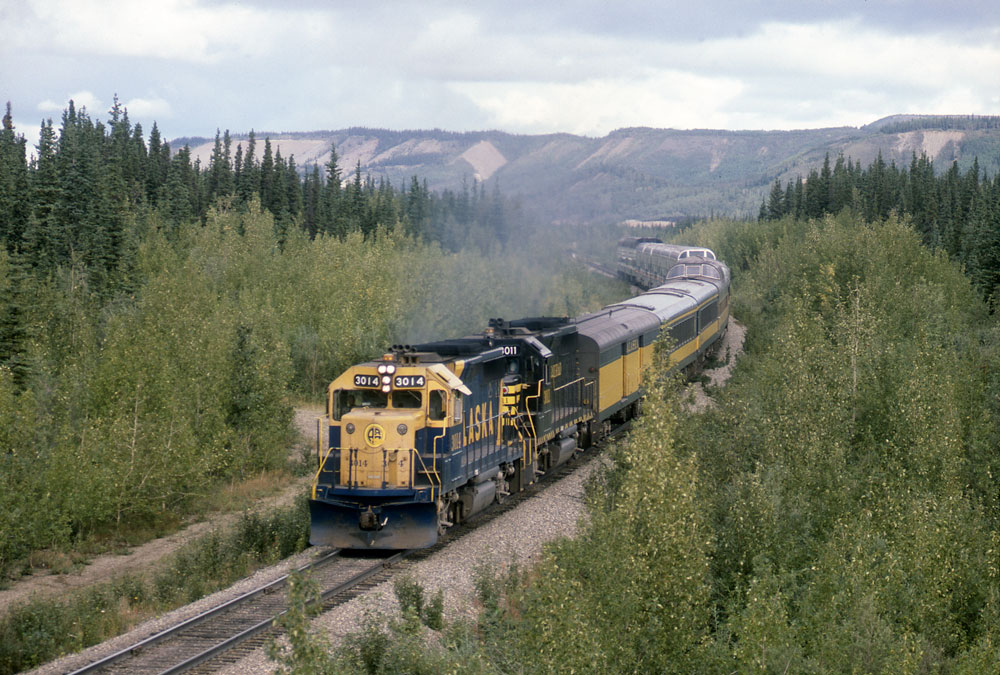
The 49th state’s own railroad has a long history of operating passenger trains with traditional freight locomotive models. One of the earliest examples is its RF1A locomotives, four-axle cowl units rebuilt from six-axle Army surplus Alco RSD1 units. By the 1990s, the road was hauling passenger trains with its most modern power: EMD GP40-2s and GP49s (coincidence?). By this time, coaches required head-end power be supplied and the railroad accomplished this with separate generator cars. Finally, beginning in 1999, the Alaska Railroad acquired 28 new EMD SD70MAC locomotives, 12 of which were later retrofitted to provide HEP for passenger service.
White Pass & Yukon Route
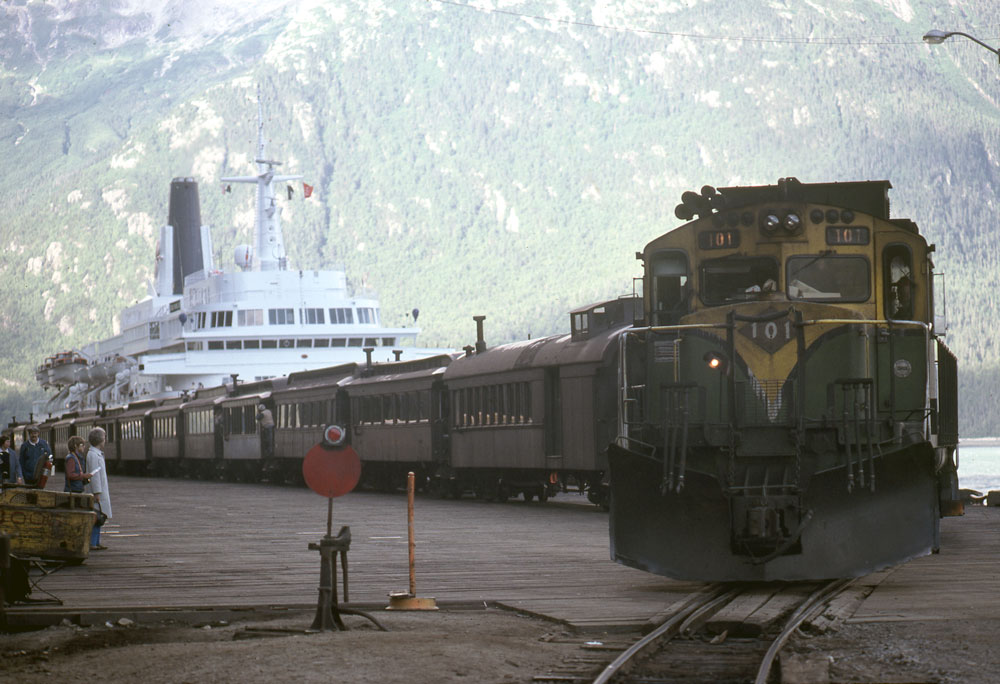
Throughout its modern history, the White Pass & Yukon Route has flirted with passenger service. Even before the freight traffic ended in 1982, the road hauled passenger trains catering to tourists with its regular 3-foot-gauge diesel power. When it reopened in 1988 as a tourist hauler, it used the same General Electric- and Montreal-built diesels on its passenger trains. Those units included the 90-series “Shovelnose” units; 100-series, six-axle Alcos; and Montreal-built 114, a lone remaining wide-nose unit set for delivery when freight operations ended. (Other units from that order ended up on an industrial railroad in Plaster City, Calif.)
Tex-Mex Express
The Texas-Mexican railroad operated the Tex-Mex Express in the late 1980s, usually powered by the road’s newest EMD GP38-2, No. 867. When it wasn’t available, the road would substitute one of its other two examples of the same model. The train was a Friday-Saturday-Sunday passenger service beginning Jan. 31, 1986, between Laredo and Corpus Christi, Texas. (Amtrak left Laredo in 1981.) The train operated seasonally in spring and summer, until 1989.
Soo’s U.P. mixed
One of the best-kept train-riding secrets of the 1980s was a Soo Line mixed train accommodations. The trains operated in Michigan’s Upper Peninsula, the U.P., connecting Sault Ste. Marine with Neenah and Rhinelander, Wis., and used whatever freight power Soo had handy: GP9s, GP38-2s, SD40-2s. Passengers were accommodated in the caboose, one per trip. It was a vestige of predecessor Duluth, South Shore & Atlantic passenger operations. Service ended Sept. 19, 1986. “When Soo had sought to abandon the service a couple of years before, public outcry deflected ICC permission to quit,” wrote Michigan railroad authority Ron Cady in the October 1987 issue of Trains. “The second time, Soo asked quietly … and got it.”
Long Island GP38-2s
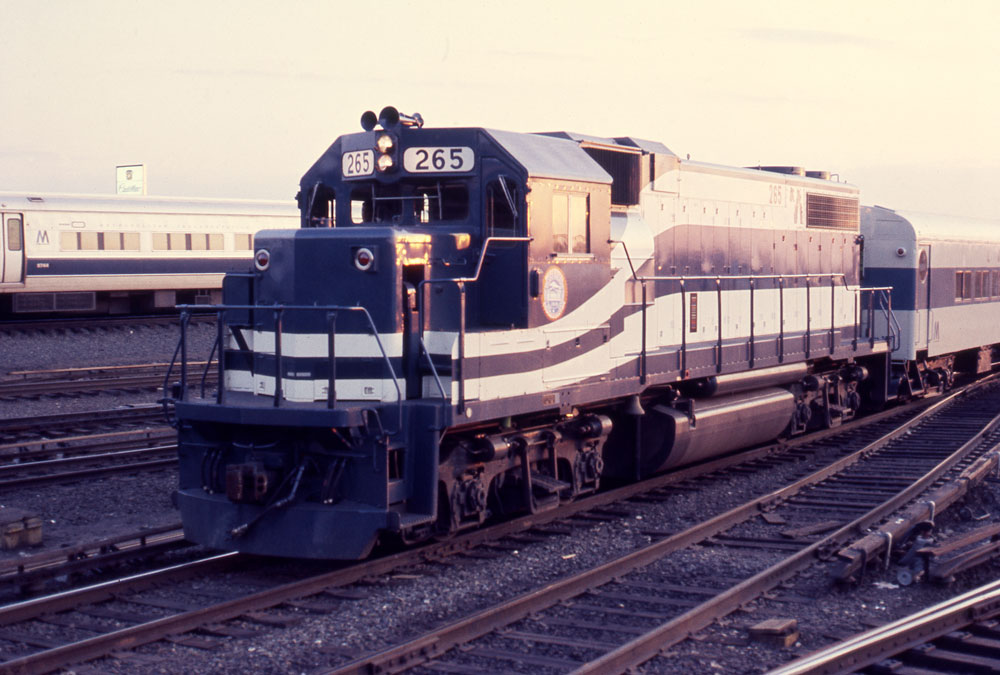
Long Island Rail Road operated 28 EMD GP38-2 units in freight and passenger service. Built 1976-1977, these freight units were paired with head end power cab cars rebuilt from Alco FA and EMD F units. (Notably, this was the last operation to use Alco carbody units, albeit without their original prime movers, in daily use in North America.) Delivery of the EMD DE30ACs beginning in 1998 spelled the end of the GP38-2s in revenue passenger service. Four LIRR GP38-2s, Nos. 261, 268, 271, and 272, even went to work for New York & Atlantic with freight operations spun off in 1997.
Rio Grande Ski Train
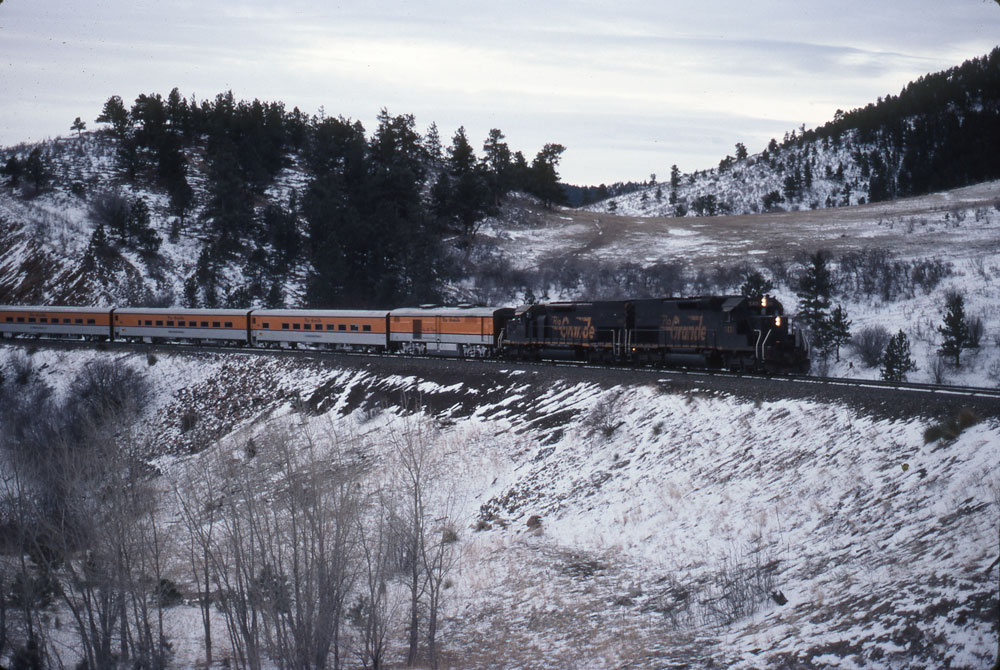
The Denver & Rio Grande Western Ski Train started operation before Christmas 1947. The railroad continued to evolve the service alongside its regular passenger operations. In 1983, when the Rio Grande dropped its fabled Rio Grande Zephyr, the Ski Train soldiered on. By the late 1980s, it was operating with a pair of iconic “speed-lettered” Rio Grande SD40T-2 “Tunnel Motor” diesels and a HEP generator car. The train continued operation after the 1989 merger with Southern Pacific and 1996 merger with Union Pacific. Later, under Anschutz Co. auspices, it acquired proper passenger power: three former Amtrak F40PHs repainted in a Rio Grande-inspired gold, black, and silver. It was discontinued in 2009, but later revived as the Winter Park Express by Amtrak in 2017.
CSX Santa Train
Throughout its run under the beloved Clinchfield Railroad, the Santa Train managed to operate with (former) passenger power. This included the road’s own EMD FP7 No. 200, retained after the end of scheduled passenger service in 1954. By the 1990s, however, the train operated with whatever freight power CSX Transportation had available. This included new GE AC4400CWs. In the same era, CSX operated its business train, which provided equipment for the Santa Train, with units selected from its freight pool. So, the train was self-contained with its own power source. But in the early 2000s, CSX acquired a set of former Amtrak F40PHs, which found use on the Santa Train as well as the executive fleet.
High Iron Travel ‘Explorers’
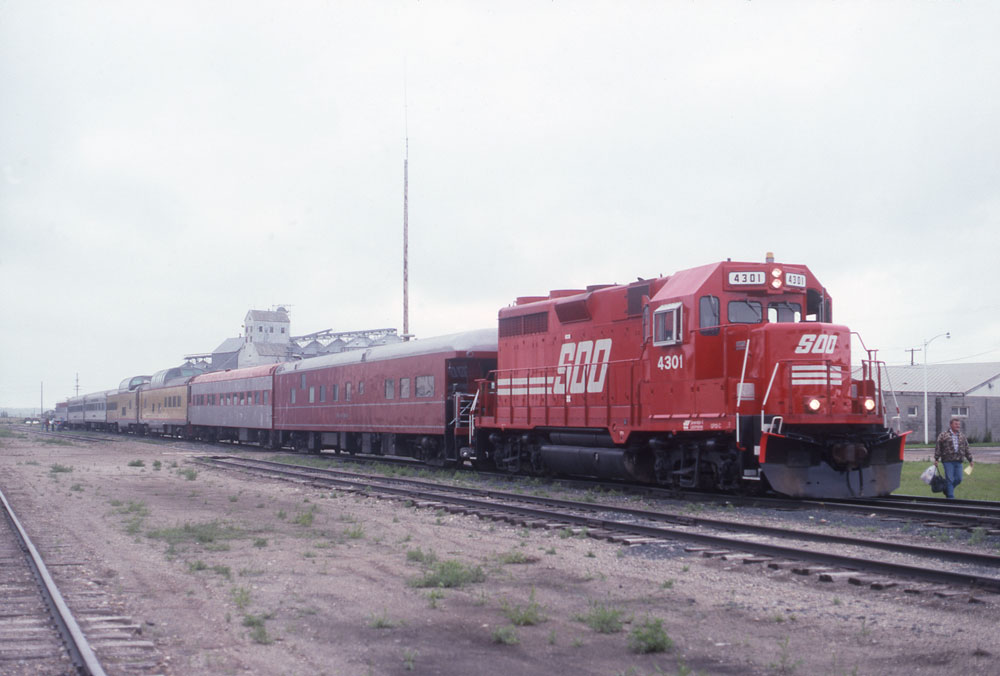
In the late 1980s and 1990s, High Iron Travel operated a recurring multi-day “Explorers” excursion for mileage collectors. The trains consisted of various private cars, many of which were self contained. Thus, some trips would operate with freight power, such as on Wisconsin Central in 1990 (EMD SDL39), Soo Line in 1991 (Caterpillar-powered “GP15C” rebuilds), and Kansas City Southern in 1997 (EMD GP40-2W). They operated with crews provided by the host railroads on trackage that did not regularly see passenger service at the time, thus the “Explorers” name.
Share this article