

CHICAGO — A group of western Chicago suburbs opposed to the union of Canadian Pacific and Kansas City Southern is asking that regulators reconsider the CPKC merger.
In a federal lawsuit filed Thursday with the U.S. Seventh Circuit, the eight communities and one county that make up the Coalition to Stop CPKC called the Surface Transportation Board’s approval of the merger “arbitrary, capricious, an abuse of discretion, and otherwise not in accordance with law or supported by substantial evidence,” according to WTTW-TV.
The group wants the STB to require another environmental impact statement dealing specifically with the merger’s impact on the Chicago area and stronger mitigation requirements for that area.
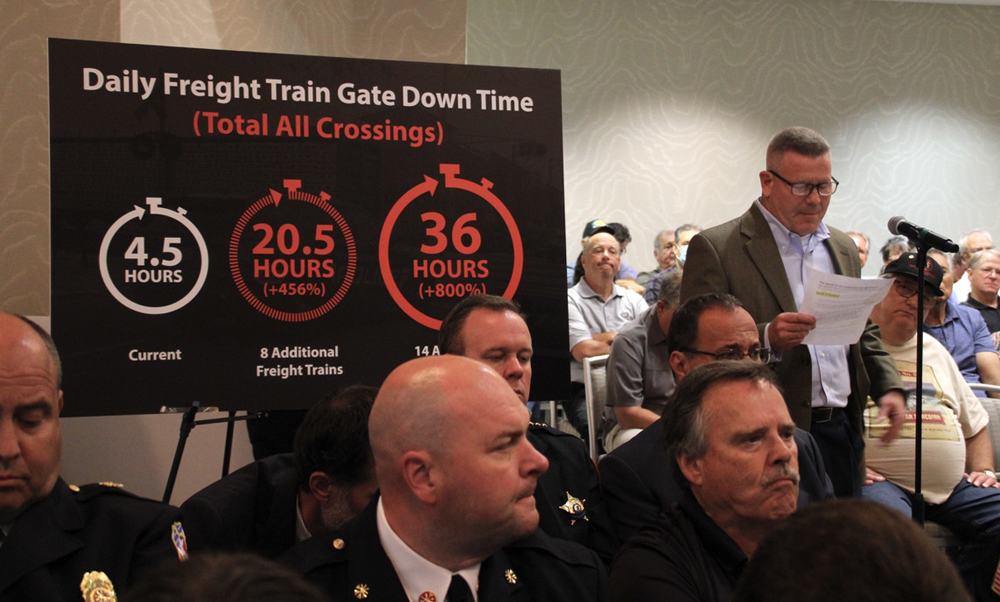
The coalition members originally sought more than $9 billion in mitigation to offset the impact of the merger’s estimated increase in freight traffic [see “Chicago suburbs seek $9.5 billion …,” Trains News Wire,” March 1, 2022]. The merger application projected the number of freight trains through the communities would increase from three to 11 per day, although coalition members claim the figure could be 14 additional trains per day [“Chicago suburbs focus on safety …,” News Wire, Sept. 13, 2022].
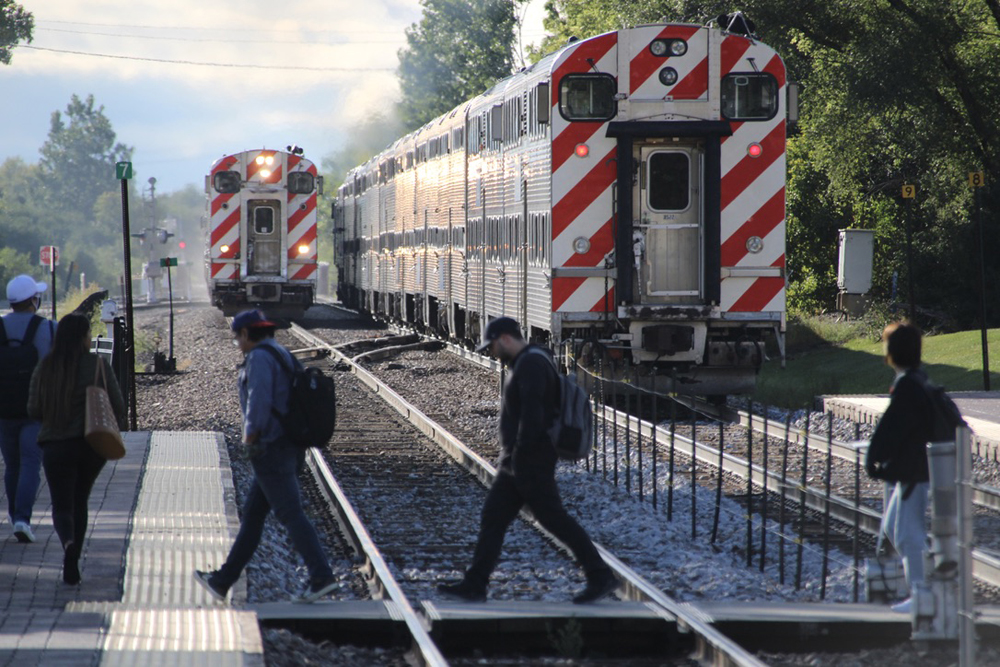
The coalition communities have largely focused on safety concerns regarding first-responder times in their fight against the merger, although they have also raised quality-of-life issues and cited potential negative impacts on development near the line CPKC shares with Metra’s Milwaukee West service.
While the group eventually decreased the amount of migitation funding it sought to some $400 million, STB Chairman Martin J. Oberman — a former Chicago alderman and Metra chairman — cited the original request in a press conference following approval of the merger. Oberman said the request “is simply not the real world and it isn’t going to happen. And it isn’t warranted. … The data show that it isn’t necessary” [see “Metra, Chicago suburbs see few concerns addressed …,” Trains News Wire, March 15, 2023]
Under the terms of the merger, mitigation for the Chicago suburbs will include CPKC funding for development of quiet zones; installation of a system that will provide first responders and drivers with advance notification of blocked crossings; and technology to minimize crossing-gate activation adjacent to Metra stations [see “CPKC offers plan to address traffic issues …,” News Wire, Jan. 27, 2023]. It also created a local liaison position, while the board said its seven years of oversight would allow community concerns to be addressed if they did, in fact, develop.
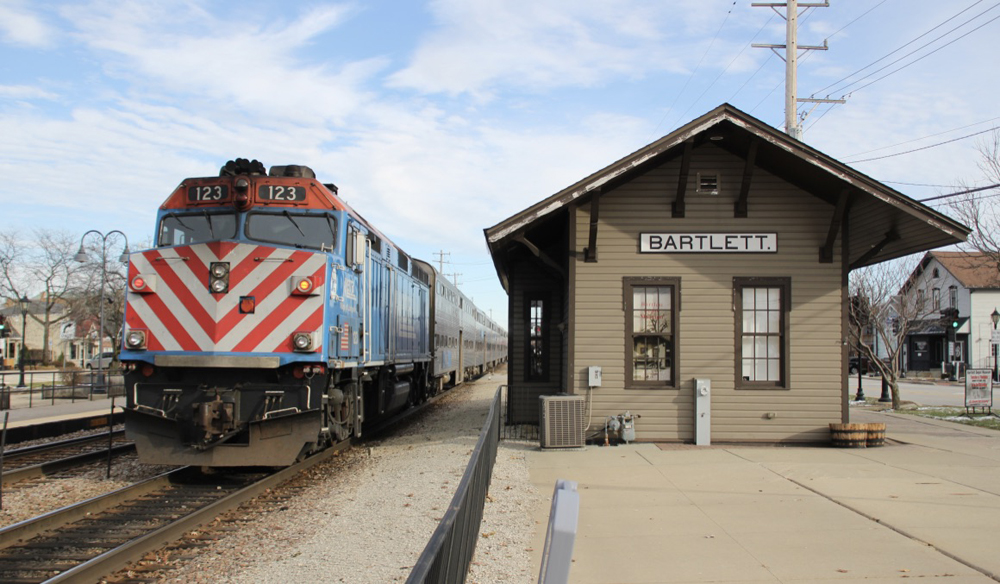
Coalition members were wholly dissatisfied with those terms, with Hanover Park Mayor Rodney Craig calling the merger decision “disgusting,” while Bensenville Village President Frank DeSimone said the decision ignored the group’s “concerns for safety; it ignored our concerns about quality of life; and it ignored our concerns about the negative consequences for economic development in our communities.”
Hanover Park, Bensenville, Bartlett, Elgin, Itasca, Roselle, Schaumburg, Wood Dale — with a combined population of about 300,000 — make up the coalition, along with DuPage County. The county has a population of more than 900,000 and includes all or part of all the member communities except Elgin.
An STB spokesman told WLS-TV the board does not comment on pending regulation. CPKC, in a statement, told the station:
“In our view, the U.S. Surface Transportation Board conducted a comprehensive, thorough and thoughtful review of the combination, and its environmental impacts, as part of a more than year-long regulatory review and environmental impact study. We believe that unprecedented examination of the facts produced the right final decision which clearly recognizes the many benefits of the CPKC combination.
“CPKC remains committed to being a good neighbor in the communities where we operate and to an open dialogue with communities across our network to address local concerns.”
The suit recalls actions by the city of Barrington, Ill., and a similar regional group, The Regional Answer to Canadian National, or TRAC, appealing STB approval of Canadian National’s purchase of the Elgin, Joliet & Eastern in 2008. Barrington would eventually appeal aspects of the board’s decision three times; its most recent appeal was turned down in 2018.
Share this article