

Steam excursions in the United States are like taking center stage. Star-studded locomotives arrived with some staying while others received curtain calls. Of those that have taken their final bow, here are five former U.S. steam excursion locomotives that left an impact.
Grand Trunk Western No. 5629
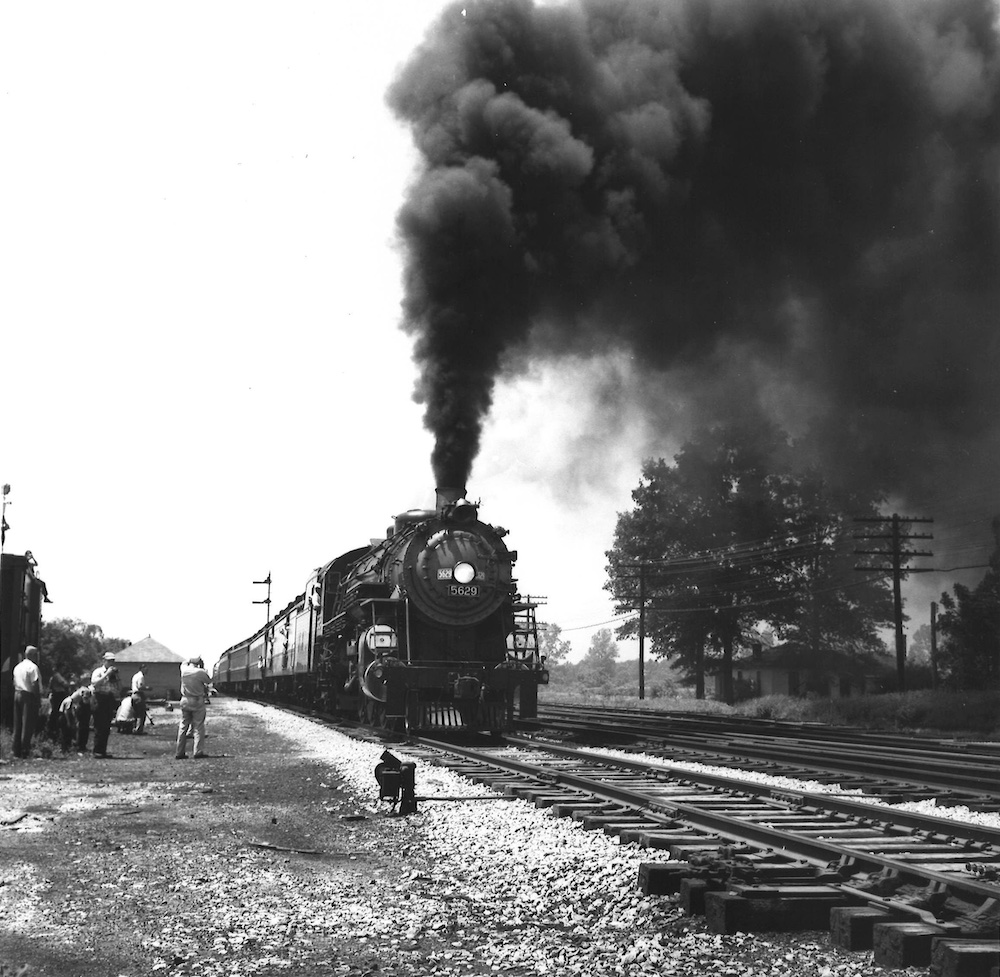
Excursion service 1959-1973: The class K-4a, 4-6-2 No. 5629 was purchased in 1959 by Richard “Dick” Jensen. Throughout the 1960s, the 1924-built Pacific called Chicago home. It made fantrips mainly on the GTW. Back then, if one desired to experience big steam out of the Windy City, No. 5629 was the way to go. By the mid-1980s, the locomotive was more than a decade removed from excursions and in storage at the former Rock Island yard in Blue Island, Ill.
Under Metra’s ownership of the property, Jensen faced a difficult situation: Turn over the title of No. 5629 to Metra or relocate the Pacific under the fear of possible scrapping. Following court orders and legal disputes, in July 1987 the locomotive was cut up right where it sat. The sad fate was a shock to the preservation world and left a mixed legacy surrounding Jensen, a pioneer whose love for steam locomotives was plagued with unfortunate circumstances.
Nickel Plate Road No. 759
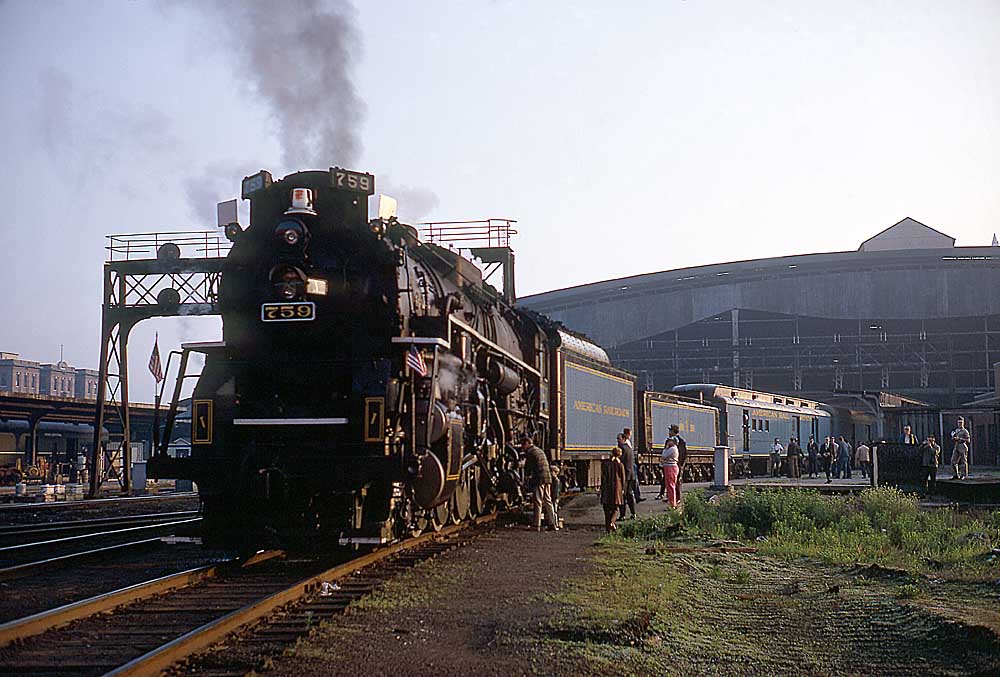
Excursion service 1968-1973: The growing success of the 1960s High Iron Company steam excursions in the Northeast led to the search for additional power. “Super Power” was the answer in the form of 2-8-4 No. 759, leased from Steamtown USA in Bellows Falls, Vt. Though it had a brief career, the 1944-built Berkshire made the most of it right out of the gate, handling a good section of the 1969 Golden Spike Centennial Limited‘s New York City-Ogden, Utah journey. The locomotive returned to Vermont in 1971 at the conclusion of the lease before being retired in 1973.
Though on display today at Steamtown National Historic Site in Scranton, Pa., No. 759 is seen as a stepping stone for successful steam preservation stories. The Limited was succeeded by the 1975-1976 American Freedom Train, prompting Doyle McCormack to restore Southern Pacific No. 4449 in Portland, Ore. after cutting his teeth on No. 759. The 1969 tour also became a catalyst to the re-genesis of sister locomotive No. 765 in Fort Wayne, Ind., while the inspiration surrounding the Van Sweringen’s design made its way to Michigan’s Pere Marquette No. 1225.
Reading Company No. 2101
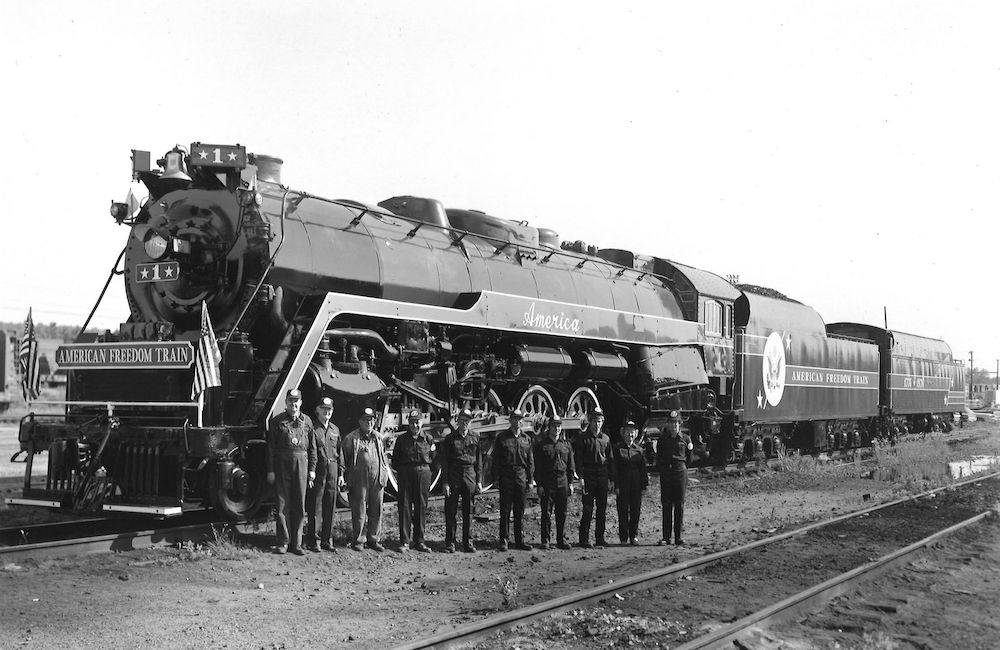
Excursion service 1977-1979: Though it wasn’t until 1977 when No. 2101 officially became an excursion star, this 1945-rebuilt 4-8-4 seemed to have been destined for that brief career. The T-1 was kept on standby during the Reading Company’s Iron Horse Ramble excursions in the early 1960s, but never saw service. Once it was retired in 1967, No. 2101 was sold for scrap before being purchased by Ross Rowland and used to pull the American Freedom Train. A miraculous 30-day restoration led to the locomotive’s Bicentennial tour of the Northeast and Midwest from 1975 to 1976.
No. 2101 then headed the Chessie Steam Special for a two-year exhibition of excursions, crisscrossing the system in celebration of the Baltimore & Ohio Railroad’s 150th birthday. On March 7, 1979, a fire struck the roundhouse in Silver Grove, Ky. where No. 2101 was stored. The severity of the damage resulted in the locomotive’s retirement at the Baltimore & Ohio Railroad Museum in Baltimore and restoration of Chesapeake & Ohio No. 614. Sister No. 2102 carries on today with excursions on the Reading & Northern, while No. 2100 looks to return to service in the future. Though it begs the question, what if No. 2101’s promising excursion career didn’t prematurely end in a blaze?
Norfolk & Western No. 1218
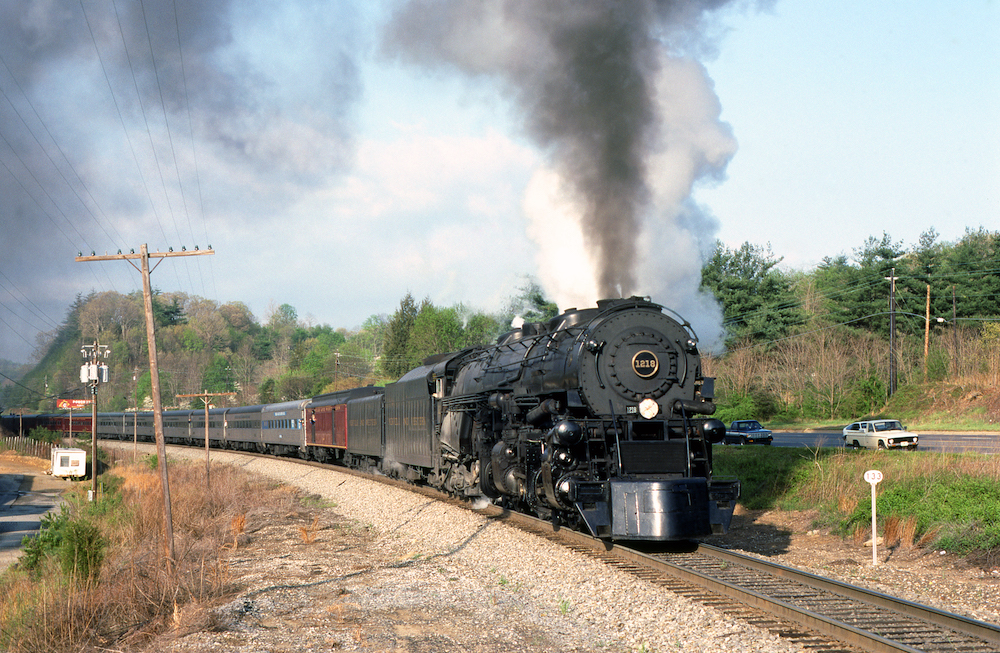
Excursion service 1987-1991: As the sole survivor of the A-class 2-6-6-4s, No. 1218 was restored to operation in April 1987 for Norfolk Southern’s steam excursion program. It was a much-needed shot in the arm; the program was still recovering from the Great Dismal Swamp derailment the previous year. No. 1218, alongside N&W J-class No. 611, became a dynamic duo with highlights including both running side-by-side up the Christiansburg grade during the 1987 National Railway Historical Society convention in Roanoke, Va. Perhaps it was the peak for mainline steam excursions in the South.
In late 1991, No. 1218 was taken out of service for a major overhaul. The work came to a permanent halt in May 1994. The handwriting was officially on the wall: The NS program came to an end in December of that year, leaving most of the eastern United States starved of big steam for years. Many organizations that relied on the excursions were left to fend for themselves. It was an end of an era, represented in the now-slumbering No. 1218 at the Virginia Museum of Transportation in Roanoke.
Frisco No. 1522
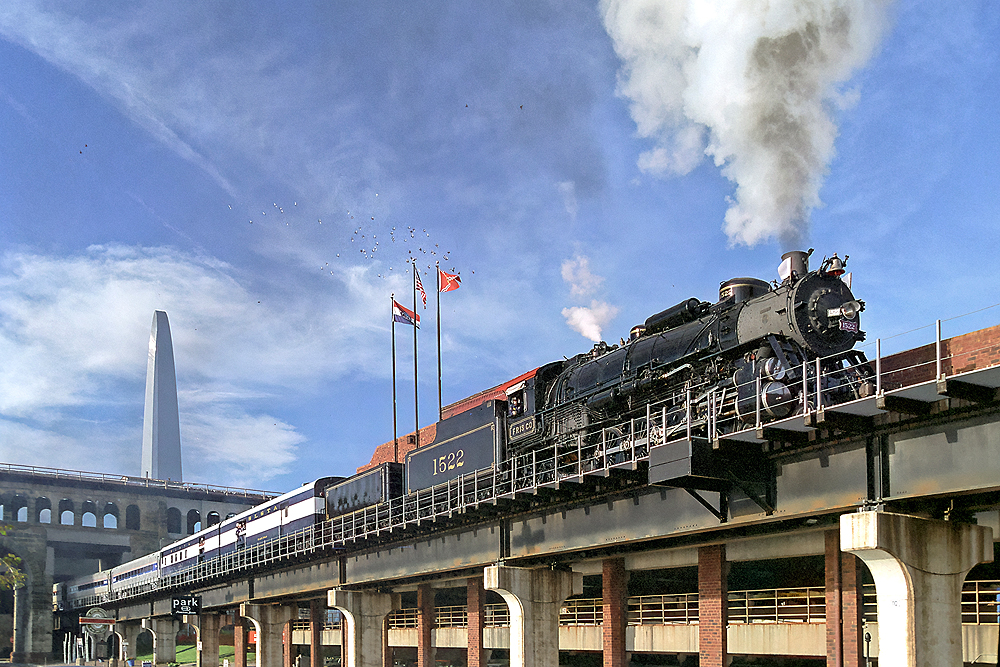
Excursion service 1988-2002: Restored by the St. Louis Steam Train Association in 1988, this 1926-built 4-8-2 had an impressive excursion track record with a title that delighted many. No. 1522 became a fixture out of St. Louis, traveling many miles and reaching as far as Atlanta. It even headed employee appreciation specials for BNSF Railway in 2001. The sharp stack talk proclaimed the Mountain-type as the loudest operating steam locomotive.
The dawn of the new millennium, however, brought staggering liability insurance premiums and new boiler regulations. This piled on to the rising cost of operating steam. By 2002, these strains, along with depleting track availability, caught up to SLSTA. No. 1522 ran its final excursions in September 2002 before becoming a static display at the National Museum of Transportation. The locomotive’s retirement marked a long road of challenges steam excursions faced at the turn of the 21st Century that continue to this day.
With these five former U.S. steam excursion locomotives that left an impact, do you think there are others deserving a spotlight?
Share this article