

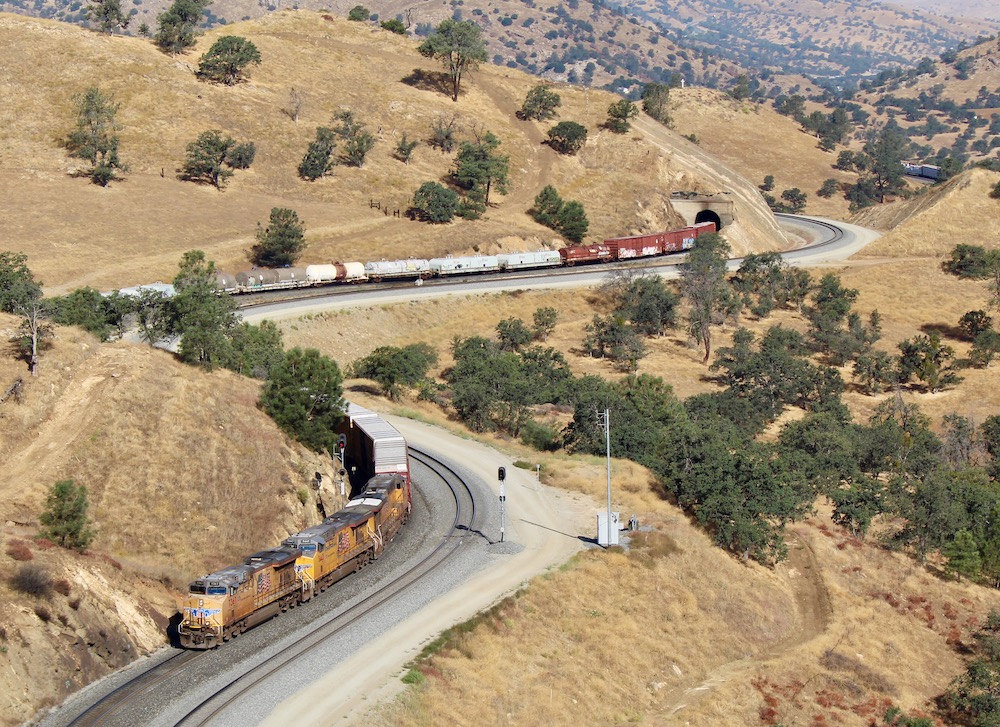
OMAHA, Neb. – Union Pacific’s reportable train derailment rate improved 10% during the first quarter, executives said today while defending the safety record of long trains.
“We continue to make great strides on safety,” Eric Gehringer, executive vice president of operations, told investors and analysts on the railroad’s earnings call on Thursday. UP’s goal remains zero accidents and zero injuries.
The railroad industry’s safety and operational practices have been under intense scrutiny after the disastrous Feb. 3 derailment of a Norfolk Southern train and subsequent hazardous materials release in East Palestine, Ohio.
“Derailments have been in the spotlight recently,” CEO Lance Fritz says. “The entire industry understands the critical role we play in support of the communities we serve. In fact, since 2000 Union Pacific’s main line derailments are down almost 30%, helping make this decade the safest for the rail industry.”
Fritz says the industry can further improve its safety record by working more collaboratively and proactively, as it has been doing since the East Palestine wreck.
The trend toward longer trains has come under criticism in Washington, where broad rail safety bills in the House and Senate would limit train length. And on April 7 the Federal Railroad Administration issued a safety advisory after noting that train makeup contributed to six recent derailments, all of which involved trains with more than 125 cars. Three of the derailments mentioned in the advisory were UP trains.
UP is talking with lawmakers on Capitol Hill to help them understand what proposed safety regulations would make a difference and what regulations would not, Fritz says.
Train length wouldn’t make a difference, Fritz says. “On UP, since 2019 train length is up something like 20% and our mainline and siding derailments are down 26%,” he says. “So there’s zero corollary between train length and derailments.”
Efforts to require at least two people in the locomotive cab, which would prevent shifting conductors to ground-based positions, also would not have an impact on safety, Fritz says, based on statistics from one-person railroad operations around the globe.
On the service front – which also has been a hot topic with regulators amid widespread crew shortages last year – UP’s use of congestion-related embargoes has dropped 65% this year and by 75% over the past two months, Fritz says.
The Surface Transportation Board held a hearing in December on UP’s skyrocketing use of embargoes since 2018. UP promised then to take a look at how it issues embargoes and roll them back to levels where they are rare, Fritz noted.
Improved service has helped reduce customer complaints, Fritz says, and the railroad remains “deeply engaged” with the STB.
“If we can get customers to a place where they’re satisfied with the service product, and in good dialogue with us on it, that takes a lot of pressure off the STB,” Fritz says.
Share this article