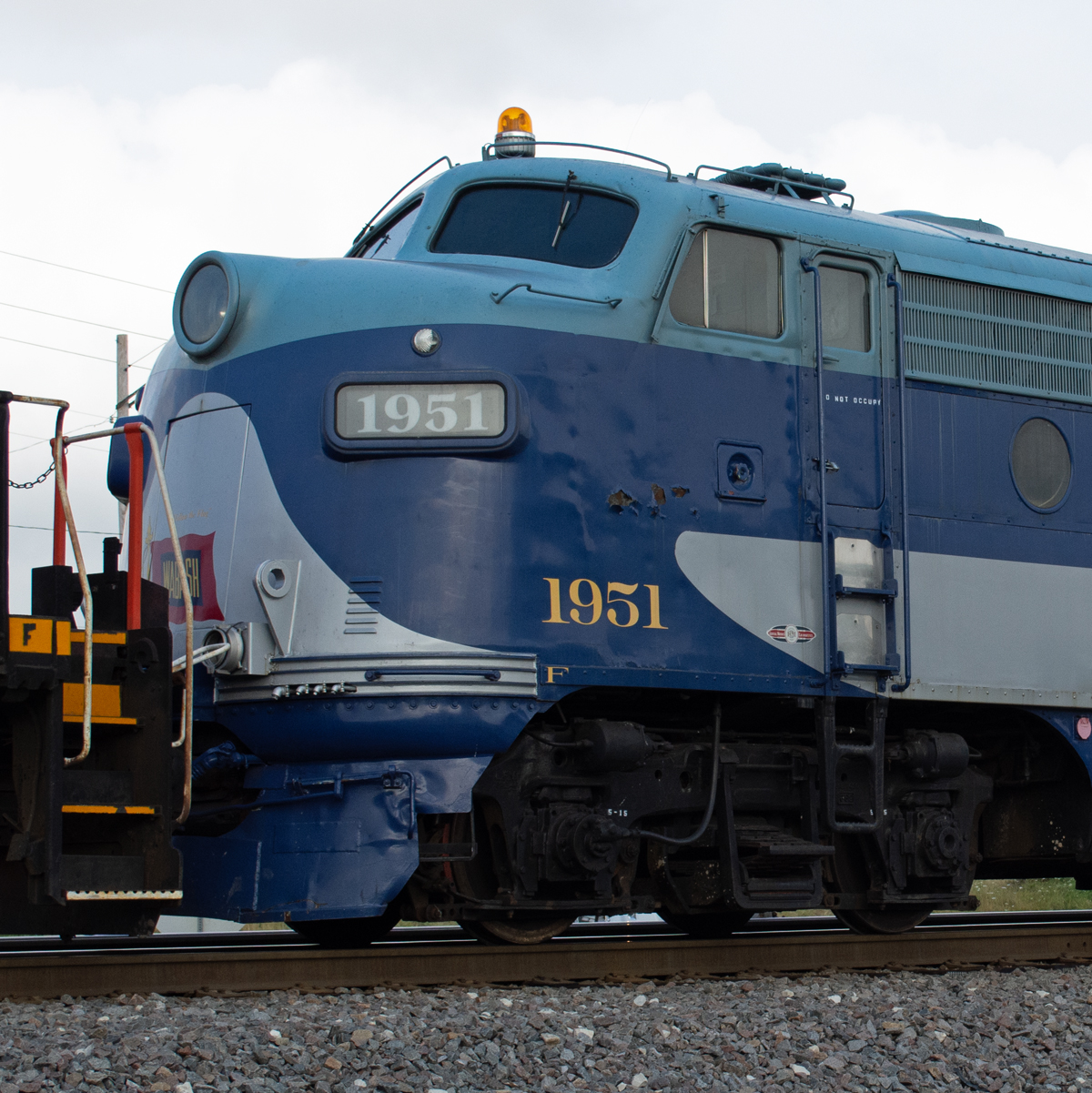


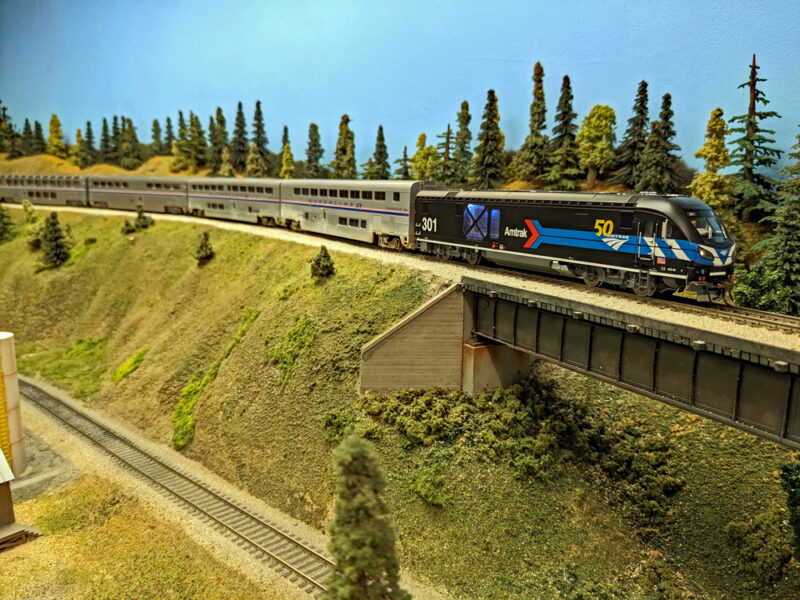
If you’re new to the hobby, you might be wondering if you can operate any locomotive on an everyday commuter, intercity, or high-speed passenger train. If you’re looking for prototypical operations on your layout set in the modern era, the short answer is usually no. However, there are many factors which go into this simple answer. With that in mind, let’s explore why freight locomotives can’t always pull modern passenger trains and what limits any locomotive in general from this type of service.
1. Speed, power, and capability
From Amtrak to Brightline, today’s passenger locomotives in North America require certain specifications in terms of speed, power, and capability. They typically run faster than freight and therefore require motive power designed for the specific application they will be used for. Most passenger locomotives have different gear ratios, brake systems, and other components that are optimized for the task.
While aerodynamics in carbody design evolve in relation to aesthetics, what has remained consistent is the functionality. “A train constantly going 80 mph has four times the wind resistance of a train going 40 mph,” a locomotive mechanical engineer explained in Trains’ June 2011 issue. “Thus, good aerodynamic design increases fuel efficiency and allows faster acceleration to the higher speeds, which can reduce overall running time.”
When a freight locomotive is used on a passenger train, such as when a passenger locomotive experiences a failure en route between cities, the train must observe the maximum speed of the freight locomotive which is typically 70 mph in North America. The majority of passenger trains in North America are authorized for a maximum speed between 79 and 110 mph.
2. Safety
Locomotives designed for passenger service must comply with certain safety regulations not applicable to freight locomotives. For example, they have enhanced designs to help absorb the energy from a crash and allow the locomotive to be crushed in a controlled manner. They also have features designed and tested to prevent one piece of equipment from overriding another in the event of a head-on collision.
3. Head-end power
Passenger trains also require certain amenities for the comfort of those onboard: Air conditioning, heating, lights, and other electrical appliances. These amenities today rely on head-end power (HEP), which is typically not present on freight locomotives. The HEP equipment is normally installed inside the carbody of a passenger locomotive, and the power needed is supplied through a special set of electrical connections between the locomotive and passenger cars. This allows the locomotive to supply the voltage needed to the entire train – typically ranging from 480 volts to 600 volts AC at a frequency of 60 Hz.
Diesels were initially fitted with generators providing steam heat for the passenger cars, a technique previously performed by steam locomotives. As railroads transitioned from steam to diesel, these powerplants became a cost-effective way to heat older passenger cars without having to completely rebuild them.
The Chicago & North Western Railroad took a significant step in the late 1950s by replacing steam generators on their EMD F7 and E8 locomotives with those fueled by diesel. It became a natural evolution since these units were already supplying low-voltage, low-current power to assist the axle generators in maintaining a battery charge. Although many commuter systems quickly converted to what became HEP, long-distance trains still relied on steam heat and battery-powered electrical systems. This gradually changed when intercity passenger service was transferred to Amtrak, leading to the full adoption in the United States.
Today, head-end power is used on commuter, intercity, and high-speed passenger services. This provides several advantages, as the locomotive offers a more efficient power source compared to individual generators on each car. New AC traction-powered passenger locomotives typically use additional AC inverters (beyond the inverters used for traction) dedicated to HEP usage. These can also come with extra inverters that can be used for locomotive traction or HEP duties in the event one of the primary inverters fails, providing redundancy not found on older passenger locomotives.
Exceptions to the rule
Freight locomotives can still be found on certain passenger services. Excursion and tourist operations are considered the most common place where the need for head-end power may be provided in a specially modified car or not needed at all. Freight railroads can have agreements to provide freight locomotives to a passenger train in the event of a passenger locomotive failure en route, though speed restrictions of the freight locomotive and operating limitations would cause additional delay to an already late train. But for everyday use, freight locomotives can’t always pull modern passenger trains based on specific designs and services in North America.
Updated from its original version first published April 20, 2023, by Train.com staff and contributors: Lucas Iverson, Chris Guss, and Scott Hartley.
Share this article