

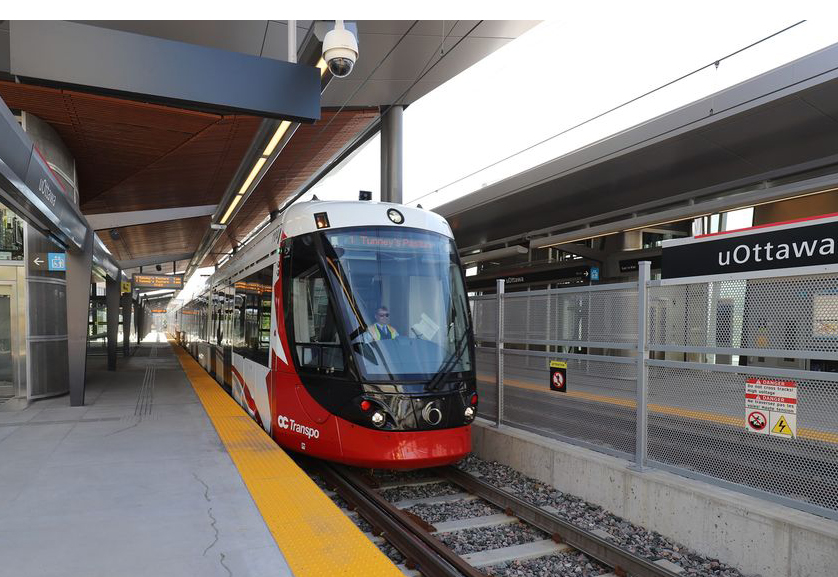
OTTAWA — Regulations requiring a set percentage of Canadian content and a lack of local, qualified manufacturing workers played a part in the delays building the light rail vehicles for Ottawa’s Confederation Line, the report from the inquiry into that line has concluded.
The 664-page report from the Ottawa Light Rail Transit Public Inquiry, released Wednesday, included harsh criticism of some city officials, as well as the companies involved in building and operating the light-rail line [see “Report from Ottawa light rail inquiry blasts city officials …,” Trains News Wire, Dec. 1, 2022]
But the Ottawa Sun also notes that the report from Justice William Hourigan found that Alstom, maker of the light rail trainsets, found it hard to find workers in Ottawa to build the equipment, as required by Ontario rules requiring 25% of the value of the equipment, as well as 25% of the labor used, had to come from within Canada.
As a result, the company hired workers, then sent them to New York for training. But the inexperience of the workforce “may have led resulted in problems, such has defective wiring that then had to be fixed, adding to delays.” Adding to the problem was the short-term nature of the manufacturing jobs: after building the cars, the facility became the maintenance shop for the Ottawa system.
In general, Hourigan wrote in his report, the content laws should be encouraged. But he recommended they allow waivers and exceptions to allow for labor shortages and to ensure systems receive ‘a quality product produced by a qualified workforce.”
Share this article