Engineers and conductors have rendered a split decision in their respective union votes over the tentative agreements reached with the U.S. Class I railroads, the unions said this morning.
By the slimmest of margins, conductors represented by the SMART-TD union rejected the deal, fueling the prospects of a nationwide strike that could begin as soon as Dec. 9. Some 50.87% of voting members rejected the agreement.
Yet the Brotherhood of Locomotive Engineers and Trainmen ratified their agreement, as did yardmasters represented by SMART-TD. Some 53.5% of engineers backed the deal, along with 62.4% of yardmasters.
Turnout was a record for both unions, reflecting the contentious relationship between railroads and the rank and file.
SMART-TD will enter a cooling-off period and resume negotiations with the National Carriers Conference Committee that represents the railroads.
“SMART-TD members with their votes have spoken, it’s now back to the bargaining table for our operating craft members,” said SMART-TD President Jeremy Ferguson. “This can all be settled through negotiations and without a strike. A settlement would be in the best interests of the workers, the railroads, shippers and the American people.”
The cooling off period runs through Dec. 8, making Dec. 9 the earliest the union could strike or railroads could lock out employees.
“The ball is now in the railroads’ court. Let’s see what they do. They can settle this at the bargaining table,” Ferguson said. “But, the railroad executives who constantly complain about government interference and regularly bad-mouth regulators and Congress now want Congress to do the bargaining for them.”
The railroads remain willing to enter agreements that are based on the recommendations of the Presidential Emergency Board, the NCCC said today.
BLET and SMART-TD — the largest of the dozen unions representing railroad workers — were the final two organizations to announce their vote tallies. Four unions have now rejected their tentative agreements, while the other eight unions have ratified their contracts.
If any one of the four unions calls a strike, it would effectively shut down the U.S. freight rail system, most Amtrak service, and many commuter lines, because the rank and file of the other unions would not cross picket lines.
“We stood shoulder to shoulder with our brothers and sisters in SMART-TD and others in rail labor throughout this process, and we will continue to stand in solidarity with them as we approach the finish line in this round of negotiations,” BLET President Dennis Pierce said.
The BLET and SMART-TD tentative agreements were based on the recommendations of the Presidential Emergency Board that was convened over the summer after railroads and unions failed to reach settlements in negotiations that began in 2020.
“Today, the BLET joined the majority of our unions in approving the largest wage increases in nearly five decades and also paved a path toward greater scheduling predictability for its members,” said Association of American Railroads CEO Ian Jefferies. “Railroads stand ready to reach new deals based upon the PEB framework with our remaining unions, but the window continues to narrow as deadlines rapidly approach. Let’s be clear, if the remaining unions do not accept an agreement, Congress should be prepared to act and avoid a disastrous $2 billion a day hit to our economy.”
All of the tentative agreements increase wages by 24% during the five-year period from 2020 through 2024, with a 14.1% increase effective immediately. The agreements also include five $1,000 annual lump sum payments, adjustments to health care premiums, and health benefit enhancements, and an additional personal leave day for all employees.
A portion of the wage increases and lump sum payments are retroactive, resulting in more than $11,000 on average in immediate payouts to employees.
But the unions that rejected their deals have said that working conditions were more important to their members than the size of their raises. The PEB did not make any recommendations on working conditions, saying they should be negotiated at the local level.
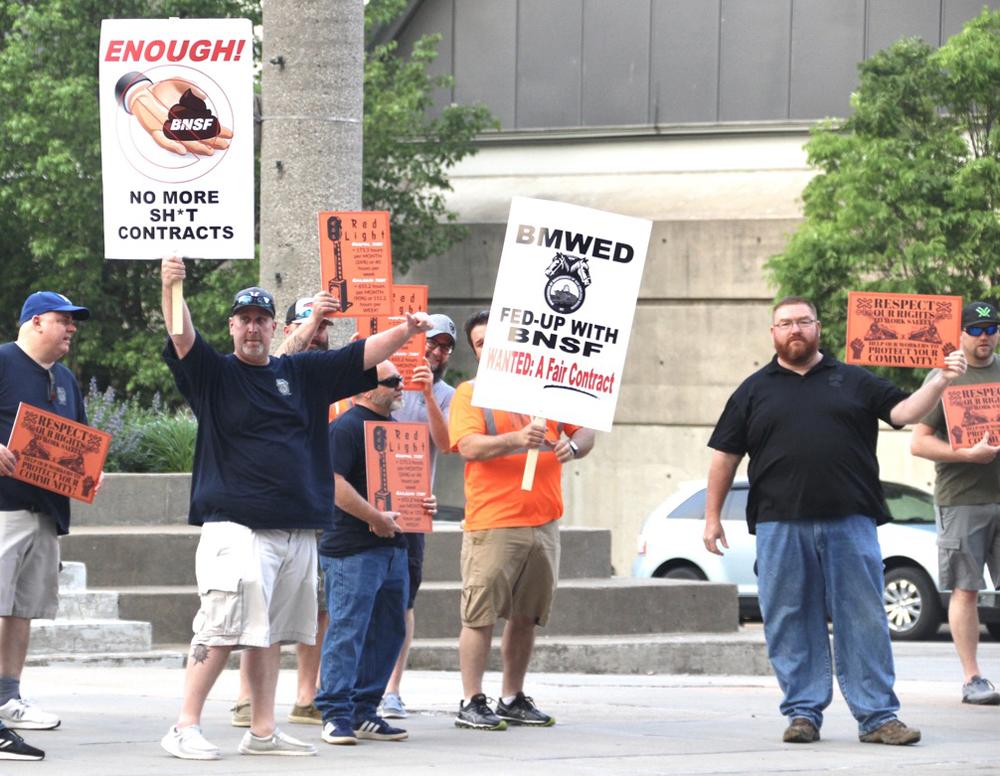
The unions representing maintenance-of-way employees, signalmen, and boilermakers also have rejected their tentative agreements. BLET, SMART-TD, and the Brotherhood of Maintenance of Way Employes have sought additional paid sick time for their members.
The railroads have rejected union requests for additional paid time off, saying employees already have paid sick time benefits. “The structure of these benefits is a function of decades of bargaining where unions, including BMWED, have repeatedly agreed that short-term absences would be unpaid in favor of higher compensation for days worked and more generous sickness benefits for longer absences,” the NCCC has said.
The last nationwide labor-related shutdown was a brief lockout in 1992.
Should the unions strike or the railroads initiate a lockout, Congress is expected to intervene as it historically has done. But some observers are concerned it could take longer than usual due to the lame-duck session in a hyperpartisan era that has bitterly divided Congress.
Railroad shipper groups have all urged Congress to act quickly. A shutdown of the freight rail network would have significant economic impacts, contribute to inflation, and potentially plunge the economy into a recession, they said.
A railroad shutdown would exacerbate agricultural shipping challenges, which include rail congestion on the big four U.S. systems, record low water levels that have brought Mississippi River barge traffic to a halt, and a shortage of trucks, the National Feed and Grain Association and 192 other members of the Agricultural Transportation Working Group told Congress earlier this month.
Even if a strike is averted before the Dec. 9 deadline, the railroads are likely to begin curtailing certain types of traffic — such as shipments of hazardous materials — as soon as Nov. 28, the American Chemistry Council says.
Shippers are also likely to divert freight to highways in advance of the strike deadline, as they did before tentative agreements were reached in September.
The tentative agreements were announced on Sept. 15, just hours before the unions could have walked out. The agreements were the result of 20 hours of negotiations between the railroads and the unions representing engineers, conductors, and signalmen.
The two sides were able to reach a deal during 20 hours of talks held at the Department of Labor headquarters in Washington, D.C., with members of the Biden administration playing a key role in the negotiations.
More than 30 U.S. railroads are covered under national bargaining. Canadian Pacific is not part of the national contract; it negotiates separately with unions representing its U.S. workers.
Share this article