

CHICAGO — J.B. Hunt executives see the potential for major growth with partner BNSF Railway next year thanks to rival Schneider shifting its intermodal business to Union Pacific.
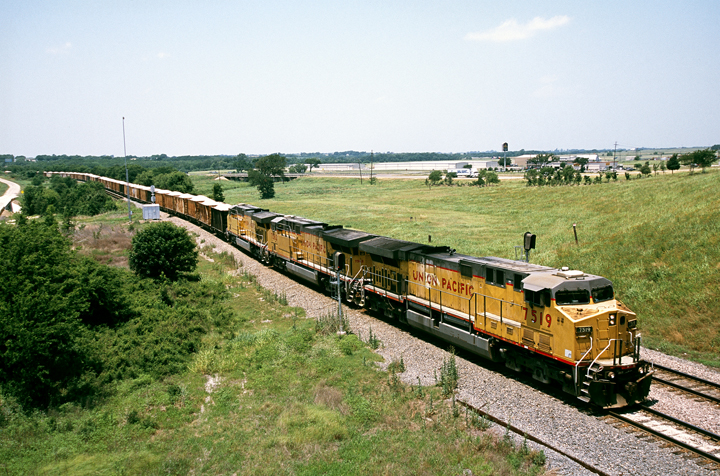
Schneider’s move to UP, effective Jan. 1, comes a year after another major truckload carrier, Knight-Swift, left BNSF for UP.
“We have massive capacity becoming available to us on our primary rail partner,” Darren Field, J.B. Hunt’s intermodal president, told an investor conference on Tuesday.
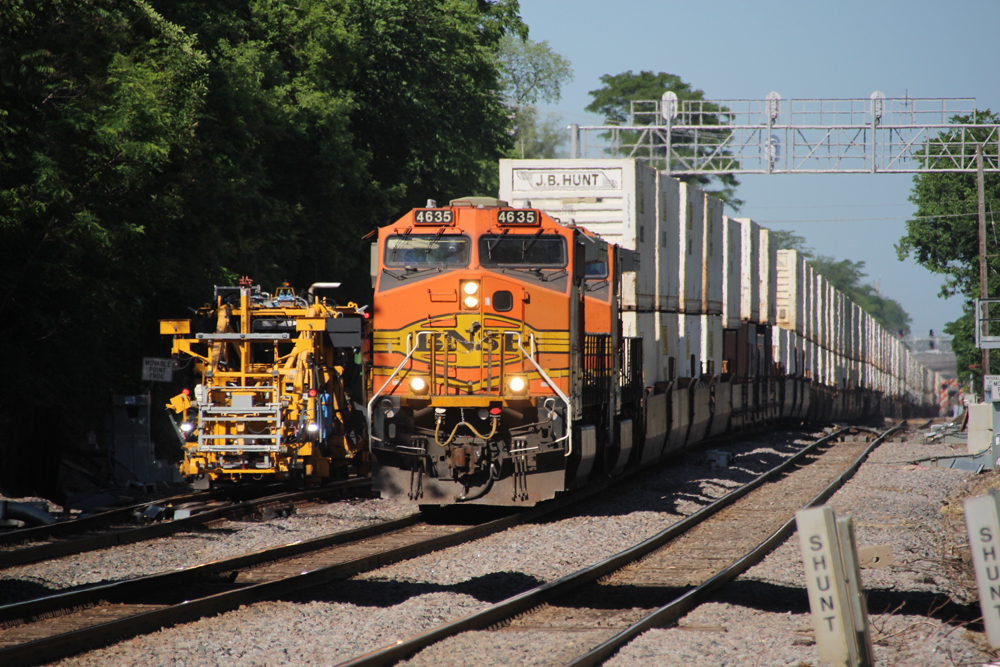
BNSF and J.B. Hunt have had a unique revenue-sharing agreement since 1989. “And that certainly gives us a ton of advantages,” Field says of Hunt’s exclusive partnership with BNSF in the West.
“We have a contract that allows us to compete and effectively go out and solve for our customers,” Field says.
BNSF and J.B. Hunt are also “aligned like we’ve never been,” Field says. The companies’ executive teams met for a full day in September talking about where capacity limits were in the past and how they have changed with J.B. Hunt becoming the railway’s only dry van truckload intermodal customer, Field explains.
In March, BNSF and J.B. Hunt announced a joint effort to boost capacity. J.B. Hunt will expand its fleet by 40% over the next three to five years, with a goal of having as many as 150,000 containers. BNSF will increase capacity at several intermodal terminals and acquire additional intermodal well cars.
BNSF’s service is improving after being bogged down with congestion on its main lines and intermodal terminals for much of the year amid ongoing train crew and chassis shortages.
“We continue to be happy with their progress. I would say there’s more work to be done. We’re not at the end of the challenge but at the same time we’re certainly excited about the progress they’ve made,” Field says. “Certainly in the East we’re beginning to see some green shoots there. We have work to do there, and continue to see the whole network has an opportunity to get more healthy as we move into 2023.”
Norfolk Southern is J.B. Hunt’s primary partner in the East.
J.B. Hunt sees strong customer demand to shift loads from road to rail. “For the next decade, there’s no reason why our intermodal product can’t continue to grow at double-digits. And we’re excited about our future,” Field says.
The short-term outlook, however, is a different story.
The traditional fall peak for intermodal traffic — which includes imports arriving at West Coast ports and being transloaded into domestic containers for the trip inland — is not materializing this year. “We just don’t have a significant surge in demand,” Field says.
Among the reasons for the lack of a peak is high retail inventory levels. Customers have J.B. Hunt containers and chassis sitting at their warehouses, but they’re not being unloaded because the warehouses are full. “That’s a new and unique event,” Field says.
Field spoke at the Baird 2022 Global Industrial Conference.
Share this article