CHICAGO – This column intends to consider the intricacies of today’s carload business in an environment constantly influenced by what’s happening in the world. Labor unions, pandemics, the economy, equipment usage, and technology all effect how railcars move. These factors shape what type of freight goes where, the volume, the urgency, and how the service is performed. Each freight car has a purpose, and a 2-mile freight train tells a story about what is happening in the economy and why railcars are doing what they do.
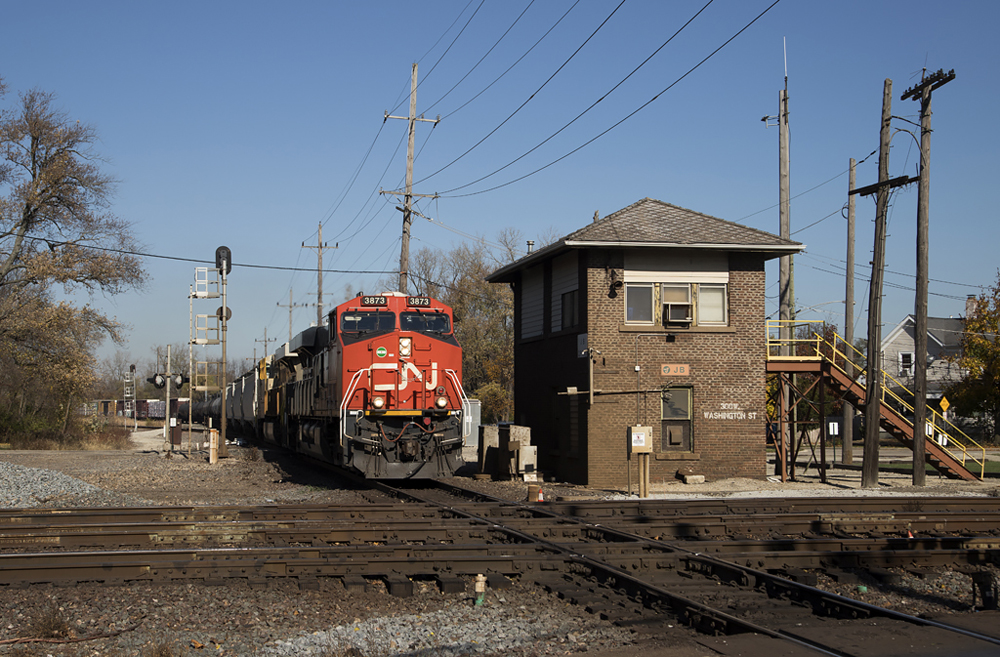
I recently watched a Canadian National freight train roll across the Union Pacific-CN diamond at West Chicago. It was carrying Canadian lumber, grains, empty tank cars of liquified gas, and a handful of boxcars. Makes sense. Canadian lumber for U.S. markets, carload grains to the Gulf or Chicago. Nothing out of the ordinary. This train was in excess of 100 railcars, though train length is no basis for forming conclusions of economic strength, given railroads’ abilities to move longer trains more efficiently. But I paid close attention to the manifest and was curious what might have been on the drawbars of the same train a year ago, and what it may look like a year from now.
Our focus this month is a topic of mainstream news – the Federal Reserve’s efforts to reel back inflation without tipping into a recession. Bank leaders have raised interest rates 0.75 percentage point the last four meetings. Inflation remains high at 8%. The cost of borrowing is above 4%, and the central bank has hinted that rates may climb higher than originally anticipated. The Fed shows no sign of pivoting to looser monetary policy. It wants to see results. America is now in a wait-and-see pattern as the Fed looks for signs that its policy is helping fix inflation. The economy, thus far, is mostly indifferent. Labor markets are hot, and consumers are spending. It’s going to take more time for the economy to respond to what the Fed has already enacted.
There have been signs of a pullback in some sectors, but inflation, the benchmark that has the Fed’s attention, remains stubbornly high. The market is timid about where things go next and the increased cost of borrowing has started to blemish inflation-sensitive markets, such as housing, where lumber prices have fallen 60% this year to $430 per thousand board feet. But further rate increases seem necessary, according to the Fed, to bring inflation to manageable levels, even at the greater risk of a recession.
Feedback from recent Fed meetings suggests that bank leaders may choose less aggressive rate increases as leaders grapple with this challenge and mounting fears of overextending the economy into a deep recession. To keep this railroad relevant, I find an appropriate analogy in a locomotive engineer and his or her train handling. Heavy train braking isn’t going to result in an instantaneous reduction in speed, just as raising interest rates won’t cure inflation overnight. It will take time for those freight cars on the rear of the train to slow, and it will take time for the economy to respond to tighter policy.
The Fed has certainly applied the air brakes – and dynamic brakes – on a free monetary world and now everyone waits for the slack to bunch in. Hopefully the Fed can be as proficient in its handling of inflation as a locomotive engineer is in his or her train handling on hilly terrain. No one wins if we all come to an abrupt stop.
Chase Gunnoe works in marketing & sales for the freight rail industry and is the author of Carload Considerations, a monthly Trains News Wire commentary series. It discusses the freight rail industry, commodities, and economic trends. Its views are the opinion of its author with no particular emphasis on a specific railroad or shipper.
Share this article