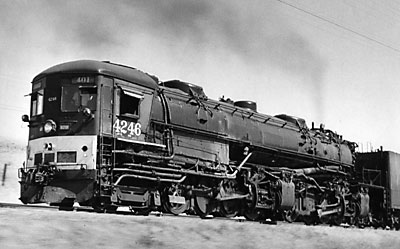


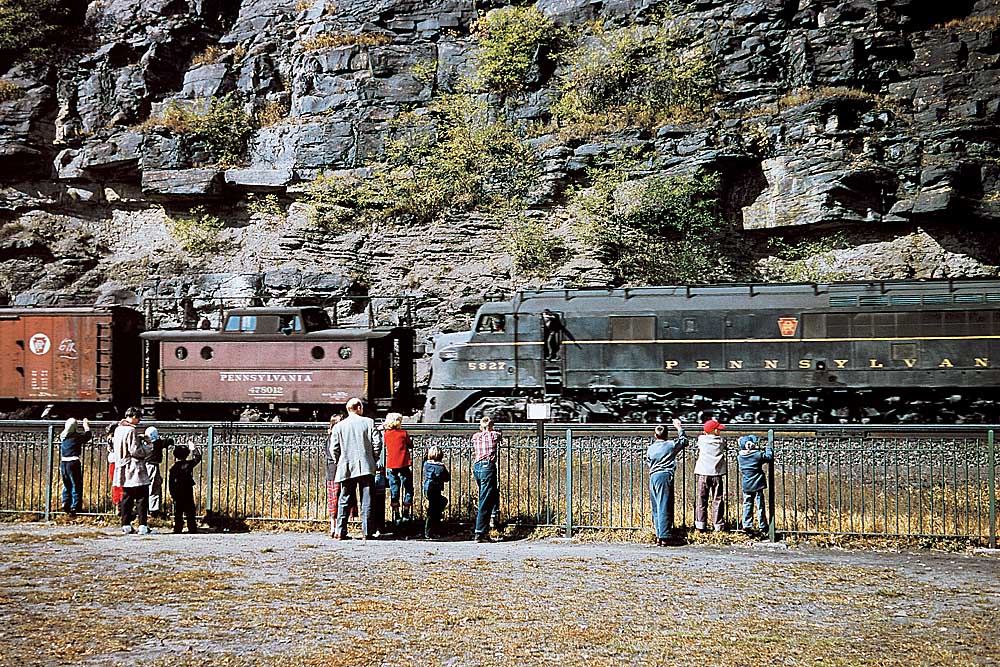
Baldwin Centipede locomotives were an oddity of mid-century railroading that just couldn’t compete with more mundane offerings from rivals Alco or Electro-Motive.
What is a Centipede?
Officially, this gargantuan diesel is the Baldwin DR-12-8-1500/2. That’s a mouthful. Broken down, it stood for Diesel Road, 12-axles, eight of which were connected to traction motors, with two engines, each producing 1,500 horsepower. The 2 stood for their original design philosophy of having two of them semi-permanently connected back-to-back to form a 6,000 hp package. Whew!
No wonder it was usually referred to as the Centipede. Baldwin engineers conceptualized the unit in the mid-1940s, and 56 of them were built between 1945 and 1948 for just three railroads.
Designed as high-speed passenger motive power, their debut was met by a ho-hum response from the railroads, especially when compared to offerings from competing manufacturers, such as four-unit sets of EMD F3s or Alco FA1 cab units.
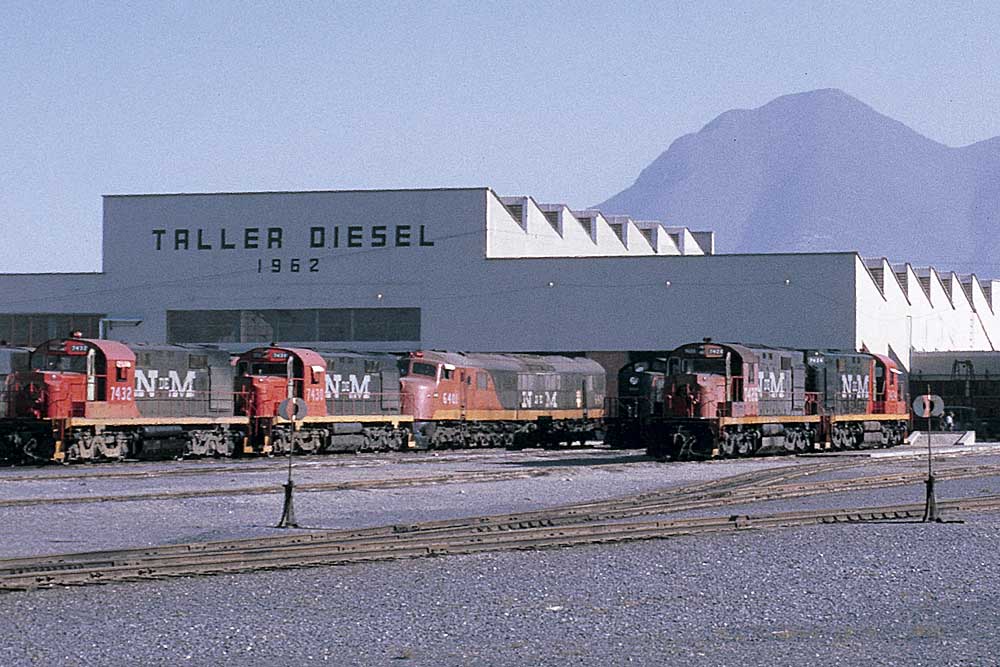
Railroads that brought them into their rosters included Pennsylvania Railroad with 24 units with a final numbering of 5811-5834, Seaboard Air Line with 14 numbered 4500-4512, and National Railroad of Mexico with another 14 in the 6400-6413 slot. A pair of demonstrators, originally intended for the Union Pacific and ultimately canceled before delivery rounded out production.
Baldwin Centipede locomotives in service
Initially the Mexican and Pennsylvania units were powering passenger trains as intended, however the railroads were frustrated with their mechanical reliability and rather quickly reassigned them to other duties. Mexico had the builder rebuild theirs with upgraded components to achieve a better operating ratio while Pennsylvania put its unit in freight service and helper duty in Pennsylvania. Seaboard Air Line predominately assigned them to freight trains.
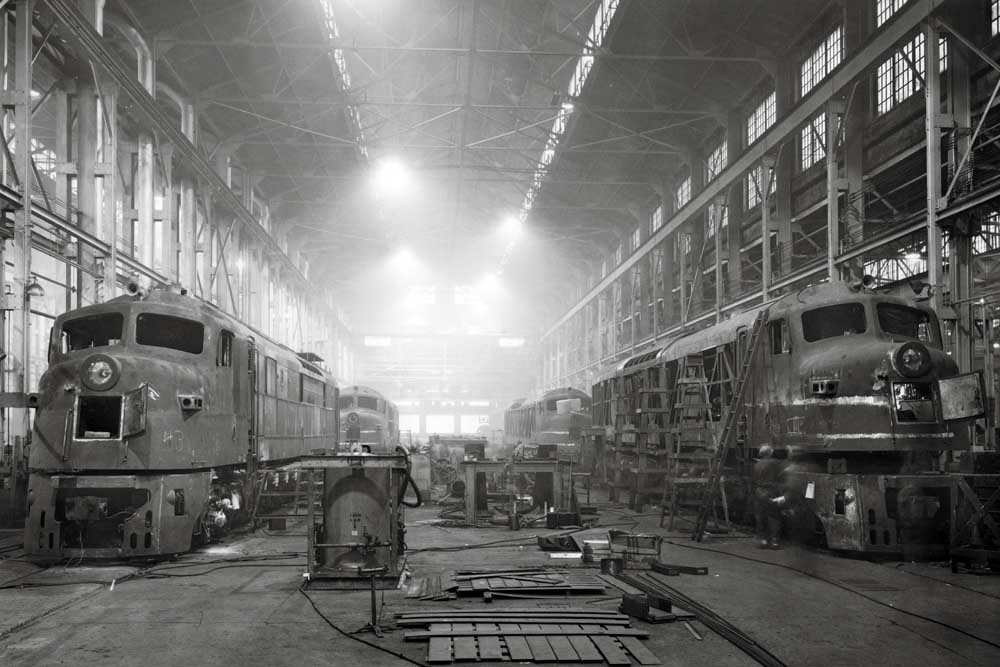
The problem? Baldwin was assembling diesels in the same fashion as it did steam locomotives; one at a time, which meant that none were exact mechanical copies of each other, with wiring and other details varying widely from unit to unit. Confounding to field mechanics, as the units came due for heavy overhauls, the units were rewired to be in mechanical harmony with each other. Some units had their pneumatic throttles, which kept them from being mated with units of other manufacturers and replaced them with more universal electric designs so the railroads could create mix-and-match motive power consists at will.
But by that time Baldwin’s reputation was tarnished in the eyes of many who were used to comparative cookie cutter units delivered by other builders. When a mechanic had to tune up or fix an EMD F3 for example, he or she knew what to expect. With a Baldwin Centipede? Good luck.
In and out of storage due to fluctuating carloadings, Seaboard unloaded the last of theirs by 1960, and the Pennsylvania held on to theirs a few more years but mostly had them gracing storage lines.
Longest lasting were the NdeM’s, which had been reworked by the builder and railroad shop forces and managed to hang on until the early 1970s, predominately in freight service.
Whatever their shortcomings, however, Baldwin Centipede locomotives must have made an impressive sight working a train.