


WASHINGTON — Ongoing service problems related to crew shortages on the U.S. Class I railroads are entirely self-inflicted due to the implementation of Precision Scheduled Railroading, the SMART Transportation Division labor union has told federal regulators.
“The freight rail network is at a breaking point,” union President Jeremy Ferguson wrote in an April 1 letter to the Surface Transportation Board. “It cannot sustain any more reductions. Substantial changes must be made, and they must be made quickly. We believe intervention from the STB is critically warranted and necessary to right this ship.”
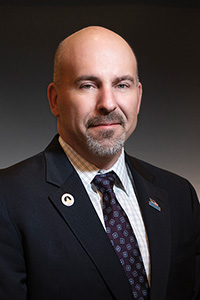
The union, which represents 40,000 railroad operating craft workers, says cutbacks related to PSR have left railroads without enough crews or locomotives to meet freight demand. “Every one of these men and women have been adversely impacted by PSR, and each of them have their own story to tell as to why the railroads are failing to fulfill their end of the bargain regarding service,” Ferguson wrote.
The union’s letter amplified concerns that grain shippers raised in a March 24 letter to the board regarding service problems on BNSF Railway, Norfolk Southern, and Union Pacific.
All Class I railroads furloughed train crews as traffic declined steeply at the onset of the pandemic in 2020. As traffic rebounded, more crew members than normal chose not to return. And a tight job market has made it difficult for railroads to hire new conductors in many areas.
The railroads say they are hiring more crews and are working to improve service as quickly as possible. BNSF has not adopted Precision Scheduled Railroading and its employment reductions have not been nearly as deep as the other railroads’ since CSX Transportation began implementing PSR in 2017. But it, too, has found itself short of crews.
“The railroads cannot sustain the same level of production they had prior to the advent of PSR given the number of drastic cuts they have made across their systems. To that point, approximately 33% of America’s railroad workforce was laid off with the initial implementation of PSR, with thousands of locomotives placed into storage,” Ferguson wrote. “This has resulted in a fundamental problem — there are not enough employees, nor locomotives available to operate the necessary number of trains required to provide a level of service that equals the current level of demand.”
The union also says that the three railroads’ attendance policies — which require train crews to work 29 out of 30 days per month — are exacerbating the crew shortages. “Not only has morale dropped to an all-time low, but employees are also leaving the industry in unprecedented numbers,” Ferguson wrote.
Operational changes designed to save fuel and move tonnage on fewer but longer trains won’t improve service, the union claims.
“Crews are restricted from being able to operate their trains at the maximum authorized speed, as they are directed to limit the locomotive’s throttle position, acceleration, and overall train speed to no more than forty (40) mph,” Ferguson wrote. “This not only impedes system fluidity, but it greatly hamstrings a railroad’s ability to service customers.”
BNSF defended its new crew attendance policy.
“BNSF’s new system will provide more predictability for our train crews while also providing more reliable crew availability, which is essential to meeting our customers’ expectations and the demands posed by an increasingly competitive global supply chain. Our program is designed to provide ample time for obligations outside of work, including planned vacations, personal leave days and unplanned absences while ensuring that we have sufficient employees available to work,” the railroad said in a statement. “Based on initial feedback, BNSF has already modified the program. We look forward to continuing to work with our employees to gather input and refine the program if needed. BNSF team members drive our success and we couldn’t deliver the nation’s goods without them. We understand that change can be an adjustment, but we believe we can adapt together to meet today’s competitive freight environment.”
UP says it’s addressing its labor issues.
“We are committed to supporting our customers and moving forward together amid the ongoing supply chain and labor challenges, which we are actively working to address,” the railroad said in a statement.
NS declined to comment.
— Updated at 2 p.m. CDT with comments from BNSF and UP, NS declining to comment.
Share this article