

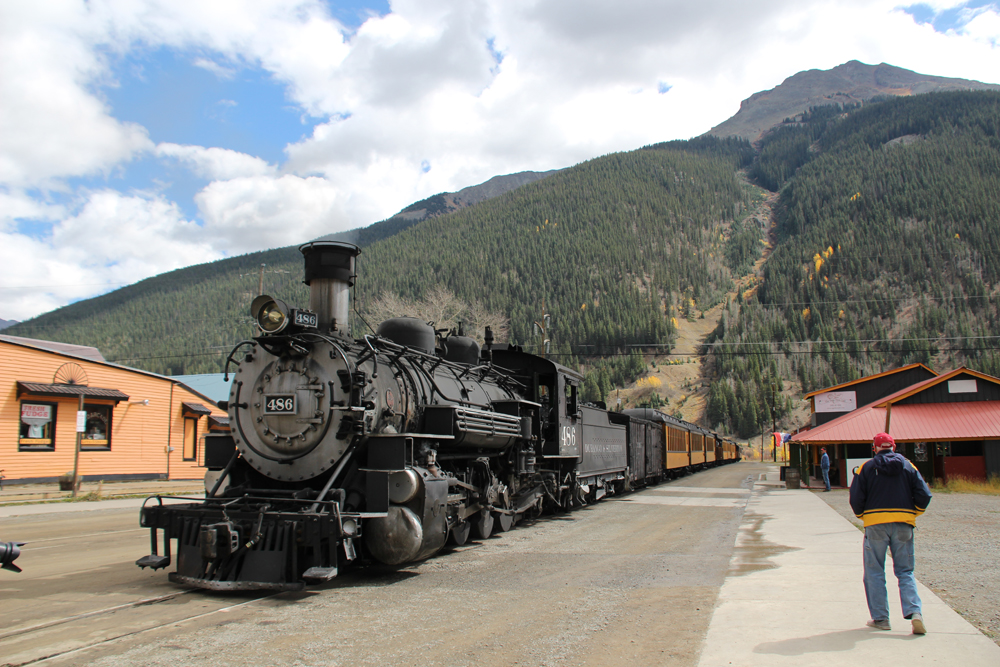
DENVER — The Durango & Silverton has agreed to pay $20 million and adopt fire mitigation plans in a proposed settlement to a lawsuit over its role in a massive 2018 Colorado wildfire.
The money will settle a suit filed in 2019 by the federal government, which claimed cinders from one of the railroad’s locomotives started the 416 Fire, which burned more than 54,000 acres [see “Federal government blames Durango & Silverton for 2018 wildfire,” Trains News Wire, July 2, 2019]. The railroad continues to deny it started the fire and the settlement is not an admission of liability.
Meanwhile, the Durango Herald is reporting that the railroad has also reached a settlement in the civil lawsuits arising from the same fire.
Under the federal settlement announced Monday, the railroad will make an initial lump-sum payment of $15 million, then pay an additional $5 million plus interest over 10 years. The government had sought to recover $25 million for costs of fighting the fire.
The agreement must still be approved by a federal judge.
“The Durango & Silverton Railroad represents an important historic and cultural icon in southwest Colorado,” U.S. Attorney Cole Finegan said in a Justice Department press release. “We intend for this settlement to enable the Railroad to continue to operate, but in a manner that will avoid causing future catastrophic wildfires. In addition, this agreement ensures fair compensation for the damages caused by the 416 Fire.”
Other aspects of the settlement include requirements for the railroad to carry a minimum of $3 million in wildfire insurance; to pay $100,000 a year into a fund to be used to pay for costs arising from any wildfire caused by the railroad; and to comply with a plan limiting its operations when fire risk is elevated and halting operations when fire risk is extreme. Under that plan, the railroad will not operate coal-fired locomotives in periods of elevated risk.
Well in advance of the settlement, the railroad had taken steps to reduce the fire danger from its operation. It has converted locomotives from coal to oil firing [see “Tests continue on first Durango & Silverton oil-burner …,” Trains News Wire, Feb. 5, 2020] and added diesel locomotives, both used [see “Durango & Silverton to buy White Pass & Yukon diesels,” News Wire, April 13, 2020] and new. The railroad was prepared to operate in 2021 without using any coal-fired locomotives [see “Durango & Silverton set to go coal free …,” News Wire, June 25, 2021].
The railroad also faced civil suits over losses suffered by businesses and property owners resulting from the fire [see “Civil trial against Durango & Silverton is delayed,” News Wire, Jan. 25, 2022], but the Durango Herald reports it was told by a lawyer involved that a settlement had been reached in that case, as well.
“I’m allowed to say only that the matter has settled,” Bobby Duthie, of Durango law firm Duthie Svastano and Brungard, told the newspaper, which reported other details were not available as of Monday night.
“This has been a very long and tedious process and I am thankful to have it past us,” American Heritage Railways COO John Harper said in a news release. “All parties in the State and Federal cases have come to a resolution and now it’s time to move forward and create a better future.”
— Updated at 7:50 a.m. CDT on March 22 with information on Durango & Silverton’s previous fire-mitigation efforts; updated at 8:50 a.m. CDT on March 22 with report of settlement of civil case.